

Risk Management · 2025
In this section4 topics
Risk Management Policy & Plan
Main Introduction
In today’s dynamic business environment, organizations operate amid numerous variables, experiencing volatility, complexity, and ongoing changes driven by both internal and external factors. These conditions give rise to uncertainties that may result in events categorized as either opportunities or risks. Opportunities refer to elements that generate value for the organization, while risks encompass those that could adversely affect the organization, whether financially or otherwise.
Effective risk management is essential for safeguarding the organization and facilitating the achievement of its objectives. The development of a risk management report forms an integral part of corporate governance best practices, supporting sustainable business growth. This report provides a structured approach to monitoring and communicating risk management activities with prudence, transparency, and efficiency, thereby enhancing the organization’s reputation and delivering added value over the short, medium, and long term.
Scope of Risk Management
The scope of risk management at Golden Lime Public Company Limited and its subsidiary, Thai Marble Corporation, Limited, encompasses all organizational activities and processes. This includes the identification and management of emerging risks, strategic decision-making, technological advancements, operational practices, legal and regulatory compliance, financial oversight, investment management, and securities.
Policy & Plan Description
The Board of Directors has established the Risk Management Committee, which includes Board members and Executives, to oversee enterprise risks that could impact ESG sustainability and crisis management for business continuity. This RM committee will hold regular meetings with Executives and department heads, including additional sub-meetings to address issues that may affect the Company's operational continuity. The Risk Management Committee understands the critical need to implement a risk management system that aligns with international standards when risks or issues arise. To support this objective, the Company has developed a Risk Management Policy based on the following framework.
Guidelines
1. Define risk management as a responsibility for all employees at all levels to be aware of operational risks including sufficient and appropriate risk management in sustainability development, crisis management for business continuity.
2. Encourage employees at all levels to embrace risk assessment and management in all critical operations and investment projects as well as continuously develop to create a risk management culture throughout the organization for confidence among the shareholders and SUTHA’s stakeholder.
3. Support the corporate use of technology for corporate and sustainability risk management and report on risk management to be examined by the committee or those appointed to ensure efficient risk management.
4. All risks that impact corporate achievement and business continuity shall be
4.1) Identified in a timely manner
4.2) Assessed with regard to likelihood of occurrence and the its impact
4.3) Treated such risk in a manner that is in line with the Company’s Risk Management Framework with regards to costs and benefits
of the treatment
4.4) Monitored to ensure that they are appropriately managed
4.5) Reported all high-possible risks which may affect the Company’s business sustainability plan and financial corporate strategies
to the Risk Management Committee or Audit Committee or Board of Directors.
In 2025, SUTHA implemented a risk management policy, identifying key risk factors impacting its business operations and performance. Although mitigation steps were taken last year, risks remain and may increase due to economic trends, environmental issues, and strong competition in the lime, calcium carbonate, and marble markets. Furthermore, the Company was also affected by changes in its core customer industries, which faced a slump, impacting on its performance last year.
Short-term management plans:
Implementing organizational restructuring and minimizing non-essential expenditures
Procuring and importing fuel to effectively manage fuel cost volatility
Selling imported fuel to generate supplemental profit
Medium- to long-term management plans:
Maximize resource and asset efficiency
Ensure quality raw material sourcing
Invest in process and product improvements
Manage inventory to reduce excess stock and free up capital
Develop new products and grow the customer base
Control cash flow and stabilize revenue
These measures are designed to mitigate potential disruptions to business operations. Ongoing monitoring and prompt execution are critical for adapting to evolving conditions. The Risk Management Committee is responsible for ensuring all actions aligned with established policies, frameworks, and risk management processes, and for preparing reports to inform the Board of Directors, shareholders, and stakeholders of ongoing progress.
Risk Management Framework and Responsibilities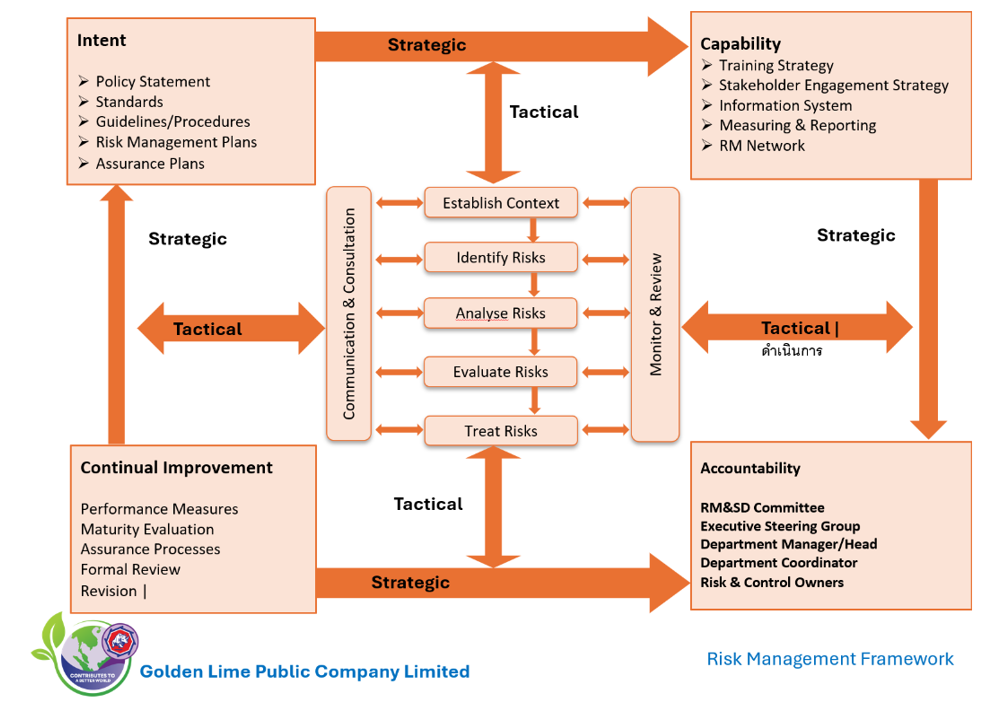
SUTHA’s Risk Management Framework consists of the Board of Directors approving the risk management policy framework and appointing a sub-committee, the “Risk Management and Sustainability Development Committee (RM_SD),” responsible for oversight in accordance with its charter and defined responsibilities. This committee ensures effective implementation of risk management and sustainability governance across the organization. It supervises processes at the departmental level to manage and control risks related to critical operational areas within each business unit and oversees operational units to ensure compliance with responsibilities, guidelines, standards, procedures, and legal and regulatory requirements.
The Board has established the scope and responsibilities under the risk management policy, defining roles and accountability for implementing and managing organizational risks as follows:
Scope of Duties and Responsibilities
Related Persons | Duties and Responsibilities |
Board of Directors (BOD) |
|
Audit Committee (AC) |
|
COMEX |
|
Risk Management and Sustainability Development Committee (RM_SD) |
|
Managing Director / Deputy Managing Directors |
|
HR Department |
|
Manager or Head of Department / Risk Department Coordinator or RM&SD committee coordinator |
|
Management |
|
Supervisor and Employees |
|
Internal controls representative |
|
Internal Audit |
|
Auditor |
|
Risk Owner |
|
Employees |
|
Risk Management Plan
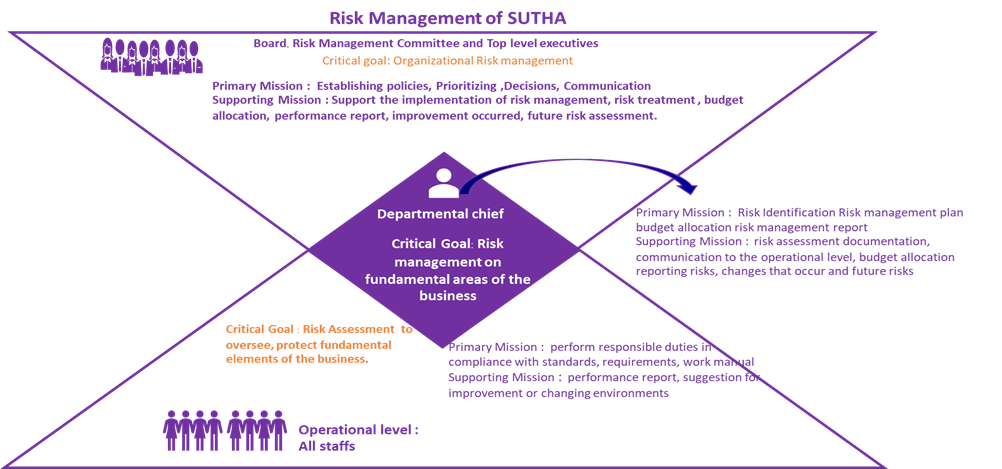
Risk management is a continuous process within the organization and is integrated into the Company’s business activities to ensure activities are aligning with strategies, accomplish missions and objectives. Employees at all levels are actively involved in identifying, planning, and implementing risk management as a corporate culture to create strategies to mitigate the risks and develop effective risk response strategies into routine operations.
Top executives’ level
Board of directors, RMC and all top executives
Core Mission: Policy establishment, Prioritization, Decision making, communication.
Core Mission support: Encourage Policy into practices; verifying risk management measures, allocating budget, Risk management performance report ,risk assessment and communication
Management and departmental level
Departmental chief
Focus on Risk management regarding critical business processes of the organization
Core Mission ; Risk identification , Risk assessment , resources allocation, report on risk management results
Core Mission support: Risk assessment documentation, risk communication
Operational level
Employees at operational level
Focus on protection of corporate asset
Core Mission ; Perform their duties to comply with requirements, manuals, work standards, rules and regulations completely and correctly
Core Mission support: Performance report, risk issues report
Policy Document Link
https://goldenlime.co.th/en/risk_management/
Risk Factors — Overview
Risk Factors — Introduction
SUTHA applied the 2017 COSO Enterprise Risk Management - Integrated Framework (2017 COSO ERM) for Risk management Process throughout its organization and has developed a “Risk Management Manual” in line with the 2017 COSO ERM. (GRI: 3-1)
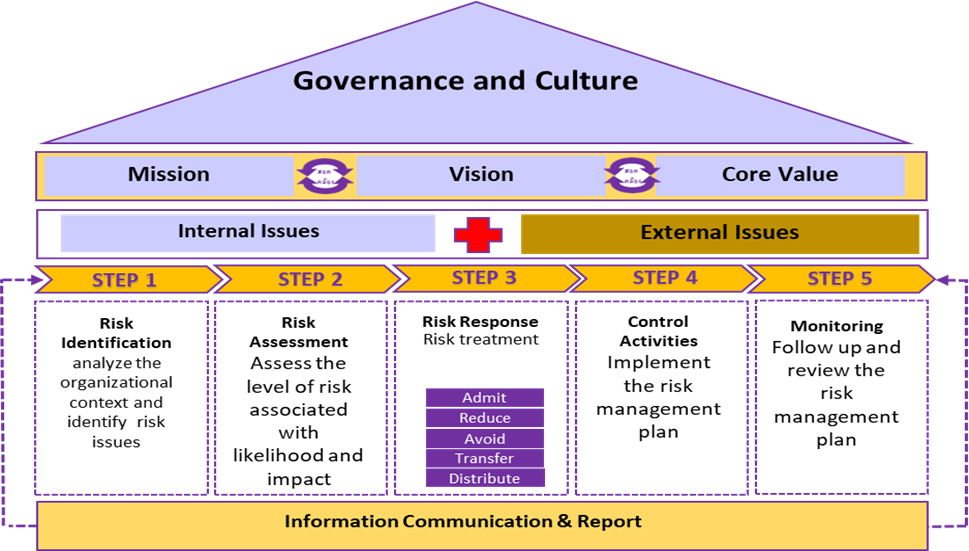 Governance and Culture
SUTHA has established the following risk management culture:
SUTHA’s Enterprise Risk Management Culture The executives and the board have laid the foundation for corporate governance and actively promote the importance of risk and crisis management across all departments. Personnel at all levels work together to enhance efforts in identifying, assessing, monitoring, preventing, and mitigating significant risks and their impacts. Their emphasis is on prioritizing critical risks, preparing comprehensive reports, and ensuring clear communication. Effective coordination is vital to enhance knowledge and understanding, thereby encouraging systematic practices. SUTHA is dedicated to nurturing a culture of risk management.
Strategy & Objective Setting
SUTHA has developed a strategic framework for managing risks to guarantee that different business processes meet their goals. This framework encompasses several key components for effective risk management. • Internal Environment: The Risk Management and Sustainability Development Committee has established a risk management culture throughout the organization and defined the acceptable risk levels based on the internal environment. This serves as a foundation and guideline for the organization’s personnel to initiate and integrate risk management practices. It also outlines how to manage significant issues or impacts by adopting the framework of four key behaviors for personnel to collaboratively drive risk management development as follows:

| Honest Feedback: from personnel at all levels as a foundation for gathering unbiased information based on experience and expertise. This collective knowledge will be used to analyse events by identifying risks and impacts from both internal and external factors. |
| Collaboration: involves board members, executives, and all personnel working together to reach shared objectives and meet their obligations including managing risks effectively within their areas of responsibility, reporting of risk issues, creating indicators and management strategies to mitigate, avoid, transfer, or distribute risks, and establishing a risk threshold of acceptable variation around an objective that reflects the risk appetite of the organization. |
| Ownership: Departments involved with significant risks must be genuinely committed to management and accountability via establishment of concrete indicators to monitor and reduce the likelihood and severity of significant impacts, implementation to mitigate such impacts to ensure continuity of the process and achieve operational goals. |
| Passion: Commitment, and dedication in driving the integration of risk management into business activities. Personnel at all levels are dedicated to their responsibilities and collaborate to foster significant growth to ensure business evolves into a visionary organization that operates sustainably. |




Objective Setting:
Operational targets recognize possible events that may impact the achievement of these goals and create risk management guidelines to ensure that the goals and targets align with the organization's mission and acceptable risk levels.
Event Identification:
Events are those that either provides an opportunity or poses a risk to achieving the operational objectives. This can either arise on account of external factors or on account of internal factors and are measurable. When opportunities are identified, executives will reintegrate them into the strategy and objective-setting processes.
Risk Assessment:
Identified risks or those indicated by event analysis and linkage are evaluated using established criteria to assess the likelihood and level of risk from those events. The results are used to prioritize risk management measures. The assessment considers both inherent risks (natural risks) and residual risks (remaining risks), taking into account the probability of occurrence and the impact of those risks.
Risk Response:
Organizational personnel identify and evaluate possible risk response strategies, including avoidance, reduction, sharing, and acceptance of risks. Management selects the appropriate response strategies that align with the organization’s acceptable risk levels.
Identifying Risk levelRisk Level = Likelihood x Severity
The level of risk indicates its significance in risk management, based on the criteria defined in the following:
Risk Appetite and Risk Tolerance SUTHA sets Risk Appetite at 10 as the amount of risk that the Company is willing to take to achieve its objectives, as a risk tolerance the amount of variation from risk appetite that the Company is willing to accept.
Control Activities:
Policies and procedures are established and implemented to ensure that the chosen risk response strategies are effectively carried out to completion.
Information and Communication:
Relevant information must be identified, collected, and communicated in a format and timeframe that allows personnel to perform their responsibilities effectively. Information is essential at all levels of the organization for identifying, assessing, and responding to risks. Effective communication must occur and be understood broadly, from top to bottom, between departments, and from bottom to top. All personnel must receive clear communication about their roles and responsibilities.
Monitoring and Audit:
The entire risk management process of the organization must be monitored, evaluated, and adjusted as necessary. This approach ensures that the organization can respond to any situation and adapt to changing conditions. Monitoring and evaluation can be conducted through ongoing management activities or separate assessments of the organization’s risk management, or both. Internal audits of the risk management process are conducted regularly each year.
The Key Risk Factors as detail follows:
Risks Factor : (Yes / No) | ||
Code | Risk Issues | Risk Factor |
E | Emerging Risk | |
E1 | The driving of sustainability goal-setting and regulatory changes to enforce ESG practices encompassing environmental, social and governance management. Governance), emerging risk from climate change | Yes |
E2 | Geopolitical Risks Updated / Add Scope | Yes |
E3 | Risk/Opportunity from adopting advanced technologies such as AI, IoT, Automation, and CCS (Carbon Capture and Storage) New | No |
S | Strategic Risk & ESG Risk | |
S1 | Technology Development | No |
S1.1 | Carbon capture and storage technologies progress below than stakeholder expectations | No |
S1.2 | Risk from Investment in Biomass or Low-Carbon Fuel Transition Projects | No |
S2 | Risk arising from economic uncertainty New | Yes |
S2.1 | Economic uncertainty affects both the unpredictability of customer demand and the pressure in allocating expenditure budgets New | Yes |
S3 | Changes in behavior or needs of customers / consumers | No |
S3.1 | Demand on environmental care products, low carbon products, or green label products | No |
S3.2 | Electronic tax invoices and transactions, digital contracts or " e-Contract" | No |
S4 | Changes in government policy and enforcement of new laws or regulations. | No |
S4.1 | Legal, Regulatory, and Compliance Risks of the Company | No |
S4.2 | Implementation, development, and allocation of operating resources to ensure standard processes consistent with the changing methods. | No |
S5 | Changes in international policies or agreements related to business operations | No |
S5.1 | Additional sustainability and ESG assessment initiated and arranged by the major shareholders for certification by Third party | No |
S6 | Technology advancement | Yes |
S6.1 | Digital transformation | No |
S6.2 | Stakeholder satisfaction survey technology | No |
S6.2 | High investment in the Modification of Technology and machinery control system | Yes |
S6.4 | IT security and cybersecurity systems rely on both hardware and software, often involving service providers from the public network. This can introduce various risk factors. Managing cybersecurity and business continuity can lead to significant investment costs for necessary changes and ongoing expenses to maintain the system's hardware, software, and protective devices, ultimately increasing IT costs. | Yes |
S7 | Changes caused by trading partners or operators in the supply chain change their trade patterns | Yes |
S7.1 | Raw material producers, suppliers / Subcontractor | No |
S7.1.1 | Trading partners as producers of limestone, dolomite and calcite. | Yes |
S7.1.2 | Stone crushing partners contracted to produce products that are by-products from limestone quarries. | Yes |
S7.2.1 | Fuel / Coal suppliers and distributors | Yes |
S7.2.2 | Purchasing and importing fuel from abroad and risks from the sea transportation process | No |
S7.3 | Refractory brick producer | No |
S8 | Dependence on the major shareholder or affiliates of the major shareholder or executives | Yes |
S9 | Over -Reliance on one customer/ few customers / Marketing Risks | Yes |
S9.1 | Marketing risks and opportunities from crises or changes in the Company's customer industries | Yes |
S9.2 | High competition risk | Yes |
S9.2.1 | Competition risk | The risk arising from increased competition, including the ease of market entry by new competitors, which may impact market share, pricing power, and profitability. New | No |
S9.3 | Risks and opportunities in Export sales to CLMV countries | Yes |
S9.4 | Marketing risks from Cost fluctuation | Yes |
S9.5 | Risk of Noncompliance with sales agreement (Product responsibility to customers) | Yes |
S9.6 | Risk of Development of new products and customers’ product trials | Yes |
S10 | Dependency on a few distributors or trading partners | Yes |
S11 | Corporate Image and reputation | No |
S12 | Risk from Investment in New Business Ventures New | No |
S13 | Risk Related to Shareholding Structure New | No |
S14 | Environmental, Social, and Governance (ESG) Risk New | Yes |
S15 | Risk from Infectious Disease Outbreaks New | No |
S16 | Impact of Measures to Reduce Slow-Moving and Non-Moving Inventory New | Yes |
O | Management and operational risk | |
O1 | Key Person Dependency Risk New | No |
O2 | Losing an employee in important positions | No |
O3 | Shortage of proficient workers | No |
O4 | Shortage of raw materials or production factors | No |
O4.1 | Sufficiency of limestone raw materials /Dolomite
| No |
O4.2 | Sufficiency of limestone raw materials /Dolomite
| No |
O4.3 | Sufficiency of limestone raw materials /Dolomite
| No |
O5 | System that has errors or failures or lack of good standards and controls | No |
O5.1 | Corporate Governance Systems and Processes New | No |
O5.2 | Risk management systems across the organization | No |
O5.3 | Internal Control | No |
O5.3.1 | Order to cash | No |
O5.3.2 | Purchase to pay | No |
O5.3.3 | Account and Financial Reporting | No |
O5.3.4 | Production | No |
O5.3.5 | Inventory Management and Production Costing | No |
O5.3.6 | Fixed Asset Management | No |
O5.3.7 | Human Resources Management and Payroll | No |
O5.3.8 | Information Management | No |
O5.4 | Quality Management New | No |
O5.5 | Health and Safety Management New | No |
O5.6 | Environmental Control Management New | No |
O6 | Human error in process New | No |
O7 | Obsolete Inventory, Noncompliance Slow moving products and Non-moving inventory Updated | Yes |
O8 | Information or computer system security and cyberattacks | No |
O9 | Loss or damage from a breaching trading partner | No |
O10 | Delay of planned projects | No |
O11 | Invested project in progress not yet Recognizing income | No |
O12 | Office space rental | No |
O13 | Safety, occupational health and working environment | Yes |
O14 | Climate change disaster and the occurrence of unstable weather conditions | No |
O15 | Environmental impact | Yes |
O16 | Risks and impacts on biodiversity Updated | No |
O16.1 | Assessment of risks and impacts on biodiversity | No |
O16.2 | Importance of the location and distance from protected or conserved areas | No |
O16.3 | Assessment of dependence on ecosystem services | No |
O16.4 | Assessment of plant and animal species on the IUCN Red List | No |
O16.5 | Water Depletion Risk | No |
O16.6 | Pollution from business processes and there are measures to monitor and control and inspection from certified external agencies | Yes |
O17 | The Effects of Population Structure | No |
O18 | Human rights impact | Yes |
O19 | Corruption | No |
O20 | IT System Failure or Disruption Risk New | No |
O21 | Inventory Obsolescence and Value Decline Risk New | Yes |
O22 | Risk of Refractory Brick Wall Damage New | No |
C | Compliance Risk | |
C1 | Changes in regulations and laws regarding business operations | Yes |
C2 | Social forces on sustainability against current unchanged laws and regulations | No |
C3 | Regulatory and Legal Constraints on Business Operations New | No |
C4 | Violations of Laws and Regulations | No |
C5 | Corporate Governance Risk New | No |
C6 | Litigation Risk / Reputational and Image Risk New | No |
F | Financial Risk | |
F1 | Insufficient financial resources | Yes |
F1.1 | Risks and sources of funds and sufficiency and flexibility of working capital | Yes |
F1.2 | Risk of Liquidity Shortage in Business Operations New | Yes |
F1.3 | Revenue Volatility Risk New | Yes |
F2 | Changes in financial and investment policies of financial institutions | No |
F2.1 | Terms or conditions that are inconsistent with the terms and conditions of the loan agreement that cannot be complied with or, if not complied with, may affect the need to repay the debt before the due date. | No |
F3 | Default of payment or exchange of goods | No |
F3.1 | Late payment/default by the Trade Account Receivable | Yes |
F3.2 | Default of payment to creditors, late payment/default by the clients | No |
F3.3 | Default delivery of goods and services | No |
F3.4 | Default delivery of goods and services from Supplier , Subcontract, Vendor, Contractor | No |
F4 | Exchange rate fluctuations and Inflation fluctuations | Yes |
F4.1 | Exchange rate fluctuations | Yes |
F4.2 | Inflation fluctuations | Yes |
F5 | Fluctuations in ROA and ROI | Yes |
F5.1 | The risk of fluctuations in the return on assets or investments: in a subsidiary Golden Lime Engineering Co., Ltd. _ GLE | No |
F5.2 | The risk of fluctuations in the return on assets or investments: in Saraburi Quick Lime Co., Ltd. _SQL | No |
F5.3 | The risk of fluctuations in the return on assets or investments: in Thai Marble Co., Ltd. _TMC | Yes |
F5.4 | Investment in Solar Farm | No |
F6 | The risk of unhedged foreign borrowings | No |
SS1 | Risks to shareholders | Yes |
SS2 | Investment in foreign securities | Yes |
TM | Business risks of Thai Marble as a Subsidiary Company | Yes |
TM1 | Threat of New Entrants: | Yes |
TM1.1 | Threat of New Entrants (Quarry) | Yes |
TM1.2 | Threat of New Entrants (Import-Produce-Sale) | Yes |
TM1.3 | Threat of New Entrants (Trading & Sale/ Dealer) | Yes |
TM2 | Threat of New Entrants from abroad | Yes |
TM3 | Threat of Substitution | Yes |
TM4 | Budgeting risks | Yes |
TM4.1 | Budgeting Risks: Price War and Low-Margin Market Practices Updated | Yes |
TM4.2 | Budgeting risks: Cash flow & High inventory New | Yes |
TM5 | Occupational health and safety risk | No |
TM6 | Social and environmental risks, stakeholders’ risk | No |
TM7 | Technology Risk | Yes |
TM8 | late payment/default by the Trade Account Receivable New | Yes |
TM9 | Climate-related Risks and Disclosure Obligations in Compliance with IFRS S1 and IFRS S2 Standards New | No |
TM9.1 | Physical risks such as floods, droughts or storms that affect operations. New | No |
TM9.2 | GHG Scope 1, 2, 3 Emissions New | No |
TM9.3 | Legal Compliance New | No |
TM9.4 | Information Disclosure New | No |
TM9.5 | Stakeholder Engagement New | No |
TM10 | The recent adjustments to the organizational structure and internal policies throughout the year have established a clear deployment strategy and direction. New | Yes |
TM10.1 | The direction of restricted human capital and resources. New | Yes |
Note:
Definitions
New refers to risk topics identified or added during the 2025 risk assessment.
Updated / Add Scope refers to risk topics that have been revised or renamed, with expanded scope or details, while still covering the risk content previously identified in prior years.
In 2025, the number of risk topics has been changed, with the sequence now organized according to risk categories.
Risks to the Company's Business Operations
Introduction
SUTHA materializes risk issues covering environmental, social, and corporate governance issues that may affect the Company’s and its subsidiaries’ operations. Such issues, at present as well as in the future unless no preventive measurement, may impact the entity's business and operations so the risk assessment is implemented to identify risk treatment as a prevention to be informed to stakeholders using a Forward-Looking Statement stated as "believe", "expect", "plan to", "intend to", and "approximate”.
The presented business, industry, performance, and other operational forecasts are expectations of events that may happen in the future and therefore may vary materially from our forecast and speculation.
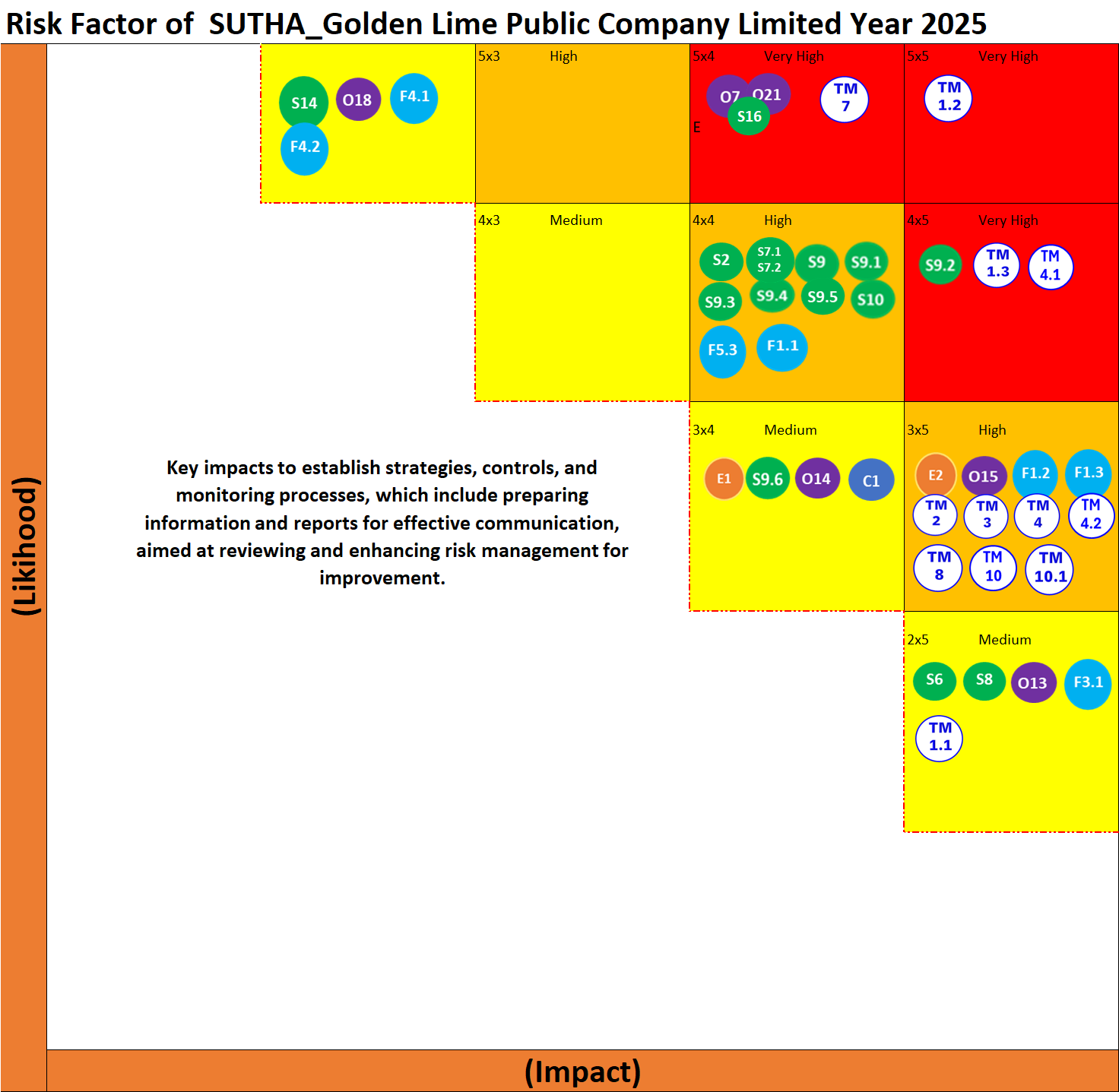
E. Emerging Risk
E1 | Climate Change Risk
SUTHA has assessed and established risk management measures related to the impacts of climate change (Climate Change Risk), with an overall summary as follows:
Risk Factors and Impacts
Risks from severe global climate conditions: Increased frequency of natural disasters affecting business operations and supply chains.
Physical Risks: The company has assessed potential impacts from natural disasters that may affect facilities and business processes, including storms, floods, and earthquakes. Key physical risk factors include:
Rising temperatures => Higher energy costs, reduced machine efficiency, heat accumulation in fuel storage areas.
Increased water demand => Greater water usage for dust and humidity control.
Workforce impacts => Reduced health and productivity.
Infrastructure and transportation risks => Damage to roads/railways and disruptions in sea and river transport.
Transition Risks:
New laws and standards such as IFRS S1 and S2 (TCFD Framework).
Higher costs from carbon reduction, carbon taxes, and greenhouse gas audits.
Reputation and funding risks if ESG standards are not met.
Risk Assessment Results
Risk Level for 2025: Likelihood = 3, Impact = 4 => Risk Level: Medium (decreased from High in 2023).
Physical Risk Assessment:
Acute Risks: No severe events impacting production sites (e.g., cyclones, major floods) within the past 5 years.
Chronic Risks: High risk of drought, water stress, water depletion, and rising temperatures based on WRI Aqueduct Water Risk Atlas.
High-risk areas for drought and flooding: Saraburi and Lopburi provinces (WRI Aqueduct Water Risk Atlas).
Drought risk level: Extremely High
Flood risk level: Extremely High
Risk Management Measures
Physical Risk Mitigation:
Regular monitoring of temperature and weather conditions.
Improve fuel storage and dust control systems.
Design water recycling and rainwater harvesting systems to reduce groundwater use.
Comprehensive insurance coverage for key assets and marine/river transport.
Transition Risk Mitigation:
Establish Risk Management and Sustainability Development Committee to oversee Climate Change strategies.
Develop renewable energy projects (e.g., solar) and explore EV infrastructure and biomass energy options.
Prepare for IFRS S1 and S2 reporting by 2030.
Implement Carbon Reduction Roadmap and carbon data management systems.
Secure Directors & Officers (D&O) liability insurance.
Competitive Opportunities:
Develop low-carbon products and environmental improvement technologies.
Participate in ESG rating programs and build partnerships for carbon reduction technologies.
Key Risk Indicators (KRIs) for Climate Change Risks
Physical Risks:
Average monthly temperature at plant sites => Alert: >35 degrees Celsius for more than 10 consecutive days.
Heatwave days => Alert: ≥5 days per month.
Rainfall below normal => Alert: <20% of 10-year average.
Water levels in key sources => Alert: <50% capacity.
Flooding incidents at plant sites => Alert: ≥1 per year.
Water usage per production unit (cubic meters/on) => Alert: Increase >10% from normal average.
Transition Risks:
Annual carbon credit cost => Alert: Increase >15% from previous year (Note: Carbon tax not yet implemented in Thailand).
GHG emissions (Scope 1, 2, 3) => Alert: Not decreasing as planned.
Share of renewable energy => Alert: <10% by target year.
ESG rating score (SET or EcoVadis) => Alert: Below required threshold (e.g., below Silver level).
New climate-related regulations => Alert: >3 per year without adaptation plan.
Investment in carbon reduction projects => Alert: <80% of planned budget (subject to financial conditions).
Supply Chain and Customer Risks:
Delays in raw material transport due to weather => Alert: ≥2 times per quarter.
Production disruptions due to weather => Alert: >5% of monthly capacity.
E2 |Geopolitical Risks Updated / Add Scope
SUTHA has assessed and established measures to manage risks arising from factors related to geopolitical risks, with an overall summary as follows:
Geopolitical Risk Factors
Sources and Nature of Risks
International wars, e.g., military conflicts affecting supply chains
Domestic unrest, e.g., protests, coups
Economic sanctions, e.g., import bans/restricted investments
Changes in trade and tax policies, e.g., increased import tariffs
Foreign investment controls
Regional tensions, e.g., South China Sea disputes
Key Historical Events
2022: Russia–Ukraine war drove energy prices up, impacting production costs
2023: Indonesia’s coal cargo insurance policy increased complexity and costs
2024: Middle East conflict (Iran–Israel) pushed global oil prices to $90–$100 per barrel
2025: U.S. trade war raised import tariffs on Thai goods by 25–30%, while Thai–Cambodia border tensions caused year-long checkpoint closures
Business Impacts
Supply chain disruptions affecting certain products and export processes
Increased costs (fuel, transportation, tariffs)
Investment uncertainty
Impact on reputation and customer confidence
Physical and Transition Risks
Physical: Risks from transportation disruptions and border closures
Transition: Fuel adaptation, e.g., shifting from bituminous coal to primarily petcoke, and monitoring biomass fuel development projects to reduce coal dependency. These require government incentives and support to ensure commercial viability and cost control compared to current fuel sources.
Risk Management Measures
Pricing strategy aligned with costs and market competition
Capital increase to strengthen liquidity (RO issuance during 2023)
Procure fuel from low-risk sources and build alliances for co-shipment
Develop biomass fuel projects (currently under study and delayed due to investment return concerns; high risk if no government incentives)
Explore new markets or boost domestic sales to offset export declines
Issue certificates of origin to maintain confidence and mitigate tariff measures (Trump tariffs) for U.S.-bound customers
Key Risk Indicators (KRIs)
News on wars and conflicts
Oil and fuel price trends
Interest rates and monetary policies
Export volumes to Cambodia and the U.S.
Fuel stock levels and procurement prices
Changes in sales by industry
S. Strategic Risk
SUTHA has assessed and established measures to manage strategic risks. If the assessment indicates a high level of strategic risk, continuous monitoring and management are required to maintain business stability. The key risk factors are as follows:
S2 | Risk arising from economic uncertainty New
Risk Factors
External: Volatile energy and raw material prices, high interest rates, slowdown in China’s economy, geopolitical tensions
Internal: Adaptation to megatrends, digital transformation, IT systems and cybersecurity, reliance on major customers and key shareholders
Impact
Decline in demand from key industries (steel, sugar, construction, chemicals)
Revenue and liquidity affected, requiring strict cost and expense control
Risks to reputation, business continuity, and relationships with customers and partners
Mitigation Measures
Monitor order volumes and industry trends
Analyze economic factors and adjust production and procurement plans
Enforce strict cost and expense control
Develop ERP/IT systems and provide staff training
Implement Business Continuity Plan (BCP) and diversify risk by expanding customer base
Assess risks from customers and partners to support procurement and sales decisions
Key Risk Indicators (KRIs)
Order volumes and economic trends
Energy and raw material prices
Industry analysis reports for customers
Promotion and increase of customer segments requiring low-carbon products
Customer complaints
S6 | Technology advancement
Risk Factors
Technology for Greenhouse Gas Reduction: CCS (Carbon Capture and Storage) projects – technology is not yet widely adopted domestically, requires high investment, and faces local limitations; therefore, capital spending for research and development has been delayed.
Biomass Fuel System Development: Project plans postponed to medium- and long-term due to commercial viability concerns and risks such as fire hazards, dust ignition, and explosions, as well as challenges in sourcing sufficient, high-quality, and consistent biomass supply.
Digital Transformation Transition: Current ERP systems are not ready to support potential government mandates for e-Contract and e-Tax systems.
IT Infrastructure: Systems are not fully integrated; some legacy systems remain isolated, causing duplication of data and reliance on manual processes. Risks include downtime from natural disasters (e.g., power outages) and operational disruptions.
Supply Chain: Risks from suppliers, shortages of raw materials meeting customer specifications for certain products, and fuel transportation risks.
ESG Compliance: Risks of non-alignment with FTSE Russell assessment criteria or AI-based evaluations of public disclosures, as current formats and details may not meet required standards.
Impact
High investment and budget requirements for project development and mitigation measures; some projects may not deliver adequate returns.
Hardware technology risks: Existing PLC systems for lime kiln control are outdated; spare parts are no longer manufactured, leading to high replacement costs or significant investment for system upgrades.
Residual risks and potential operational disruptions remain; mitigation requires costly backup systems or generators.
Loss of competitive opportunities, increased control costs.
Changing customer demands, increased IT workload.
Impact on carbon reduction and ESG targets.
Mitigation Measures
Continue feasibility studies and monitoring for new technologies (CCS, Biomass).
Develop ERP/IT systems aligned with financial capacity and business needs.
Train personnel, enhance skills, and implement appropriate cybersecurity measures; raise awareness and understanding among staff.
Build partnerships with suppliers, create supply chain contingency plans, and secure alternative raw material sources.
Monitor carbon tax laws, government policies, and ESG standards.
Track developments in e-Contract/e-Tax systems; improve website and applications.
Establish Business Continuity Plans (BCP), IT and transportation insurance.
Key Risk Indicators (KRIs)
Number of projects/partners involved in technology development.
Adoption of CCS in international industries.
Biomass prices, carbon tax legislation announcements.
Share of customers requiring green/low-carbon products.
ESG/FTSE Russell assessment results, stakeholder complaints.
IT expenses, machine downtime hours, GHG emissions (Scope 1–3).
S9 | Over -Reliance on one customer/ few customers
Risk Factors
The company relies on only 20–25 key customers, accounting for over 70% of total revenue.
Risk of losing major customers or reduction in purchase orders.
Risk from changes in customers’ industries, such as steel, sugar, and construction.
Risk from intense competition and entry of new foreign competitors, impacting export markets and increasing domestic market share competition.
Risk from fluctuations in production costs and pricing requirements for certain customer segments or industries.
Impact
Immediate loss of revenue and cash flow if major customers reduce orders.
Impact on EBITDA and potential deterioration of debt servicing ratios.
Risk to reputation and market confidence if revenue base and customer count decline in favor of competitors.
Increased marketing costs to build new market bases and acquire new customers.
Increased workload and pressure on marketing and support teams.
Risk to CLMV market expansion if logistics or regulatory constraints arise.
Mitigation Measures
Diversify customer base to reduce reliance on major customers.
Develop new products and expand sales channels.
Establish long-term contracts with key customers to maintain relationships.
Expand export markets to CLMV and other countries.
Monitor industry trends and adjust pricing strategies accordingly.
Enhance product specifications to meet customer requirements.
Analyze cost structure to support pricing decisions for competitiveness and market share retention.
Prepare contingency plans for potential loss of major customers.
Key Risk Indicators (KRIs)
Revenue share from top 25 customers.
Order volume from major customers.
Number of new customers acquired.
Market competition level (Market Share).
Customer complaints and product returns.
Sales in CLMV and other international markets.
S9.1 | Changes in Company's customers.
Risk Factors
Changes in key customer industries such as steel, sugar, construction, and chemicals
Global economic and geopolitical crises, e.g., trade wars, regional tensions
Customer transition to new technologies or clean energy
Risk from customers reducing production capacity, impacting purchase orders
Impact
Immediate decline in sales if customer industries slow down
Impact on cash flow and EBITDA
Risk of losing market share and competitiveness
Increased marketing costs to acquire new customers or adjust pricing strategies
Mitigation Measures
Closely monitor industry trends and global economic conditions
Diversify customer base into lower-risk industries
Develop new products to meet future customer needs
Expand export markets to CLMV and other countries
Establish long-term contracts with key customers to maintain relationships
Key Risk Indicators (KRIs)
Order volumes from key industries
Revenue share from high-risk customer segments
Production trends in steel, sugar, and construction industries
Customer complaints and product returns
Sales in new markets (CLMV)
S9.2 |High competition risk
Risk Factors
High market competition from existing and new producers
Entry of foreign competitors with lower production costs
Risk from price adjustments to maintain market share
Customer demand shifting toward ESG-compliant and lower-priced products
Risk from competitors adopting new technologies that enhance production efficiency
Impact
Market share decline if unable to compete on price and quality
EBITDA and net profit reduction due to lower selling prices
Increased marketing and product development costs
Risk to brand image if unable to meet customer expectations
Mitigation Measures
Develop high-quality products that meet customer specifications and ESG standards
Adjust pricing strategies to align with costs and competitive conditions
Expand into new markets such as CLMV and other high-demand countries
Invest in technology to improve production efficiency and reduce costs
Build long-term relationships with key customers and partners
Key Risk Indicators (KRIs)
Market share
Number of new competitors entering the market
Order volume from key customers
Average selling price compared to cost
Customer complaints regarding quality and pricing
S9.3 | Risks and opportunities in Export sales to CLMV countries
Risk Factors
Regulatory and trade policy uncertainties in CLMV countries (Cambodia, Laos, Myanmar, Vietnam)
Risks from border closures or logistics restrictions
Exchange rate volatility and transportation cost fluctuations
Risks from local market competition and customers establishing their own production facilities
Risks from changes in consumer behavior and product standards
Impact
Export revenue may decline if transportation or regulatory restrictions occur
Increased costs from route adjustments or switching from land to sea transport
Risk of losing customers in CLMV due to stronger competition or local production
Opportunity: Effective management can increase sales and expand the regional customer base
Mitigation Measures
Negotiate with customers to use water/sea routes when borders are closed
Explore new markets in other countries or boost domestic sales as a substitute
Issue certificates of origin to build confidence
Closely monitor border situations and trade regulations
Build business alliances in CLMV to strengthen distribution stability
Key Risk Indicators (KRIs)
Sales and revenue share from CLMV
Border opening/closure status
Transportation costs and exchange rates
Number of complaints from CLMV customers
Order volume from CLMV markets compared to targets
S9.4 |Cost fluctuation
Risk Factors
High volatility in prices of key raw materials such as fuel (Petcoke, coal), oil, and production inputs
Risks from exchange rate fluctuations and rising transportation costs
Uncertainty from trade and tariff policies of partner countries
Risk of global raw material shortages
Impact
Increased production costs, affecting selling prices and competitiveness
EBITDA and net profit decline if selling prices cannot be adjusted in line with costs
Risk of losing customers due to uncompetitive product price
Increased liquidity burden from higher working capital requirements
Mitigation Measures
Develop pricing strategies aligned with costs and competitive conditions
Diversify raw material source across multiple countries to reduce risk
Enter into long-term contracts with reliable suppliers
Develop renewable energy projects, such as converting production support vehicles and transporting trucks to EVs
Reduce costs and expenses through maintenance optimization, workforce restructuring, cutting unnecessary expenses, and adjusting controllable costs
Closely monitor raw material price trends and exchange rates
Key Risk Indicators (KRIs)
Price trends of key raw materials (fuel, oil)
Exchange rates and transportation costs
Ratio of raw material costs to selling price
Raw material stock levels and procurement volumes
EBITDA and gross margin
S9.5 | Noncompliance with sales agreement (Product responsibility to customers)
Risk Factors
Risk of non-compliance with sales contract terms, such as product quality and delivery timelines
Risk from production process control not meeting standards
Risk from lack of quality monitoring and inspection systems
Risk from unclear communication between production and sales teams
Impact
Product returns and customer complaints
Loss of confidence and damage to corporate reputation
Increased costs from corrective actions or compensation
Risk of lawsuits or legal disputes
Impact on long-term relationships with key customers
Mitigation Measures
Implement quality control (QC) systems and pre-delivery inspections
Train employees on product standards and contract requirements
Use ERP systems to track production and delivery processes
Develop contingency plans for issues, such as replacement production or compensation
Communicate contract terms clearly to all relevant parties
Key Risk Indicators (KRIs)
Number of customer complaints
Product return rate
Delivery timelines compared to contract terms
Number of cases requiring compensation or corrective action
Quality inspection results before delivery
S9.6 | Development of new products and customers’ product trials
Risk Factors
Risk of developing new products that fail testing or do not meet customer requirements
Risk of high resource utilization in research and development (R&D) without generating returns
Risk of delays in product testing and approval
Risk of changes in customer standards or requirements during development
Impact
Loss of competitive opportunities if products fail testing
High costs from R&D investment without revenue generation
Risk to reputation and customer confidence
Impact on cash flow and production plans if delays occur
Mitigation Measures
Develop clear product development plans aligned with customer needs
Conduct multi-stage product testing before full-scale production
Maintain close communication with customers to incorporate feedback
Prepare R&D budgets carefully and monitor spending
Create contingency plans for products that fail testing
Key Risk Indicators (KRIs)
Number of new products under testing
Testing duration compared to plan
R&D budget versus outcomes
Number of customer complaints or feedback during trial phase
Approval rate of new products
S10 | Dependency on few distributors or trading partners
S7 | Changes caused by trading partners
S7.1| Trading partners as producers of limestone, dolomite and calcite.
S7.2| Fuel / Coal suppliers and distributors
Risk Factors
The company relies on a limited number of key suppliers and distributors for raw material sourcing and product distribution, such as limestone and refractory bricks.
Risk from changes in key suppliers due to financial impacts or policy adjustments.
Risk from lack of diversity in sourcing and distribution channels.
Risk of non-compliance with legal requirements or standards by fuel suppliers in certain countries.
Impact
If supply chain disruptions occur with major suppliers, production processes may be halted.
Increased costs from finding alternative suppliers or policy changes may affect procurement costs. For example, changes in limestone sourcing policies from subsidiaries could impact asset valuation and business valuation.
Negative impact on sales and competitiveness.
Mitigation Measures
Diversify sourcing and distribution channels to reduce reliance on single suppliers, and assess the impact and necessity of dependency on each supplier by selecting options that minimize revenue or customer impact.
Enter into long-term contracts with reliable suppliers.
Regularly audit and evaluate suppliers, including compliance with ESG standards.
Develop contingency plans for raw material sourcing and risk diversification, ensuring quality material sources.
Build strategic relationships with key suppliers for stability.
Key Risk Indicators (KRIs)
Number of key suppliers and proportion of purchases from each.
Level of sourcing diversity.
Incidents or impacts from dependency or policy changes with key suppliers.
ESG compliance audit results of suppliers.
Lead time for raw material procurement during emergencies.
S14. Environmental, Social, and Governance (ESG) Risk New
Risk Factors
Risk of greenhouse gas (GHG) emissions and particulate matter exceeding standards
Risk from community complaints regarding environmental impacts
Risk of non-compliance with ESG standards or failure to align with international benchmarks and sustainability performance indicators, such as ESG ratings by FTSE Russell, SET ESG Rating, and EcoVadis
Risks related to human rights and worker safety
Risk from lack of ESG data disclosure as required
Impact
Negative impact on corporate image and stakeholder confidence
Risk of fines or operational suspension by government authorities if air quality standards are not met
Loss of access to funding sources and ESG-focused investors
Increased costs from environmental remediation and system improvements
Risk of production disruptions in case of severe incidents
Mitigation Measures
Develop plans to reduce GHG emissions and particulate matter to meet standards
Install pollution monitoring and control systems in factories
Train employees on the consequences of non-compliance and human rights violations
Disclose ESG data according to GRI standards and adopt practices aligned with stock exchange requirements
Implement CSR projects to build positive community relationships
Prepare Business Continuity Plans (BCP) for environmental crisis scenarios
Key Risk Indicators (KRIs)
GHG emissions (Scope 1–3)
Number of community complaints
ESG compliance audit results and ratings (SET ESG Rating, FTSE Russell)
Labor accident rate (LTIFR)
Number of CSR projects and community engagement activities
S16. Impact of Measures to Reduce Slow-Moving and Non-Moving Inventory New
Risk Factors
Inventory buildup of slow-moving and non-moving items such as quicklime, hydrated lime, dolime, limestone, dolomite, and marble blocks.
Increased need for investment due to rising inventory management costs
Production process disruptions and kiln shutdowns, order cancellations, and impacts from sluggish industries such as steel, leading to unsold production volumes
Insufficient silo storage and reliance on open storage for unsold products, which may cause dust-related issues
Increased cash flow requirements for reprocessing slow-moving and non-moving inventory, such as resizing undersized limestone and dolomite for specific customers, re-briquetting dolime, and converting quicklime into bagged agricultural products
Impact
Positive:
Reduce storage and inventory management costs
Improve financial and production flexibility
Free up space and resources for value-added activities
Negative:
Need to assess impairment and reduced product value
Market prices for some products may fall below cost
Finding customers for certain products may take time
Reprocessing adds costs and may affect product properties
Additional investment required to upgrade processes for reprocessing
Mitigation Measures
Reduce slow-moving and non-moving inventory through clearance plans and continuous monitoring
Sort and assess actual market value to identify sales opportunities
Set provisions for impairment when prices fall below market
Develop markets and sales channels for reprocessed products
Improve processes and machinery to increase production capacity and reduce off-spec products
Strictly monitor production processes to prevent quality deterioration
Key Risk Indicators (KRIs)
Volume and value of slow-moving and non-moving inventory
Monitoring of impairment provisions
Management and operational risk
SUTHA has assessed and established measures to manage operational risks, identifying the key operational impact factors as follows:
7.bsolete Inventory /noncompliance / slow moving products and Non-moving inventory
21. Inventory Obsolescence and Value Decline Risk
Risk Factors
Obsolete Inventory: Items stored for long periods without movement or not meeting market standards, such as Grade B limestone, marble blocks stored for over 10 years, and refractory bricks remaining since 2019.
Non-compliant product properties: Products that have deteriorated or can no longer be used in production, including items resulting from kiln shutdowns (Off Kiln).
Accumulation of finished goods: Such as Quicklime and Dolime produced during testing or when customers halt purchases.
Impact
Positive:
Reduce storage and inventory management costs
Improve financial and production flexibility
Free up space and resources for value-added activities
Negative:
Financial value decreases, requiring impairment provisions, impacting financial statements
Loss of storage space and increased warehouse management costs
Losses from selling at low prices or as scrap
Impact on valuation of finished goods, production costs, and tax implications
Mitigation Measures
Implement clearance plans for non-moving inventory such as Dolime, Quicklime, Limestone, marble, and refractory bricks
Sort and estimate market value for undersized products to find suitable customers
Gradually reprocess stock items into new products, e.g., marble blocks into handicrafts
Invest in production processes to expand briquetting capacity for Dolime products
Develop markets and channels for reprocessed products
Set impairment provisions
Key Risk Indicators (KRIs)
Reports on obsolete or deteriorated inventory
Value of impairment provisions for obsolete inventory
Stock management plans for items such as Grade B limestone, undersized products, refractory bricks, and marble blocks
O13. Safety, occupational health and working environment
Risk Factors
Risks from inadequate or insufficient workplace safety measures
Unsafe behavior by employees neglecting safety regulations
Risks from production processes or activities that may cause accidents or hazards
Internal and external factors affecting safety, such as violations of ISO 45001 standards
Impact
Employee injuries or harm
Accidents affecting health and safety of employees and stakeholders
Costs for medical treatment, compensation, or remediation
Damage to property and inconvenience to involved parties
Mitigation Measures
Implement ISO 45001 standards for safety control and management
Develop emergency plans, such as fire prevention, chemical spill control, and pandemic response
Inspect and improve workplace conditions
Prepare operational manuals and provide training for all employee levels
Foster a culture of safety and responsibility
Conduct Job Safety Analysis (JSA) and communicate accident analysis results to prevent recurrence
Provide eye-wash stations and safety measures for contractors
Key Risk Indicators (KRIs)
Statistics on all types of accidents
Target: Zero accidents
Injury Severity Rate (ISR) ≤ 3 days per 1,000,000 hours
Injury Frequency Rate (IFR) < 1 case per 1,000,000 hours
O15. Environmental impact
Risk Factors
Operations involve limestone burning, lime grinding, and chemical reactions, which may impact the environment and nearby communities
Dust emissions from production processes and raw material transportation
Carbon dioxide emissions from the burning process
Waste or scrap generation from production if poorly managed
Risks from climate change and environmental shifts
Impact
Environmental complaints from local communities
Environmental quality measurements failing to meet legal standards
Increased environmental management costs to comply with international standards
Damage to corporate image and reputation if mismanaged
Health impacts on employees and surrounding communities
Negative effects on ecosystems and surrounding environment
Mitigation Measures
Implement ISO 14001 standards and sustainability guidelines
Develop methods, manuals, and processes aligned with international standards
Set indicators for resource recycling, waste management, and circular economy practices
Develop ESG projects and participate in sustainability assessments such as EcoVadis
Reduce GHG emissions according to quantitative targets
Promote renewable energy use and efficient energy management
Key Risk Indicators (KRIs)
Number of environmental complaints
Environmental quality measurement results from third-party audits
Number of environmental development projects
Volume of GHG and dust emissions
Sustainability assessment results and number of eco-friendly products
O18. Human rights impact
Risk Factors
Risk of human rights violations toward workers, such as termination without prior notice
Risk from organizational restructuring impacting employees
Risk to corporate image if labor disputes occur
Risk from community and customer complaints regarding products
Impact
Labor complaints or disputes
Damage to corporate reputation if disputes arise
Compensation claims from affected parties
Disruption of production or operations if communities are impacted
Costs for compensation and legal compliance
Mitigation Measures
Establish and strictly enforce human rights policies and measures
Manage labor practices fairly and set up a welfare committee with employee representatives
Assess human rights risks with stakeholders
Strict compliance with labor laws
Enforce strict safety measures
Control processes to meet environmental standards and reduce dust-related impacts on communities
Communicate and build understanding within internal departments
Consider compensation payments in accordance with legal requirements and obtain consent from affected parties
Key Risk Indicators (KRIs)
Number of human rights and labor-related complaints
Complaints from communities and customers
Occurrence of disputes
Accident statistics from transport vehicles at customer sites
Costs incurred from actions or compensation
C. Compliance Risk
SUTHA has assessed and established measures to ensure proper operational risk management, identifying the following key factors:
C1. Changes in regulations and laws regarding business operations
Risk Factors
Changes in laws, regulations, and requirements related to business operations, such as labor laws, environmental regulations, and industry standards
Introduction of new sustainability rules by regulatory bodies such as the SEC, Bank of Thailand, and Department of Industrial Works
Risk of non-compliance with internal and external regulations
Impact
Damage to the company’s reputation if legal compliance is not maintained
Penalties, fines, or administrative sanctions under the Administrative Penalty Act B.E. 2565
Increased costs to upgrade systems and processes to comply with new regulations
Reduced business opportunities if unable to meet sustainability standards
Mitigation Measures
Prepare a comprehensive list of applicable laws and assign responsible departments
Review and update company policies, charters, and practices to align with new regulations
Enhance employee knowledge to keep pace with legal changes
Engage legal consultants when specialized expertise is required
Improve internal systems and processes to support sustainability standards
Key Risk Indicators (KRIs)
Number of legal disputes
Complaints regarding code of conduct violations
Fines due to delays or incomplete compliance
Official notices of administrative violations
Government notifications for process improvements
F. Financial Risks
SUTHA has assessed and established measures to manage financial risks, identifying the following key impact factors:
F1.1 Risks and sources of funds and sufficiency and flexibility of working capital
Risk Factors
Shortage of adequate and appropriate funding sources, both internal (shareholder equity, retained earnings, asset sales) and external (bank loans)
Loan conditions such as high interest rates creating financial burden
Market and economic volatility leading to uncertain revenue
Rapid changes in raw material costs and supply chain
Operational efficiency issues, such as inventory management and production capacity
Environmental and regulatory requirements (Regulatory Risk)
Impact
Potential liquidity shortages causing delays in key projects if revenue falls short of projections
Inability to execute development projects as planned
High interest burden impacting profitability
Risks from slow-moving inventory increasing working capital requirements
Loss of markets and customers due to non-compliant products
Mitigation Measures
Secure funding from at least three financial institutions to compare and select the best offer
Prepare cash flow plans on weekly, monthly, quarterly, and annual basis
Develop and strictly control expense budgets aligned with weekly plans
Increase capital to repay debt and reduce interest burden (implemented in 2023)
Improve governance processes and standards to build confidence
Implement cost-reduction measures and promote cost-saving initiatives to encourage employee participation in reducing expenses and costs
Manage slow-moving inventory through reprocessing plans or expanding sales channels
Key Risk Indicators (KRIs)
Number of debt payment defaults
Duration of overdue payments
Value of working capital tied up in slow-moving or non-moving inventory
Value of inventory impairment
Value of lost markets and customers
F1.2 Risk of Liquidity Shortage in Business Operations
Risk Factors
Declining revenue or sales
High operating expenses or unexpected emergency costs
Inefficient cash flow management
Using cash flow for dividend payments without forecasting impacts
Delays in customer collections
Limited access to funding or credit facilities
High inventory levels
Economic recession or market uncertainty
Investments in illiquid assets
Impact
Potential delays in payments to suppliers if cash inflows do not meet forecasts
Inability to execute key investment projects
Production or service delivery under development projects may slow or halt
Reduced stakeholder confidence
Increased borrowing costs due to lower credit ratings
Decline in employee morale due to financial pressure
Risk of disputes or litigation if debt obligations are unmet
Mitigation Measures
Regular weekly cash flow forecasting and monitoring
Establish emergency liquidity reserves
Negotiate flexible payment terms with customers and suppliers
Diversify revenue sources to reduce dependency on a single industry
Continuously monitor financial ratios and liquidity indicators
Strengthen collection processes
Maintain access to short-term credit facilities
Workforce restructuring and cut unnecessary expenses to reduce long-term burden
Develop contingency liquidity plans and conduct stress tests
Train finance teams on liquidity risk management
Align investment plans with liquidity capacity
Analyze revenue streams and adjust strategies, e.g., selling low-margin products to boost liquidity
Sell imported fuel to repay credit lines if market prices drop
Key Risk Indicators (KRIs)
Liquidity ratio below 1.0
Cash Conversion Cycle exceeding industry average
Days Sales Outstanding (DSO) over 30 days
Negative operating cash flow for more than 2 consecutive quarters
Overdue payables exceeding 10% of total liabilities
Credit line utilization is above 80%
F1.3 Revenue Volatility Risk
Risk Factors
Changes in customer demand
Economic or market fluctuations
Intense industry competition
Dependence on major customers for revenue
Regulatory changes impacting income
Product/service quality or delivery issues
Seasonal factors or specific events
Impact
Uncertain revenue affecting budget planning
Irregular cash flow leading to liquidity issues
Reduced ability to invest or expand business
Decline in investor or shareholder confidence
Need to cut costs or restructure operations
Risk of inability to meet debt or financial obligations
Mitigation Measures
Diversify revenue sources to reduce dependency
Monitor and analyze revenue trends regularly
Implement flexible budgeting based on scenarios
Build strong relationships with customers and partners
Develop products/services to meet diverse market needs
Prepare financial contingency plans for revenue downturns
Use ERP or BI systems for revenue analysis and scenario planning
Future Prevention Strategies:
Develop adaptable business models
Create multi-channel revenue streams (e.g., online, agriculture sector)
Conduct sensitivity analysis on revenue
Implement automated revenue and cost tracking systems
Key Risk Indicators (KRIs)
Revenue decline >10% compared to previous quarter
Revenue variance >15% from plan
Revenue share from major customers >40% of total
Months with revenue below 12-month average
Negative revenue growth for more than 2 consecutive quarters
Revenue-to-expense ratio below 1.2
F3.1 Late payment/default by the Trade Account Receivable
Risk Factors
Some customers extending payment periods beyond credit terms
Increasing trend of customers failing to pay on time
Granting credit without strict control of conditions
Trading with high-risk customers without requiring advance payment
Impact
Adverse effect on cash flow liquidity
Need to use high-cost funding or incur interest burden
Creation of provisions for doubtful debts
Overall financial performance risk
Mitigation Measures
Establish clear credit policies and practices
Require advance payment terms for high-risk customers
Closely monitor and enforce compliance for customers with default history
Set credit limits and strictly control product delivery
Key Risk Indicators (KRIs)
Number of overdue accounts receivable
High value of doubtful debt provisions
Customers involved in disputes or litigation
Accounts under collection and their outstanding amounts
F4.1 Exchange rate fluctuations
Risk Factors
Changes in inflation and interest rates affecting capital inflows and outflows
Government monetary policies and private sector investment news
External factors such as conflicts between major powers and trade wars
Volatility in foreign currency demand
Impact
Baht appreciation:
Export profits decrease, export opportunities decline; import costs decrease, resulting in higher profits
Baht depreciation:
Export profits increase, export opportunities rise; import costs increase, reducing profits
Losses from exchange rate fluctuations
Impact on cost and profit planning for the business
Mitigation Measures
Open Foreign Currency Deposit accounts to reserve foreign currency for payment of imported raw materials or spare parts
Consider entering into forward contracts to reduce risk
Regularly monitor exchange rate trends and monetary policy reports from the Bank of Thailand
Key Risk Indicators (KRIs)
Losses from exchange rate fluctuations
Quarterly or annual monetary policy reports
Export volume and sales, and price impact compared to previous periods
F4.2 Inflation fluctuations
Risk Factors
Demand-Pull Inflation: Increased purchasing demand driven by higher income, causing prices of goods and services to rise
Cost-Push Inflation: Rising production costs such as wages and energy prices, leading to higher prices for goods and services
Printing Money Inflation: Monetary injection to stimulate the economy, causing currency depreciation and higher inflation
External Factors:
Outbreaks of infectious diseases (e.g., Covid-19) and their economic impact
Central bank monetary policies (e.g., liquidity injections)
Conflicts, wars, and geopolitical risks affecting global energy prices
Impact
Increased production costs from energy, labor, and transportation
Decline in customer demand, especially in consumer-related businesses
Inflation volatility influencing monetary policy and interest rate adjustments by central banks, potentially impacting company investments and financial costs
Mitigation Measures
Manage costs and improve efficiency, e.g., adopt alternative energy and optimize production processes
Apply pricing strategies aligned with market conditions
Enter into forward contracts and secure raw materials at favorable prices
Diversify risk by expanding into new markets
Monitor economic data and adjust strategies promptly
Manage financial resources, e.g., reduce high-cost credit lines and seek low-interest loans
Key Risk Indicators (KRIs)
Interest rate trends (increase/decrease)
Quarterly CPI changes
Sales and delivery volumes
Monetary policy reports from the Bank of Thailand
Market demand and production reduction in related industries
F5.3 The risk of fluctuations in the return on assets or investments: in Thai Marble Co. , Ltd. _TMC
Risk Factors
Investment in acquiring Marble Company Limited primarily financed through loans, resulting in high debt burden and increased financial costs
Interest rate volatility leading to higher financial costs
TMC’s revenue heavily dependent on the construction industry; any slowdown will impact income
Risks in managing limestone and marble mines operated by subcontractors; lack of control may affect production
Market demand volatility, especially regarding the GCC capacity expansion project in 2025, which may not proceed as planned
Accounting issues such as non-moving marble block inventory and internal audit system under improvement
Potential changes in limestone sourcing plans or reduced limestone usage could affect asset valuation, investment value, and lead to asset impairment or goodwill write-down
Impact
Increased financial costs from interest and debt obligations
Reduced debt repayment capacity if revenue falls short of plan
Impact on cash flow and return ratios (ROE, ROA), which have fluctuated between 2019–2024 (e.g., ROE in 2023 = -2.84%, 2024 = 12.59%)
Risk to production continuity and raw material delivery if subcontractors face issues
Mitigation Measures
Prepare annual budgets and ensure operations align with plans
Conduct inventory audits by independent auditors
Implement Supplier Visit programs for operational assessment
Appoint executives to the board for policy oversight and regular monitoring
Recruit professional managers to replace resignations
Explore GCC market and evaluate investment projects to increase production capacity
Continuously review and improve internal control systems
Key Risk Indicators (KRIs)
Revenue / Net Profit
Selling and administrative expenses
Cash flow and financial governance ratios
Debt repayment capacity
Limestone mining concession renewal
Internal control audit results
Return ratios (ROE, ROA) and operating profit margin to total revenue
Investment valuation and impairment provisions
Risk Register
| Risk Name | Risk Characteristics | Consequences | Management Measures | Related Risk Factors |
|---|---|---|---|---|
| TM Thai Marble Corporation Limited Risks | -Threat of New Entrants (Quarry) (1.1) , New Entrants (Import & Trading) (1.2), New Entrants (Small Distributors) (1.3) -Threat of International Competitors (2) -Threat of Substitution (3) -Budgeting Risks: Price War and Low-Margin (4.1) -Budgeting risks: Cash flow & High inventory (4.2) -Technology Risk (7) -Late payment/default (8) -Restructuring and policy amendment during the year (10) -The direction of restricted human capital and resources.(10.1) | -Impact:more competitiveness and less market share (1.1) -Impact:Increased price competition / reduced market share (1.2) -Impact:margin and customer relations (1.3) -Impact:Decreased market share and lower demand for Thai stone. (2) -Impact:Reduced demand for natural marble. (3) -Impact:concession renewal deadline and investment budget.(4) -Impact:decrease in revenue and profitability.(4.1) -Impact:Affects cash flow and operations.(4.2) -Impact:Loss of marketing opportunities, reduced production efficiency.(7) -Impact:cash flow, requires bad debt provisioning. (8) -Impact: limited personnel and its capacity, Unclear policies and management direction.(10), (10.1). | -Monitor markets, review concession applications, evaluate customer quality and satisfaction (1.1) -Monitor producers and importers; strengthen customer ties. (1.2) -Build business alliances, monitor market trends, maintain product quality. (1.3) -Import premium stones and create value-added products. (2) -Market natural stone’s value and highlight its unique features. (3) -Plan budgets, cut extra costs, track policy changes. (4) -Build customer relationships, cut costs, modify sales strategies. (4.1) -Run stock clearance promotions, control credit. (4.2) -Encourage AI use and create online platforms.(7) -Set clear credit policies, control product delivery. (8) -Policies and management guidelines are clearly communicated and documented in language understood by staff. (10),(10.1) Key risks have been managed through ongoing planning and mitigation to mitigate impacts and enable quick responses. Additionally, the Company has established contingency plans with preventive actions and monitoring to address crises / emergencies. | 767 · Other name: Cash flow & High inventory · Description: Other · Info category: FINANCIAL_RISK · 1714 · Description: Competition risk · Info category: STRATEGIC_RISK |
Risks to Securities Holders' Investment
Risk Register
| Risk Name | Risk Characteristics | Consequences | Management Measures | Related Risk Factors |
|---|---|---|---|---|
| Shareholders’ investment risk | The company has a policy to pay annual dividends or pay interim dividends quarterly at a rate of not less than 40 percent of net profit after deducting corporate income tax and allocating legal reserves each year. However, the company may consider paying dividends at a rate different from the specified policy or refrain from paying dividends, depending on the operating results, financial position, economic situation, investment plan, other necessities and appropriateness as the company's board of directors and/or shareholders deem appropriate. Currently, the company has financial costs and has the burden of repaying loans to financial institutions on a timely basis. Therefore, if the company and its subsidiaries' operating results are not as expected, or if the company or its customers are affected by the economic crisis, it may result in a decrease in revenue and result in the company's profits during the period of difficulty being insufficient to pay dividends, or if in the period when the principal repayment is due according to the loan agreement Or may have to increase working capital reserves due to the economic situation, which may result in insufficient cash flow to allocate to pay dividends to the company's shareholders. | -The company may not consider paying quarterly dividends to shareholders. -The company may not consider paying annual dividends to shareholders, depending on the operating results, financial position, economic conditions, investment plans, and necessity. -According to the regulations, if the company cannot pay dividends if the operating results are not profitable | -The executives and board of directors will evaluate the possibility of issuing dividends at a minimum rate of 40 percent, contingent upon satisfactory operating results and cash flow aligned with the financial management strategy. -If dividends are not distributed quarterly or annually, an announcement will be made via the Stock Exchange of Thailand to explain the rationale and necessity to shareholders. -A report will be provided regarding dividend payments or their suspension, along with proposals for approval concerning annual dividend payments at the annual shareholders' meeting. | 2968 · Description: Risk of the company having a single shareholder holding >= 75% of shares · Info category: HOLDER_RISK · 2975 · Description: Risk from the stock having low free float, resulting in low trading liquidity · Info category: HOLDER_RISK |