

Sustainability · 2025
In this section56 topics
- Sustainability Policy & Goals — Overview1 item
- Sustainability Policy3 items
- Sustainability Goals & UN SDGs3 items
- Policy Review3 items
- Business Value Chain1 item
- Stakeholder Analysis2 items
- Environmental Sustainability — Overview1 item
- Environmental Policy & Guidelines4 items
- Environmental Policy Review3 items
- Energy Management — Overview1 item
- Energy — Plan & Guidelines4 items
- Energy — Electricity Consumption1 item
- Energy — Fuel Consumption1 item
- Energy — Targets3 items
- Energy — Performance & Outcomes2 items
- Water — Plan & Guidelines3 items
- Water — Withdrawal, Discharge & Consumption1 item
- Water — Targets3 items
- Water — Performance & Outcomes3 items
- Waste — Plan & Guidelines3 items
- Waste — Generation, Disposal & Recycling1 item
- Waste — Targets3 items
- Waste — Performance & Outcomes2 items
- GHG — Plan & Guidelines3 items
- GHG — Emissions2 items
- GHG — Emissions Verification4 items
- GHG — Principles & Standards1 item
- GHG — Targets1 item
- GHG Targets — Net Zero1 item
- GHG Targets — Carbon Neutrality2 items
- GHG — Performance & Outcomes2 items
- Environmental Legal Incidents2 items
- Other Environmental Management2 items
- Social Sustainability — Overview1 item
- Social Policy & Guidelines5 items
- Social Policy Review2 items
- Social — Principles & Standards Practised1 item
- Human Rights Due Diligence3 items
- Employees — Plan & Guidelines3 items
- Employees — Workforce6 items
- Employees — Remuneration & Provident Fund2 items
- Employees — Training & Development2 items
- Employees — Occupational Health & Safety2 items
- Employees — Labour Relations1 item
- Employees — Employee Representation2 items
- Employees — Targets2 items
- Employees — Performance & Outcomes3 items
- Customers — Plan & Guidelines3 items
- Customers — Satisfaction Results1 item
- Customers — Targets2 items
- Customers — Performance & Outcomes2 items
- Community & Social — Plan & Guidelines3 items
- Community & Social — Targets2 items
- Community & Social — Performance & Outcomes2 items
- Other Social Management1 item
- Law Violation Incidents3 items
Sustainability Policy & Goals — Overview
Introduction
SUTHA aims to develop the business and organization into sustainability pertaining to being a leading lime producer and mineral processor in South East Asia in delivering highest values to all Shareholders and Stakeholders.
SUTHA performs prime lime production and mineral processing enhanced by process innovation and technology guided and geared by expertise and business alliances to foster industrial and agricultural sectors of the country as we realize that lime, an alkaline material, is chemically a fundamental raw material converted into useful products for everyday life. Even lime production is associated with unavoidable CO2 emissions from heating the kiln and the calcination process, lime can compensate for its unavoidable emissions by minimizing negative environmental impact to both agricultural and industrial sectors by restoring and maintaining water resources, air and ground. Determined to deliver the value that we believe in, SUTHA intends to take part in making the world a better place.
Sustainability Policy
Has a Sustainability Policy
Yes
Policy Description
In response to both external and internal fundamental changes and trends are shaping us to be a sustainable organization where an organization continues to evolve its risk management and sustainability priorities to strengthen business foundation.
Golden Lime Public Company Limited (SUTHA) is committed to developing its business operations to be in line with the sustainability development framework and sustainability assessment criteria of listed companies and expectations of key stakeholder groups to drive business sustainably with responsibility towards society, the environment, and stakeholders. The " Sustainability Development and Environmental and Social Responsibilities Policy” serves as an overview of corporate governance policy and the sustainability development policy for training organization personnel and public disclosure on the website of the Company and internal publication.
Policy | Sustainability Development and Environmental and Social Responsibilities Policy | |
Public disclosure | Policy | Manual |
|
| |
www.goldenlime.co.th | https://goldenlime.co.th/en/business-driving-esg-sustainability/ Select > Sustainability | https://www.goldenlime.co.th/The_CG_Policy.................................................................................................................................. |
The sustainability development integrates three equally dimensions: environmental, social and economic and links between transparency and sustainability to improve sustainability governance in order for delivering mutual beneficial values to the Company and its stakeholders.
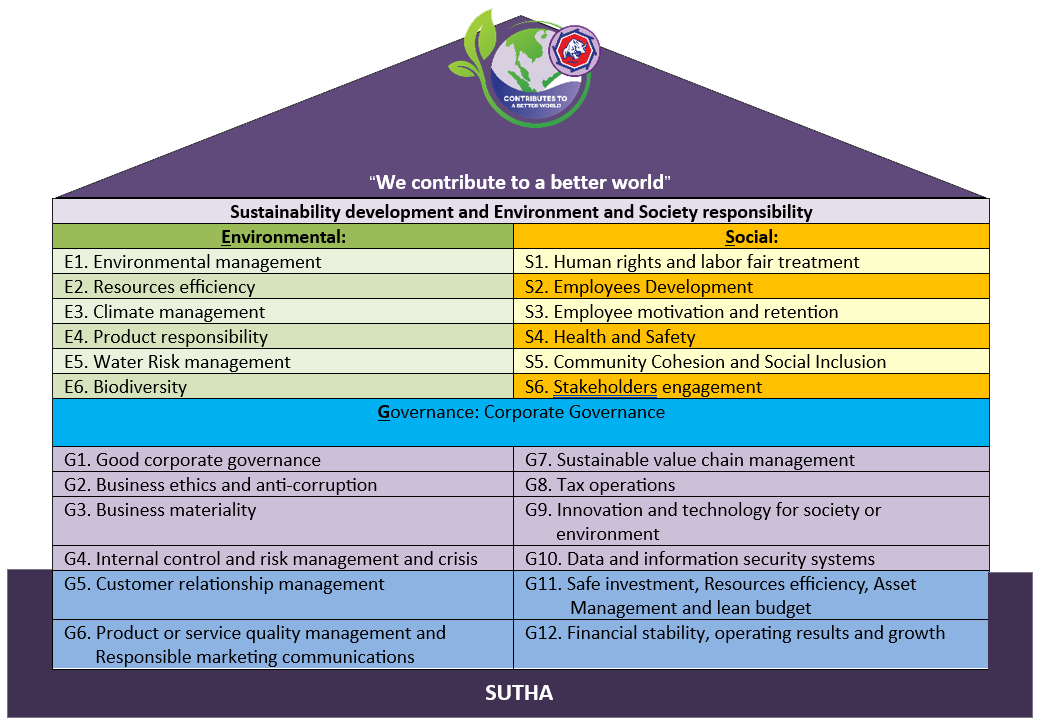
Mission: “We Contribute to a better world”
Policy Document Link
https://www.goldenlime.co.th/csr.asp?lang=E
Sustainability Goals & UN SDGs
Has Sustainability Goals
Yes
Goals Description
“Leading lime manufacturers in Southeast Asia in delivering high value to shareholder and stakeholders.”
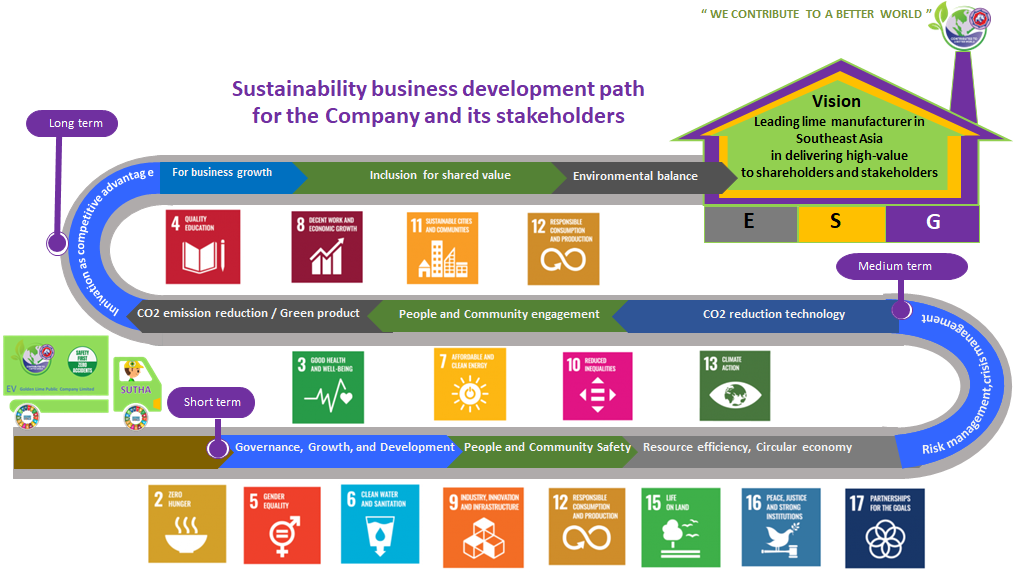
The company has established short-term strategies and goals (1-2 years), medium-term strategies and goals (3-5 years), and long-term strategies (more than 5 years).
The details are disclosed in Section 1, Item 1.1, Policy and Business Overview.
United Nations SDGs that align with the organization’s sustainability management goals
| Goal 2 Zero Hunger, Goal 3 Good Health and Well-being, Goal 4 Quality Education, Goal 6 Clean Water and Sanitation, Goal 7 Affordable and Clean Energy, Goal 8 Decent Work and Economic Growth, Goal 9 Industry, Innovation and Infrastructure, Goal 10 Reduce Inequalities, Goal 11 Sustainable Cities and Communities, Goal 12 Responsible Consumption and Production, Goal 13 Climate Action, Goal 15 Life on Land, Goal 16 Peace, Justice and Strong Institutions, Goal 17 Partnerships for the Goals |
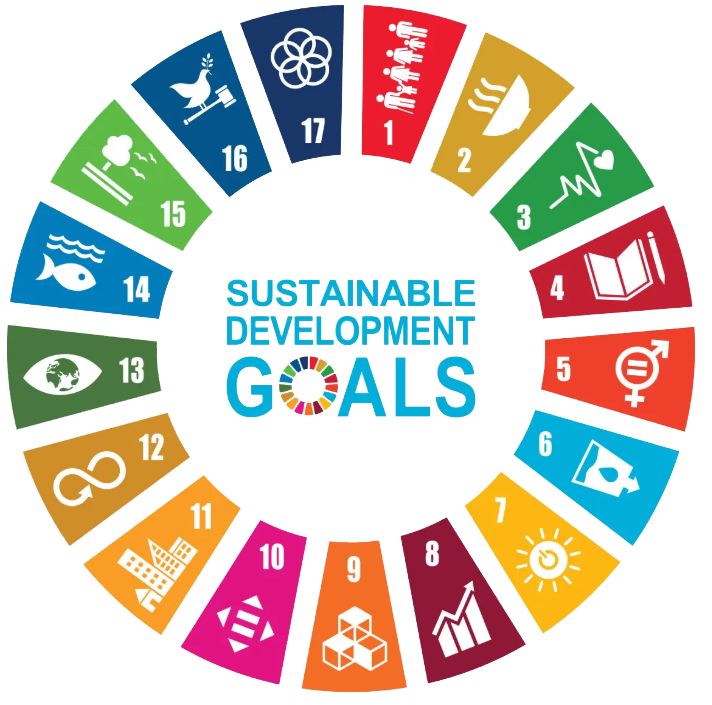
UN Sustainable Development Goals
| SDG Goal |
|---|
| Goal 2 Zero Hunger |
| Goal 2 Zero Hunger |
| Goal 3 Good Health and Well-being |
| Goal 3 Good Health and Well-being |
| Goal 4 Quality Education |
| Goal 4 Quality Education |
| Goal 6 Clean Water and Sanitation |
| Goal 6 Clean Water and Sanitation |
| Goal 7 Affordable and Clean Energy |
| Goal 7 Affordable and Clean Energy |
| Goal 8 Decent Work and Economic Growth |
| Goal 8 Decent Work and Economic Growth |
| Goal 9 Industry, Innovation and Infrastructure |
| Goal 9 Industry, Innovation and Infrastructure |
| Goal 10 Reduce Inequalities |
| Goal 10 Reduce Inequalities |
| Goal 11 Sustainable Cities and Communities |
| Goal 11 Sustainable Cities and Communities |
| Goal 12 Responsible Consumption and Production |
| Goal 12 Responsible Consumption and Production |
| Goal 13 Climate Action |
| Goal 13 Climate Action |
| Goal 15 Life on Land |
| Goal 15 Life on Land |
| Goal 16 Peace, Justice and Strong Institutions |
| Goal 16 Peace, Justice and Strong Institutions |
| Goal 17 Partnerships for the Goals |
| Goal 17 Partnerships for the Goals |
Policy Review
Policy Reviewed This Year
Yes
Policy Changed This Year
Yes
Review Details
In 2025, the company reviewed its annual sustainability policy and developed key sustainability frameworks and goals as follows:
Detailed adjustments were made to expand the scope of asset management under Governance G. 11 to ensure comprehensive asset management practices, recognizing assets as a critical resource.
Policies and intentions for biodiversity management were established, along with goals and strategies to assess impacts and implement measures for biodiversity management."
To assign a team to set directions, policies and implementation plans as per below; (GRI: 2-13, 2-14)
The Board of Directors appointed a sub-committee as the Sustainability Development committee for supporting and directing sustainable development economically, socially, and environmentally to ensure appropriate, sufficient, efficient and effective Company's business operations. The board consists of a member who is a director of the Company and 5 senior executives and 2 senior management and secretary to support coordinator and secretary of the sub-committee and scope of responsibility are detail in structure follows:
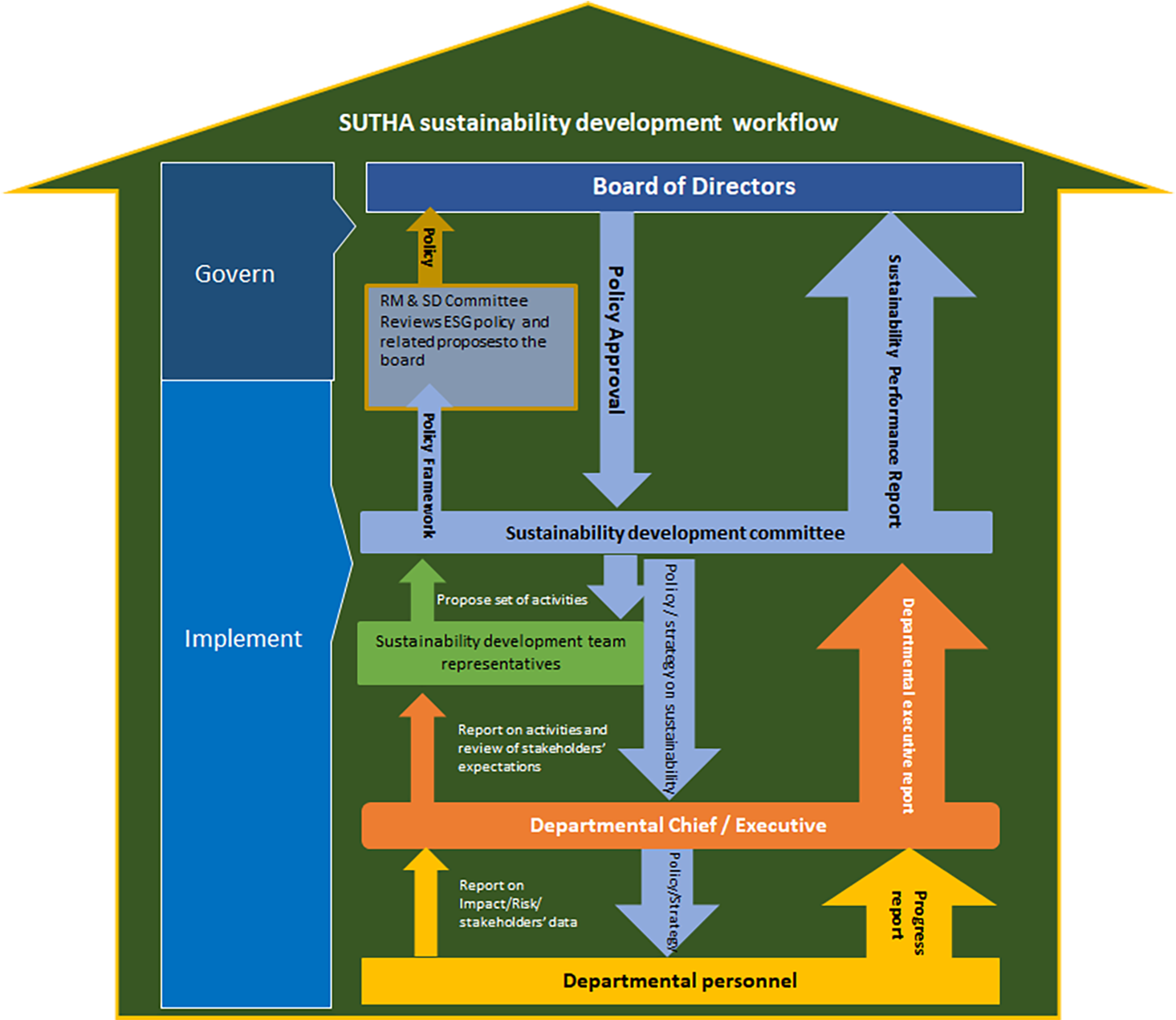
Level | Implementation |
Policy and Governance | SUTHA’s sustainability policy team leader consists of
3.1. Evaluate the sustainability development operational framework established by the major shareholder group to adopt and establish the relevant policies including the targets to propose to the Board as well as lead the company in the direction of sustainability regarding economic, social, and environmental factors following relevant policies to propose to the Board of Directors. 3.2. Encourage sustainability development implementation/ involvement in all areas to facilitate growth and execution. Each department aligns with the sustainability mission: "We contribute to a better world. We join in making the world better.". 3.3. Supervise, advise, review and evaluate the policies and guidelines for sustainability development with social responsibility and environmental concern and ensure such policies continue to be appropriate and compliant with up-to-date standards 3.4. Encourage and support employees across all levels to collaborate and implement strategies for assessing and handling ESG risks, adding value for stakeholders, and fostering business growth alongside key stakeholders. 3.5. Supervise and assign relevant personnel to perform duties and coordinate in accordance with the specified strategies. 3.6. Supervise and ensure that relevant personnel operate within the scope of the value chain by mitigating impacts rising from material sustainability issues that may affect the business and stakeholders. 3.7. Review, change and amend this Charter to keep up with the changing situation and propose revisions to the Board of Directors for consideration and approval. 3.8. Perform other duties assigned by the Board of Directors |
Implementation Management Level | The sustainability management team consists of all department heads and managers to carry out and measure the progress of the organization's development towards sustainability. 1. Managing and implementing the sustainability policy through guidelines and frameworks to drive the organization towards sustainability. 2. Assessing supportingdata to set out the framework, guidelines, and goals to set sustainability indicators to measure progress in sustainability 3. Tracking operational progress against goals, reviewing and analyzing data to improve operations including reporting progress 4. Gathering and recording data according to reporting standards to set out benchmark indicators to measure progress consistently with the disclosure guidelines of listed companies. |
Level | Implementation |
5. Promoting, supporting, raising awareness, communicating in order to create a culture of sustainability within the organization. 6. Communicating policies, strategies, goals, and progress in sustainability operations through the annual report involving stakeholders for both employees and stakeholders’ engagement 7. Follow up and review the sustainability performance to be proposed to the Board of Directors before disclosure to stakeholders 8. Preparing practice guidelines to support sustainability performance. 9. Encourage and support employees to comply with policies and guidelines in accordance with the framework of sustainability practices. | |
Implementation Operation Level | 1. Understanding organizational sustainability 2. Acknowledge and perform as per policies, strategies, goals, and indicators of the sustainability policy and practices. 3. Responsible teamwork as a direct contact with stakeholders in each group bringing the materiality to discuss and set initiatives into an annual work plan 4. The departments in charge summarize activity outcomes and report progress on various initiatives through internal communication channels, such as “BeeKeeper.” They may also prepare summary presentations for projects intended for public disclosure via the company’s website.Additionally, these summarized results are submitted to the management team and/or coordinators appointed by the RM&SD Committee. The coordinators then compile a comprehensive report to present to the committee and relevant stakeholders on an annual basis. |
Secretary and Coordinator of the RM&SD Committee. | Prepare a sustainability development summary report to present progress on sustainability initiatives for disclosure in the annual report, as well as through the company’s website. |
Business Value Chain
Value Chain Description
SUTHA implements supply chain management to deliver maximum value and benefits, positioning itself as a partner that offers products and services that provide optimal advantages and is recognized by customers. To achieve this objective, the management of the business's value chain involves primary and support activities, encompassing seven core processes and three functional areas.
Management of limestone mining and production, procurement of raw materials, fuels, machinery and equipment, transportation and production process support services.
01 | Sourcing materials , Product and Services
1) Quarry management
2) Domestic Sourcing and International Sourcing
3) Inbound Logistics
4) Receiving Process, quality control, inventory management of raw material Payment and settlement
Operations: Plant and production management, storage, packaging, inventory management, quality control and assurance.
02 | Operation: Manufacturing (plant management)
03 | Controls, Screen/Customize and Quality Standard Assurance
04 | Storage, Packing and Efficient Inventory Management
Outbound logistics Services, Sales, Marketing, Business and Product Development, Support, and Management
05 | Outbound logistic Safe logistic with environmental, Social, Community awareness
06 | Sales and Marketing Services product, business, and relationship development for customer satisfaction
07 | Customer (users)
Stakeholder Analysis
Introduction
Materiality Analysis
The Materiality of Business and Sustainability
The consideration to identify the business's key material issues consists of economic sustainability, social and environment related to the Stakeholders of the Company. Those material issues might affect the ability of business conduction and business value-creating for the Shareholders both in the present and future. The Company considered evaluating the material issues and to communicate the business strategies to respond to the Stakeholders expectations which is an important factor for maintaining competitiveness, creating long-term value for the organization and supporting sustainable business operations.
The prioritized material topics are approved by the Sustainability Development Committee and subsequently reported to the Board of Directors for acknowledgment. Details of the process, steps for identifying material issues, and related plans and measures for addressing sustainability topics for the year 2025 can be found at the following link: https://goldenlime.co.th/en/materiality-business-sustainability/
Sustainability issues and Description
Sustainability Topic | Impact | |
E | Environmental | Description |
E1 | Environmental , Pollution and Dust Control and Waste Management | The production process may have certain impacts; consequently, comprehensive management measures are implemented to monitor operations and proactively address any potential disturbances or inconveniences to the community. This approach fosters community acceptance and supports sustainable business operations, thereby minimizing the risk of complaints and reducing the likelihood of disputes with local stakeholders. Maintaining such standards also helps mitigate issues related to license renewals or potential disruptions within supply chain management processes. |
E2 | Resources Management | Effective resource management for cost savings and optimal utilization entails procuring high-quality raw materials—such as stone and fuel—from reputable suppliers in quantities aligned with production requirements. This process also encompasses reducing consumption, efficiently managing resources, minimizing waste, and repurposing lost or discarded materials into marketable products. |
E3 | Climate Change Action | Mitigating the greenhouse gas impacts and preparing for compliance with carbon tax regulations and carbon credit requirements. |
E4 | Product responsibility through enhancing the circular economy | By efficiently using both natural and manufactured resources, businesses aim to lessen environmental impact and lower future resource risks. Repurposing scrap and selling slow-moving inventory improves cash flow, while promoting resource management encourages reuse and circulation of materials. |
E5 | Water management | The area where the plants are situated lacks public water supply systems, requiring the use of groundwater from permitted boreholes for production and consumption. Therefore, it is crucial to adopt strategies for reducing, reusing, and recycling resources. |
E6 | Biodiversity management | Encouraging initiatives that enhance biodiversity involves protecting, restoring, and sustainably managing terrestrial ecosystems. This includes planting trees, improving soil health through lime application, and sustainably managing forest areas for restoration or compensation. Collaboration with partners is essential to bolster positive biodiversity efforts and promote conservation, ultimately increasing green spaces and creating market opportunities for environmental products. |
E7 | Waste management. | Waste management and separated waste according to the methods of the Department of Industrial Works and participation with waste segregation program with stakeholders |
S | Social People and Human Right | Description |
S1 | Human rights throughout the Business Supply Chain | Stay relevant in Human Rights throughout the Business Supply Chain |
S2/S3 | Human Capital: Development, Retention, and Replacement | Employees are crucial to a business's success. Internal and external influences, along with regulatory changes, require the skills and accountability of all individuals. Effective human resource management is essential for improving efficiency and minimizing negative impacts, making it a key sustainability concern. |
S4 | Occupational health & Safety | Safe and well-being of employees, stakeholders and communities |
S5 | Community Relation & Engagement | Good relations and cooperation with the community to be informed of any complaint from the business operations for improvement |
S6 | Developing Stakeholder Collaboration | The management of both internal and external issues requires the engagement of stakeholders to achieve a better world |
G | Economic & Governance | Description |
G1/G4 | Good Corporate Governance , Risk Management and Sustainability Development | Sustainability targets and regulatory changes aimed at enforcing ESG practices related to environmental, social, and governance management, along with risks from climate change and disasters, compel listed companies to modify their policies and strategies. They must align their operations with the standards and methods established by regulatory bodies. |
G5-1 | Customer Focus and Maintaining Long-Term Relationships | The Company recognizes all customers’ applications and needs in enhancing processes to meet diverse product satisfaction. However, some factors may pose challenges, potentially leading to negative outcomes. All issues will be monitored to develop corrective actions aimed at achieving optimal customer satisfaction. |
G6 | Product Continuity and Disruption Prevention | Focusing on product sales to align with budget and customer demands, managing production to meet specifications for different segments, ensuring consistent supply for delivery, and identifying key improvement areas. |
G7 | Sustainable Value Chain Management | Creating a management system aligned with sustainability principles necessitates working together with partners and stakeholders across the entire business value chain. The company has encouraged collaboration with partners and stakeholders to implement management practices that minimize social and environmental effects, while consistently enhancing sustainable practices. |
G | Economic & Governance | Description |
G7-1 | Stable and Secure Raw Material Sourcing | Selecting trustworthy suppliers or reliably securing sources for raw materials and fuel is crucial to guarantee safety, fair pricing, and quality that match planned usage volumes. A reliable supply chain and strong partnerships support sustainable production. |
G9 | Development of New Businesses/Products with Technology and Innovation | Increase sales , acquire new buyers , build and retain new customer base and market expansion involves developing new products to introduce to the same or new markets to compensate the customer loss |
G10 | IT Services and Cybersecurity | Current business operations rely on IT resources, data communication, and networks to drive and conduct transactions. These systems must be developed to prevent disruption, ensure security against cyber threats, and build trust with the company, investors, and key stakeholders. |
G11 | Safe Investments (Expansion, Process Improvement, Technology, Innovation, Investment Efficiency) | To avoid disruptions and promote growth via capacity expansion and process improvement requires investment in technology and innovation. Each initiative is evaluated for returns, payback period, and funding options to ensure secure decision-making and favorable investment outcomes. |
G11-2 | Asset Management for Maximum Returns | The company has an inventory or assets that are slow moving or inactive during certain accounting periods. This covers refractory bricks reserved for repairs, assets waiting for construction or postponed investment, options pending market and economic conditions, and disposal of unused business assets. |
G12-1 | Financial Stability and Management of low-interest rate sources | Effective financial management involves using the proceeds from capital increases in repayment strategy to reduce financial costs and seeking additional loan sources to choose options with the lowest interest rates. The company secures working capital to manage revenue fluctuations, such as market downturns or large fuel imports that require significant funding. |
G12-2 | Cost Volatility and Competitive Pricing Conditions | Mitigating impact of domestic competition through pricing strategies, managing operational challenges, and tackling the critical issue of fluctuating fuel costs. |
Identifying and prioritizing stakeholders
For mutual cooperation to drive SUTHA’s business value chain, SUTHA includes and categorises all supporting stakeholders into groups as follows ;
| Customers who use products |
| Shareholders, either direct or indirect ones |
| Directors, executives, and employees: A company's employees, managers and board of directors make up a business's internal stakeholders. |
| Business partners, contractors, service providers, creditors , and loan providers make up a business's external stakeholders. |
|
|
| Organizations regulating listed companies or supervise, asses the operations of listed companies under the capital market or the Stock Exchange of Thailand. |
| Government agencies and local authorities |
| Other businesses who offer the same or similar goods and services to customers. |






To evaluate and survey the impact of issues within the business supply chain, it is essential to understand the needs and expectations of each stakeholder group. This includes identifying methods to operate or manage effectively in response to these expectations.
Stakeholder Analysis
| Stakeholder Type | Stakeholders | Stakeholder Expectations | Response to Expectations | Communication Activities |
|---|---|---|---|---|
| External stakeholders | 2936 · Other name: Business partners (Raw materials, products and services suppliers or financial institution · Description: Others | • Profitability from business operations, cooperation that reciprocates appropriately and fairly with long term cooperation without problems and obstacles.
• Clarity in product information, services, agreements and conditions including the credit term, guarantee conditions and the fair business agreements
• code of conduct between trading partners.
• Compliance with terms and conditions
• Transparent and fair contract of procurement
• Payments in commercial transactions on time
• Loan repayment and interest on time
• Coordinating, discussing, or sharing information to perform duties including attending meetings to discuss related matters through various communication channels as necessary
Expectations of the Company
- Qualified products without corruption and fraud
- Prompt services and solutions from contractors or contracted parties under rules and regulations with fairly treat to staff and ensure no impact to the Company and community nearby, society, environment and business operation in long run.
- Compliance with supplier code of conduct and procurement guidelines in line with sustainability development
- Cooperation in preparing documents and defining contract details that comprehensively cover risk management and comply with the company’s internal control processes.
- Cooperation in completing various assessments required for compliance with applicable standards and systems.
| • A procurement policy is in place and is implemented in line with the internal controls, the supplier’s code of conduct, and governance policies across different areas.
• in compliance with Quality standards (ISO9001), environmental standards (ISO 14001) and occupational safety and health standards (ISO 45001) and implementation of internal control, codes of conduct and corporate governance in related fields.
• Conduct supplier assessment to prioritize supplier and to monitor compliance with the supplier code of conduct.
• Have the Supplier codes of conduct signed by partners as acknowledgment.
• Listing of trading partners and prioritization of key suppliers.
• Conduct business partnership survey
• Providing products specification sheet for customers
• Launch Meet & Greet in a group for the business partners or in individual for the potential partners to exchange information and discuss through communication channels as needed or remotely meeting
• Inform safety and security measures and any other relevant rules
• Regular communication between responsible persons and the business partners through phone calls, Line and email
• Improved payment process for goods, services and payment via online banking and adjusted payment terms and conditions with a verification system for an accurate and concise transaction which has been carried out
• Fair business agreements and conditions with non-discrimination under both parties’ acceptance.
• In case of the related parties’ transactions, the pricing will be based on Arm’s Length principle and proceed in accordance with the disclosure rules of SET
• Funds gained from the sale of collateral assets shall be used as debt repayments to financial institutions in full amount.
• A “Supplier Day” event is organized to jointly develop business partners, as well as to communicate policies and provide important information to partners.
- Deliver goods and services as per agreed guidelines
- Collaboration to create mutual long-term benefit
- Effective and fair supplier assessment and evaluation
- Arrange “Supplier Day” for suppliers’
- Cooperate and participate in activities organized by the company
| 2942 · Description: Internal Meeting · 2949 · Other name: Meeting & greeting among internal departments · Description: Others · 2949 · Other name: Information from joint meetings or contacts with interested parties within the organization · Description: Others · 2949 · Other name: Information from Subsidiary who operates the limestone quarry · Description: Others · 2949 · Other name: Survey results from various external agencies and from interested parties in similar industries or · Description: Others · 2949 · Other name: Survey and monitoring · Description: Others · 2949 · Other name: Results of the supplier assessment · Description: Others · 2949 · Other name: Supplier risk assessment and priority of key suppliers · Description: Others · 2949 · Other name: High value procurement contracts require high value guarantee along with full process of vendor se · Description: Others |
| External stakeholders | 2936 · Other name: Communities/Social (GRI 413-1) · Description: Others | • Compliance with laws or good corporate governance in driving the business sustainability guidelines
• Preventing various impacts from business process that cause inconvenience in various aspects to nearby communities
• Social and environmental responsibility
• Implement sustainable development guidelines to reduce the impacts of climate change and take action on matters related to all stakeholders
• Production management to reduce the air pollution which affects the community and disclose CO2 emission data
• Promote local employment and community activities arranged by the government agencies, treat labor under Human rights principles throughout the supply chain and proceeding in accordance with the Personal Data Protection Act
• Support traditional local activities such as making merit, community care services and caring for temple Property
• Safety monitoring
• Attentively make use of complaint channel provided by the Company to implement corrective actions properly
The Company’s expectations
• refrain from expressing dissatisfaction without evidence.
• use the company's designated complaint channel on the website, contact the public relations officer.
| • Operate in compliance with environmental standards (ISO 14001), occupational safety and health standards (ISO 45001) and internal control system
• Regulate dust levels and enforce strategies to minimize buildup and protect the community.
• Collaboration from all stakeholders in the organization to participate in the sustainability development practices
• Implement Human Rights principles throughput the value chain
• Mindful investment in manufacturing, tool or processes for preventive measures
• Conducting business with social and environmental responsibility practices that meet international standards in cooperation with stakeholders to drive jointly with throughout the business cycle.
• Regularly and suitably cooperate with corporate governance or government agencies
• Conducting supportive activities with community and government agencies in a number following regulations of government agencies.
• Working time and working methods adjustment in order to comply strictly and cooperate with the government’s protective measures, regulations or guidelines announced by the corporate governance agency
• Attentive to recommendations and comments by continuously adjusting, reviewing and developing, systems or method as an improvement and participation with full force appropriately
• Develop and implement tax policy strictly
• Corrections and improvements as per suggestions or cooperation in relevant activities
• Laying out guidelines, frameworks and methods to monitor if there is any negative impact toward stakeholders to construct preventive measures to prevent recurrent
• Assign representative personnel to participate activities organized by regulatory or government agencies appropriately
• The company encourages community members to report various issues and concerns.
| 2949 · Other name: Meet up with community agencies · Description: Others · 2949 · Other name: Community relations programs · Description: Others · 2949 · Other name: Community relations staff or government agencies · Description: Others · 2949 · Other name: Communication channel through news, newsletter, and others · Description: Others · 2949 · Other name: Conduct community surveys either by the company team when joining annual community events or by lo · Description: Others |
| External stakeholders | 2936 · Other name: Corporate Governance Agencies · Description: Others | • Regulations compliance, policy and work practices established
• Sustainability implementations
• CO2 emission reduction
• Minimize impact to an environment
• Patriciate ESG rating assessment
• Complete and transparent information disclosure
• Equitable treatment to all shareholders
• Govern the business with honesty, integrity, transparency and responsibility with provable data
• Prevention of conflict of interest of directors and executives and the use of inside information
• Corporate internal controls, risk management, crisis management, Human rights due diligence, complaint channel, anti-corruption network
• Sustainability materiality identifications, implementation and reporting
Expectations of the Company
- Provide training and/or recommendations for cost saving, avoiding cost occurred
- Provide and facilitate with document digitization / online training, news to reduce costs and boost Productivity.
- Work together to create systems or tools that streamline tasks, avoid unnecessary repetition, and promote a more organized workflow. | • Regulators prescribe policy, requirements identify work instructions
• Define scope, framework and implementations to respond such expectations
• Review and improve work practices and develop as work instructions / training
• Provide training, workshop regarding new and changing regulations
| 2949 · Other name: • Via Rules, regulations, work guidance · Description: Others · 2949 · Other name: • Policy announcement · Description: Others · 2949 · Other name: • News notified via e mail, corresponding platform · Description: Others · 2949 · Other name: • Training course provided · Description: Others · 2949 · Other name: • Website publication and communication channels · Description: Others · 2949 · Other name: • Surveys and campaign incorporated with various agencies · Description: Others |
| External stakeholders | 2936 · Other name: Government Agencies · Description: Others | • compliance with laws or good corporate governance in driving the business sustainability guidelines
• Preventing various impacts from business processes that cause inconvenience in various aspects to nearby communities
• Cooperate in providing information and support projects run by government agencies
• Cooperate and promote to comply with the government’s protective measures, regulations or guidelines announced by the corporate governance agency
• Safety control
• Equitable treat to all labor
• Adhere to tax ethics
• Strictly follow government authorities’ instructions
• Immediate correction
• Quick response to the authorities’ inquiries
The Company’s expectation
• Fair and transparent assessment of duties and taxes with no delay except for tax refund
• Clear and reliable practice of new or existing authorities ‘work practices
• Concise requirements
• Provide exact and clear Focal point for government affairs
| • Regularly and suitably cooperate with corporate governance or government agencies.
• Pollution control in the community nearby the business
• Implementing Human rights principles throughout the value chain
• Develop and implement tax policy strictly
• Conducting supportive activities with community and government agencies following regulations of government agencies.
• Working time and working methods adjustment to comply strictly and cooperate with the government’s measures, regulations announced by the corporate governance agency
• Assign representative personnel to participate activities organized by regulatory or government agencies appropriately
• The government and regulatory agencies offer investment promotional advantages such as Tax benefits, guidance, training courses at no cost, discounted annual fee, etc. with providing idle period for listed companies to make a change and adjust to comply new regulations.
| 2949 · Other name: Meet up with community agencies · Description: Others · 2949 · Other name: Community relations staff or government agencies · Description: Others · 2949 · Other name: Onsite visit and related assessment · Description: Others · 2949 · Other name: Government’s announcements or regulations for cooperation to prevent any contingency situations an · Description: Others |
| External stakeholders | 2898 · Description: Competitors | •Compliance with laws or good corporate governance in driving the business sustainability guidelines
•Preventing various impacts from business processes that cause inconvenience in various aspects to nearby communities
•Cooperate in providing information and support projects run by government agencies
•Cooperate and promote to comply with the government’s protective measures, regulations or guidelines announced by the corporate governance agency
•Safety control
•Equitable treat to all labor
•Adhere to tax ethics
•Strictly follow government authorities’ instructions
•Immediate correction
•Quick response to the authorities’ inquiries
The Company’s expectation
•Fair and transparent assessment of duties and taxes with no delay except for tax refund
•Clear and reliable practice of new or existing authorities ‘work practices
•Concise requirements
•Provide exact and clear Focal point for government affairs
| • Regularly and suitably cooperate with corporate governance or government agencies.
• Pollution control in the community nearby the business
• Implementing Human rights principles throughout the value chain
• Develop and implement tax policy strictly
• Conducting supportive activities with community and government agencies following regulations of government agencies.
• Working time and working methods adjustment to comply strictly and cooperate with the government’s measures, regulations announced by the corporate governance agency
• Assign representative personnel to participate activities organized by regulatory or government agencies appropriately
• The government and regulatory agencies offer investment promotional advantages such as Tax benefits, guidance, training courses at no cost, discounted annual fee, etc. with providing idle period for listed companies to make a change and adjust to comply new regulations. | 2949 · Other name: Business meets ups · Description: Others · 2949 · Other name: Information disclosed on website, news and marketing channel · Description: Others · 2949 · Other name: External Survey results · Description: Others |
| External stakeholders | 2923 · Description: Customers | • Qualified products and services as per requirements without affecting the production process, community and environment.
• On time delivery
• Standard packaging meeting storage and logistics requirements
• After-sales service and accurate and timely supportive documentation
• Selling prices aligned with market trends.
• Follow safe logistics rules and health and safety , environmental standard and while ensuring compliance with labor laws and human rights regulations.
• Follow supplier code of conduct
• Collaboration to drive business sustainability and greenhouse gas emissions data
Expectations of the Company
• Requirements and obligations in terms and conditions; no pressure, no urgent deadlines, and flexibility to negotiate.
• Reasonable and suitable pricing aligned with the cost structure.
• Prevention of insider information leaks to competitors for negotiation or unfair benefits.
• Fostering relationships for sustainable business growth.
• Involvement in environmental initiatives like CO2 reduction, renewable energy, and biofuels.
| • Implement international standard systems such as quality (ISO 9001), environmental (ISO 14001), and occupational health and safety (ISO 45001) standards, along with internal controls, business ethics, and corporate governance policies aligned with sustainability standards.
• Create a customer care system that tailors processes to meet the unique needs of different customer groups, aiming for improved satisfaction survey results.
• Monitor work processes in all relevant departments to ensure the delivery of products and services that align with customer requirements.
• Provide training for customer-facing teams to enhance their knowledge of products and services, as well as to develop skills for managing customer relationships effectively.
• Establish a process for addressing issues related to product quality and performance, including troubleshooting to prevent reoccurrences.
• Provide technical experts to assist in product application, offering guidance and additional services both before and after the sale.
• Innovate new products and broaden the customer base by focusing on environmentally sustainable options.
• Engage in activities organized by customers to strengthen relationships.
• Make sure to load promptly to reduce waiting periods.
• Focus on minimizing customer complaints and enhancing satisfaction scores.
• Prioritize product quality and responsibility in all operational processes to maximize customer satisfaction.
- Sustainable Development Goals (SDGs)
G5, G6, G9, G1, G4
• The pricing strategy is based on the cost -based pricing and the market mechanism
• Strong and mutually beneficial trade relationships
• Invest in process improvement to meet customer needs
• Equip machinery with dust control systems that function without water to minimize dust emissions and help conserve water resources.
• Collaborative efforts are in progress to drive business growth through sustainable methods, fostering beneficial partnerships and ensuring steady, long-term development.
| 2949 · Other name: • Engaging in meetings and visits to gather feedback or participating in discussions via different communication platforms. · Description: Others · 2949 · Other name: • Survey customer satisfaction · Description: Others · 2949 · Other name: • Customers touring the facility and observing processes. · Description: Others · 2949 · Other name: • Utilizing technologies to connect with customers and relevant officials. · Description: Others · 2949 · Other name: • Attending Supplier Days hosted by customers to understand their policies and expectations. · Description: Others · 2949 · Other name: • Information shared by customers through media or accessible survey sources and government databases. · Description: Others |
| External stakeholders | 2913 · Description: Shareholders · 2936 · Other name: Investors · Description: Others | • Efficient management ensures business stability, continuous revenue generation, and opportunities for growth.
• Enhance capital gains for better return on investment.
• Ensure regular and fair dividend distributions.
• Manage profits and cash flow effectively to maintain steady dividend payments.
• Facilitate liquidity in securities trading.
• Uphold strong corporate governance with accurate and transparent disclosures.
• Maintain business stability and sustainable performance.
• Provide a secure investment that fosters business growth.
Expectations of the company
• Shareholders consider long-term investment.
• More engagement to create advantageous sponsorships for businesses.
• Comprehensive understanding of business operations, market conditions, competition, and compliance with corporate governance and legal requirements.
• transparent co-investing to benefit all parties and ensure fair returns for stakeholders through open business practices.
| • Develop a corporate governance policy and guidelines that establish standards for operational systems, risk management, internal audit controls, transparent management, and current policies aligned with the 2024 Corporate Governance Assessment program.
• Implement risk management strategies for crisis situations, including asset management.
• Create a roadmap for business sustainability and stability, along with a sustainability management policy to collaboratively advance these initiatives.
• Organize shareholder meetings and engage with investors and minority shareholders.
• Regularly hold meetings with major shareholders.
• Set a consistent dividend payment policy with an appropriate rate.
• Pursue growth investments through business acquisitions to enhance and secure the supply of limestone raw materials, establishing a strong industrial and agricultural foundation both nationally and globally.
• Enhance business operations to achieve returns aligned with strategic goals.
• Manage the solar farm project to produce electricity and initiate further projects that provide economic, social, and environmental benefits.
• Build investor confidence for a long-term, healthy relationship by offering knowledge support and fostering an understanding of business regulations and cultural differences across countries.
• Support business growth by providing technical expertise and a network for directors and executives to ensure effective management and solutions that promote stability and sustainability.
• Policy decisions and controls reflect the business context, competitive landscape, and current obligations. The executives and management need to act promptly and knowledgeably, adjusting policies when necessary to manage efficiently and thrive in a dynamic environment.
| 2941 · Description: Online Communication · 2944 · Description: Annual General Meeting (AGM) · 2949 · Other name: • Gather feedback through shareholder meetings · Description: Others · 2949 · Other name: • Feedback gathered during Shareholder meetings · Description: Others · 2949 · Other name: • Input and remarks collected from Opportunity Day · Description: Others · 2949 · Other name: • Communication with investors through phone and email · Description: Others · 2949 · Other name: • Meetings with both direct and indirect shareholders • Execution of corporate policies set by major shareholders · Description: Others · 2949 · Other name: • Execution of corporate policies set by major shareholders · Description: Others · 2949 · Other name: • Interaction via phone, email, and website · Description: Others · 2949 · Other name: • Survey findings from different external organizations and stakeholders in similar sectors or other publicly traded companies · Description: Others |
| Internal stakeholders | 2897 · Description: Board of director · 2921 · Description: Employees · 2936 · Other name: Executives · Description: Others | Directors – executives
• Compensation is fair, competitive, as proposed for shareholder approval.
• Professional dignity without effect on business reputation
• Disclose accurate and transparent information with sufficient care and respect to others’ rights and honor
• Training sessions provided to enhance the performance of directors
• Online meeting platforms will be made available, with regular virtual meetings held at least once annually. Additionally, strategic meetings will be organised for board members as required.
• Effective meeting agenda with time proper time allocated
• Proper frequency of executives meeting
Expectations of the Company
• Set aside enough time to complete tasks effectively.
• Focus on identifying and minimizing barriers in every process.
• Develop a contingency plan before potential risks materialize.
• Foster open communication for better mutual understanding.
• Oversee responsibilities diligently, aiming for the greatest benefit to the company and its operations.
• Act with careful consideration for all stakeholders involved.
• Carry out responsibilities with integrity, caution, and transparency.
• Collaboratively manage and oversee the business to ensure sustainable growth that benefits shareholders and stakeholders alike.
Employees
• Regular compensation and good welfare,
• Annual bonus for employees at all levels
• Additional paid holidays over the law’s basis
• Added special holidays according to the Government’s announcement
• Annual Party and leisure activities for employees
• Good working environment and job safety
• Human rights respect and equal treatment without disparity
• Training and knowledge, career path development for advancement, stability and balancing wages as per economic conditions.
• Providing sufficient IT support services and assisting each user to help users adapt to new applications and maximize the benefits of technology.
Expectations of the Company
• Compliance with company policies, codes of conduct, regulations, operational manuals, best practices for internal control, as well as adherence to organizational values and core behaviors.
• Perform duties responsibly, cautiously, honestly, and responsible for products, services, society and the environment with conciseness to prevent negative impacts toward the organization or other stakeholders
• Operate safely happily at work, focus on health, self-development, work method development, cooperate and communicate appropriately, remain with the company for a lengthy period
• Develop knowledge, skills and pay attention to the stakeholders to operate in accordance with the policy and guidelines set by the executives, the Board of Directors, and shareholders to drive the business growth and sustainability.
• Be responsible, be inclusive and participate in brainstorming to develop creative practices and solutions for organizational sustainability.
| • Summarize and clarify regulations, guidelines, and reasons for any changes in practices that need to be reported to the board.
• Manage and mitigate risks to minimize negative impacts.
• Establish an acceptable risk level and preventive measures
• Control and prevent disputes, complaints, and issues related to human rights, the environment, or corruption risks.
• Enhance oversight across the supply chain for both internal staff and related parties.
Employees
• Develop work manuals, conduct training sessions, assess employee performance, ensure fair treatment of workers, uphold human rights, and share relevant policy information through the website, bulletin boards, and internal communication channels to enhance understanding among employees.
• Supply essential information and provide adequate tools and equipment to facilitate job responsibilities.
• Formulate compensation policies by analyzing economic trends, strategic plans, and operational outcomes.
• Offer suitable welfare benefits that align with the living conditions of each workplace.
• Establish a safe and conducive working environment.
• Ensure that appropriate safety gear is available for employees and others working in the factory.
• Modify working hours and guidelines at each location to ensure consistency and appropriateness, benefiting both the organization and its employees.
• Announce holidays in accordance with legal requirements and add significant holidays judiciously to manage overall costs effectively.
• Plan annual social and recreational events for employees and management, considering convenience, minimizing travel risks, and enhancing employee satisfaction based on the establishment's location.
• Create and distribute employee handbooks, develop manuals and safety symbols, and provide safety equipment tailored to each establishment's conditions.
• Organize training sessions and send teams to participate in courses covering work systems, safety, new regulations, and sustainability development.
• Develop essential and relevant work manuals.
• Implement systems and software to support teleconferencing in line with electronic meeting standards across all departments.
• Set up communication systems to facilitate information exchange between the company and its employees.
• Distribute opinion surveys to gather employee feedback effectively.
• Developing various activities to enhance employee participation
• Installing equipment for online training for employees
| 2942 · Description: Internal Meeting · 2947 · Description: Satisfaction Survey · 2949 · Other name: • Board and subcommittee meetings · Description: Others · 2949 · Other name: • Updates from the welfare committee · Description: Others · 2949 · Other name: • Collaborative meetings within internal departments and communication · Description: Others · 2949 · Other name: • Queries from designated individuals, feedback collected through annual performance assessment · Description: Others · 2949 · Other name: • Data from employee satisfaction assessments · Description: Others · 2949 · Other name: • Insights from external organizations representing stakeholders in comparable sectors or publicly traded companies · Description: Others · 2949 · Other name: • External factors, including shifts in living conditions due to crises · Description: Others · 2949 · Other name: • Government initiatives, relevant governmental bodies, and corporate governance organizations · Description: Others · 2949 · Other name: • Trends and challenges in sustainability examined by various national and global agencies · Description: Others · 2949 · Other name: • Benchmarking against sectors or industries with similar operational characteristics · Description: Others · 2949 · Other name: • Comparisons with firms within the same Market Cap category · Description: Others |
Environmental Sustainability — Overview
Operating Results — Introduction
Goals, indicators, and controls, including quantitative measures of environmental performance, must be incorporated into the sustainability framework to guarantee that environmental outcomes are in accordance with sustainability development principles.
No. | Goal | 2025 | |
target | performance | ||
1 | Environmental law compliance | 100% | 99.55% |
2 | Meet legal indicators of environmental law | 100% | 96% |
3 | Community complaints on Impact of dust from process
| 0 | 8 (rectified and closed) |
4 | establishments certified and controlled by environmental management system standards:
| Certified for 6 out of 9 kilns at the site, representing 66.67%. | 66.67% |
5 | Environmental Certification and Third-Party Auditing:
| 1 Branch (CS plant) 6 kilns All operating establishments: 100% | 1 Branch (CS plant) 6 kilns All operating establishments: 100% |
6 | Fines or expenses incurred to compensate for or restore environmental damage resulting from disputes. | - | - |
Air Quality measured from the Stack
| Year/ Parameter | Total Suspended Particular (TSP) | Carbon monoxide (CO) | Oxides of Nitrogen (Nox) | Sulfur Dioxide (SO2) | |
(The Average Measurement) From the Stack
| Average Result | Standard | 320 | 690 | 400 | 700 |
2566-2023 | 109 | 269 | 135 | 5 | ||
2567-2024 | 98 | 329 | 219 | 1 | ||
2568-2025 | 81 | 391 | 134 | 15 | ||
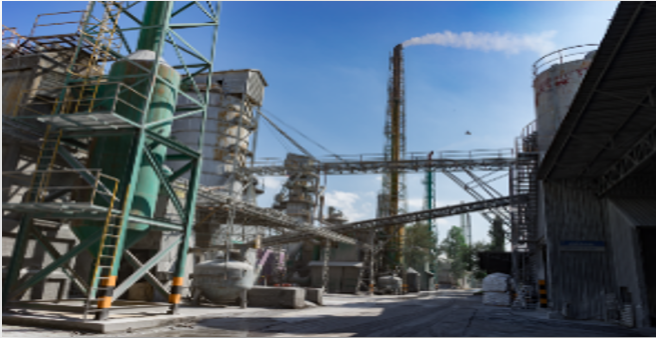
Measurement of Air Quality in the work area
Location | Parameter | Standard | 2023 | 2024 | 2025 |
1. Maintenance Area | Benzene | 10 ppm | 0.01 | <0.02 | <0.016 |
Iron Oxide Fume | 10 mg/m3 | 0.007 | <0.001 | <0.001 | |
2. Calcium Plant | Respirable Dust | 5 mg/m3 | 5 | 1.024 | 0.624 |
3. Hydrate Plant | Respirable Dust | 5 mg/m3 | 1.583 | 0.917 | 0.391 |
4. Kiln Area | Total Dust | 15 mg/m3 | 1.759 | 2.454 | 3.833 |
5. Lab | Hydrochloric acid | 7 mg/m3 | 0.01 | <0.01 | 0.090 |
6. Grinding Plant | Total Dust | 15 mg/m3 | 10 | 0.722 | 4.5 |
7. Hydrate3-4 | Respirable Dust | 5 mg/m3 | 3.5 | 4.845 | 0.167 |
Control of noise impact from the production process.
There are the points that cause noise in the production process, including the operation of Blower System installed in the closed concrete wall building and other noise-causing systems which are not heavy machines. Besides, control equipment in the process is installed to minimize the impact of noise pollution in order to meet the noise pollution control standards.
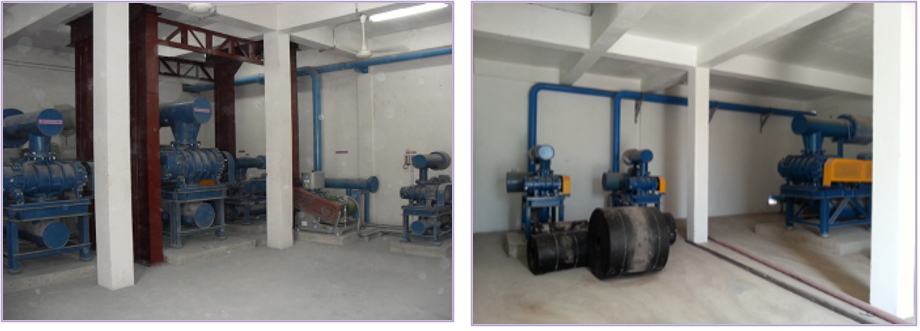
Measurement Area | 2023 | 2024 | 2025 | |||
Standard | Standard | Standard | Standard | Standard | Standard | |
(Leq. 8 hrs. : dBA = 85) | (Lmax: dBA = 140) | (Leq. 8 hrs. : dBA = 85) | (Lmax: dBA = 140) | (Leq. 8 hrs. : dBA = 85) | (Lmax: dBA = 140) | |
Lime handling Kiln 1 | 83.5 | 99.7 | 81.4 | 105.1 | 80.3 | 93.4 |
Lime handling Kiln 2 | ||||||
Lime handling Kiln 3 | 84.6 | 102.0 | 82.4 | 97.0 | 88.1 | 98.2 |
Lime handling Kiln 4 | ||||||
Lime handling Kiln 5 | 85.0 | 103.0 | 87.5 | 101.1 | 91.6 | 104.4 |
Lime handling Kiln 6 | 84.5 | 104.7 | 88.1 | 102.7 | ||
Packing Area Hyd Plant 1 | 81.1 | 96.7 | 78.2 | 97.7 | 67.8 | 90.4 |
Packing Area CaCO3 plant | 75.0 | 86.6 | 91.4 | 96.1 | 74.5 | 92.7 |
Packing Area Grinding Plant RM-3 | ||||||
Packing Area Grinding Plant RM-4 | ||||||
Control room Grinding Plant | 82.2 | 101.1 | 73.9 | 98.8 | 69.0 | 83.0 |
Average | 82.3 | 99.1 | 83.3 | 99.8 | 78.6 | 93.7 |
Controlling the impact of temperature and heat from the production process
Heat generated by the burning process does not affect the environment in any heat-related way because the kiln system is closed with brick insulation to prevent heat from leaking out of the kilns. Furthermore, the points with possible impact are controlled by measuring the temperature of heat in the areas with possible impact.
Measurement Area | 2023 | 2024 | 2025 |
Standard (34oC) | Standard (34oC) | Standard (34oC) | |
| |||
| 29.0 | 30.3 | 29.7 |
| 29.4 | 31.8 | 29.9 |
| 29.1 | 30.6 | 28.6 |
Average | 29.2 | 30.9 | 29.4 |
Factory water recycle system effluent quality
For the Company’s activities, water is used for the production process, including spraying water to wash stone before entering the burning process in the kilns. A water consumption system includes the pit and installation of piping system to circulate the used water back to the cesspit by sedimentation in the pit. After going through a sedimentation process, the water is reused. Sludge in the pit, which includes bits of earth, mud from washing stone mixed with the dust of lime from the production process, will be dumped, scooped out for utilization such as use to adjust the factory areas, donation to the temples, the schools, the villagers for land fill, etc.
As to Water recycle system based on the standard of industrial wastewater according to notification of the Ministry of Industry No. 2 1996 (B.E. 2539) issued under the Factory Act 1992 (B.E. 2535), the Company has measured the quality of used water as follows:
The volume of Wastewater released beyond the factory.
Unit | 2023 | 2024 | 2025 | |
Water (effluent) discharge | cubic meter | No water drained outside the factory | No water drained outside the factory | No water drained outside the factory |
The factory's wastewater system recirculates water internally, ensuring that it is not discharged into the public domain. As a result, it has no impact on the external environment. | ||||
Measurement | Method | Standard | 2023 | 2024 | 2025 |
pH* | pH Meter | 5.5-9 | 12.2/1 | 12.400/1 | 12.000/1 |
Suspended Solids | Dried at 103-105 oC | 50 mg/l | 4,670/2 | 110.000 | <3 |
Total Dissolved Solids | Dried at 103-105 oC | 3000 mg/l | 1,950 | 980.000 | 1050 |
BOD5 | Azide Modification | 20 mg/l | <2 | <2 | <2 |
COD | Closed Reflux | 120 mg/l | <5 | 9.000 | <5 |
Oil & Grease | Partition & Gravimetric | 5 mg/l | <5 | <5 | <5 |
(Latest year data presented)
(*) 1) The Water quality test report shown is of the Chong Sarika branch published in the annual report. Every plant obtains this kind of report in accordance with the specified standards, except for the pH value, where the pH value (pH) ranges between 5.5 - 9.0
2) Suspended solids refer to insoluble solids or particles that are suspended in water or a medium. These particles are small and lightweight due to the recirculation of water back into the sedimentation pond. Therefore, measurements of water from the sedimentation pond will show high levels of suspended solids resulting from sediment accumulation during the process.
Volatile organic compound emissions (VOCs)
Unit | Y2023 | Y2024 | Y2025 | |
Volatile Organic Compounds Emission (VOCs) | kilograms | Non-volatile substances used in main process | Non-volatile substances used in main process | Non-volatile substances used in main process |
Note: The company does not use volatile organic compounds in its operations. Gasoline for vehicles is purchased off-site; there are no on-site fueling facilities. | ||||
Environmental Assessment and Management
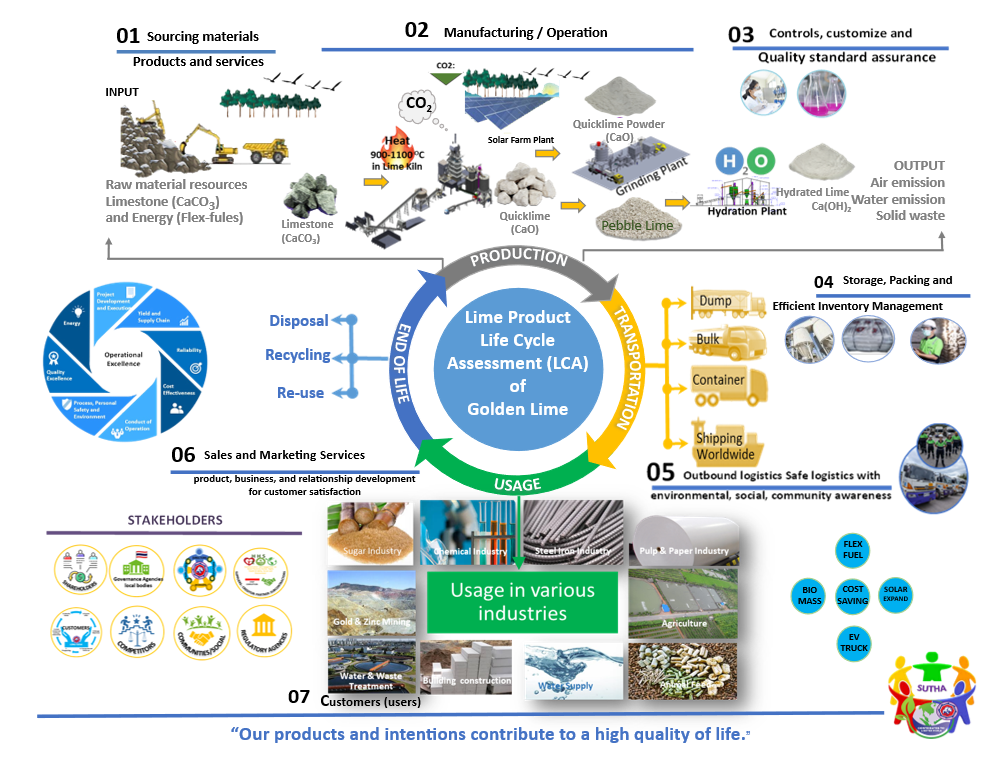
SUTHA has implemented the Product Life Cycle (PLC) and Life Cycle Thinking framework as a systematic approach to identifying and managing environmental concerns. This is facilitated through the Environmental Aspects – Product Life Cycle (EMFM0302) assessment document, which comprehensively addresses all major stages, including raw material and fuel acquisition, production processes, storage and utilization of substances and materials, transportation and distribution, as well as waste management and disposal.
The company assesses activities, products, and services by identifying environmental impacts such as resource depletion, air pollution, noise, odor, nuisance, and health and safety. These findings inform planning and are incorporated into operational controls and environmental strategies, including:
From the outset, select and assess stakeholders within the supply chain for raw material or resource sourcing to effectively manage impacts.
Establish occupational health and safety protocols—such as PPE, training, and hazard prevention—for activities involving dust, noise, heat, and electrical hazards, including engineering solutions like grounding.
Implement preventive maintenance (PM) for machinery and vehicles to minimize risks and reduce malfunctions.
Carry out waste management and sorting initiatives, targeting waste produced from spare parts, packaging, and cleaning supplies through dedicated programs.
Regulate wastewater using treatment systems to control related activities.
Ensure safe transportation and delivery by conducting annual vehicle inspections and executing PM plans to mitigate smoke, noise, and employee risk.
The company maintains assessment and control documentation in compliance with prescribed retention periods and assigned responsibilities, thereby facilitating continuous monitoring and operational evaluations.
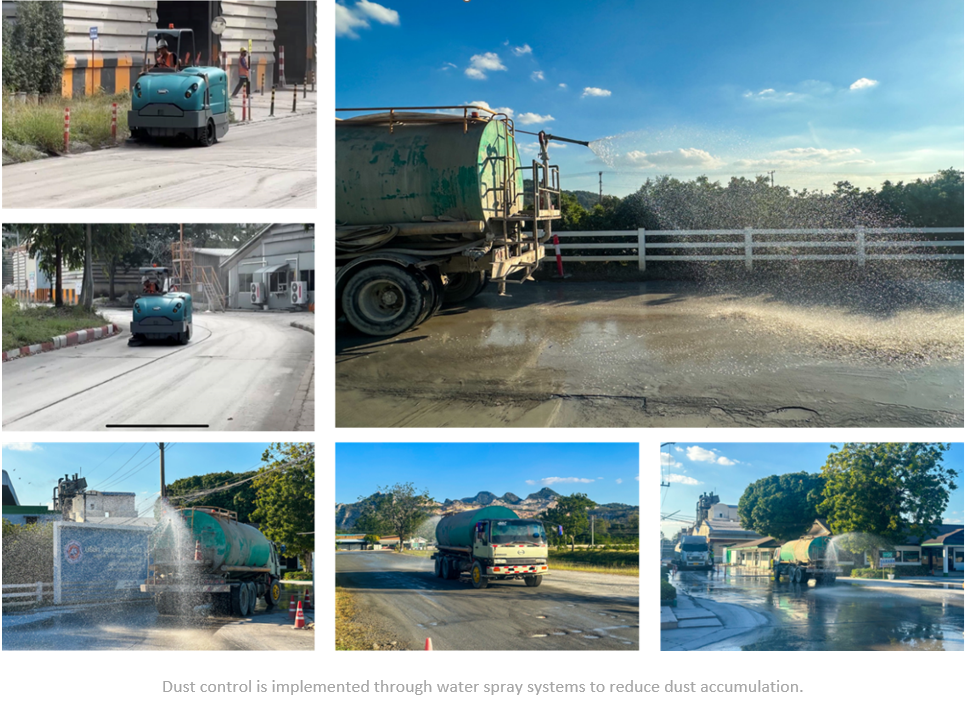
In addition, to effectively manage and mitigate dust-related issues originating from operational activities, the company has implemented comprehensive dust control measures. These include upgrading and installing machinery, enhancing dust extraction systems, and minimizing dust accumulation through practices such as water spraying.
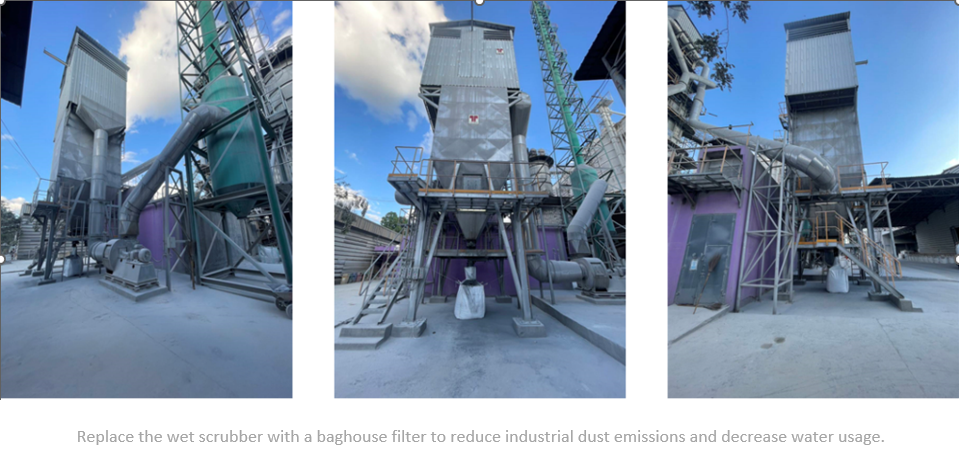
Environmental Policy & Guidelines
Has an Environmental Policy
Yes
Policy Description
“We contribute to a better world”
Sustainability development and Environment and Society responsibility
E1. Environmental management
E2. Resources efficiency
E3. Climate management
E4. Product responsibility
E5. Water Risk management
E6. Biodiversity
E1. Environmental management
Principles
Adhere to ISO 14001 to ensure efficient environmental operations to reduce risks and expenses that may result from violations or consequences of non-compliance with environmental requirements.
Guidelines
1.Environmental management in accordance with ISO 14001
“ The Environment policy ” is as follows:
Golden Lime Public Company Limited is committed to responsibly manufacturing and
distributing calcium oxide, calcium hydroxide and calcium carbonate with quality
according to customer needs with environmental awareness by continuous environmental improvement
and development in accordance with the laws, Environmental customer requirements and
other requirements as per following guidelines
1) Promote energy and natural resources optimization, prioritize resource efficiency
2) Pollution-control strategies, in general, seek to manage a pollutant and reduce its impact upon the environment
3) Set objectives, goals and continuously improve environmental operations.
4) Adherence to environmental laws, regulations, guidelines, and specifications relevant to business processes.
5) Providing information and training to all employees and persons working for, or on our behalf to encourage effective contribution to our environmental goals.
This policy is in writing. and conveyed to all employees and those working on behalf of the organization to put into practice continuously which can be disclosed to the public
2. Designated persons to manage environmental issues
3. Targets, indicators, and controls are in place
4. Disclose quantitative outcome obtained from environmental treatment and products
Air Quality Management
Principles
The production of limestone and lime involves grinding and crushing limestone, as well as processing calcium carbonate. This process generates dust, smoke, and gases that can contribute to air pollution and degrade air quality. To mitigate these effects, policies and guidelines have been established to minimize the impact and implement measures aimed at controlling and preventing dust-related issues that may affect nearby communities.
Guidelines
1. Regulatory Compliance:
• Adhere to relevant local, national, and international environmental laws and regulations.
• Apply best practices and standards for managing air quality
2. Pollution Prevention:
• Prioritize pollution prevention at the source by altering or creating manufacturing processes that utilize materials to lessen impacts and enhance operational efficiency.
• Encourage the adoption of clean technologies and renewable energy options.
3. Pollution emission Control:
• Implement and maintain state-of-the-art emission control systems to capture and minimize pollution.
• Consistently monitor and document emissions to ensure adherence to environmental regulations.
4. Continuous Improvement:
• Perform environmental impact assessments and regular audits to pinpoint areas needing enhancement.
• Allocate resources for research and development to discover innovative pollution control methods.
5. Stakeholder Engagement:
• Maintain open communication with stakeholders regarding environmental performance and initiatives.
• Collaborate with communities, government bodies, and other organizations on projects aimed at improving air quality.
6. Employee Engagement:
• Provide education and training for employees on environmental policies and practices.
• Encourage employee involvement in environmental initiatives and ongoing improvement efforts.
Dust and Gas Control Measures
• Dust and gas control system: Implement a system to minimize dust and gas emissions from production activities.
• Closed system: Utilize a closed system for material storage management to prevent dust dispersion.
• Water spraying: Employ water spraying methods to control dust during material handling and transport.
• Green buffer zone: Establish a green buffer zone by planting trees and vegetation around the facility to mitigate dust.
• Regular cleaning: Ensure equipment, vehicles, and facilities are kept clean to avoid dust buildup.
• Inspection and reporting: Continuously assess air quality and provide reports to relevant authorities.
Noise controls and mitigations
The production process will involve sources of noise, such as the large fan system (Blower System), which is housed within a closed concrete structure. Other noise sources will not include heavy machinery but will involve control devices used in the process. These control devices are implemented to mitigate noise pollution and ensure compliance with noise control regulations.
• Noise control system: Implement a system designed to minimize noise emissions during production.
• Use of noise-dampening materials: Incorporate materials that reduce noise in both production and construction activities.
• Equipment upkeep: Regularly clean and maintain equipment to minimize noise generation.
• Monitoring and reporting: Routinely assess noise levels and communicate findings to the appropriate authorities.
Wastewater quality management without discharge
• An internal wastewater treatment system that utilizes water circulation for coagulation and reuse.
• The use of lime in the coagulation process, which is an eco-friendly approach to wastewater treatment.
• Equipment upkeep: Ensure cleanliness and proper maintenance of treatment system equipment, water pumps, and related components.
• Ongoing inspection and reporting: Regularly monitor wastewater quality and communicate findings to the appropriate authorities.
Water utilization in the production process involves
- Spraying water to clean stones prior to their introduction into the kiln for burning.
Water management system:
• A pond and piping system are in place to redirect used water back to the storage tank.
• Used water will settle in the tank.
• Water is recycled following the sedimentation process.
Sludge in the pond
• Mud from the stone washing and cement dust from production activities.
• Dredging and removal for various uses, such as:
- Leveling the factory grounds.
- Donating to temples, schools, and local communities.
- land filling.
Wastewater Quality Monitoring
Measurement operations yield results that meet the specified standards, except for pH, which ranges from 5.5 to 9.0.
Remark: the water properties used in the company's system showed a pH value between 11 and 13 during inspection, indicating high alkalinity. This is due to the use of lime products, which exhibit high alkalinity when water circulates within the production process. The water quality measured reflects this high alkalinity. However, since the factory's wastewater system operates as a closed-loop system and does not discharge into the environment, it does not pose any external risks.
Thermal Management
The thermal produced during the manufacturing process, especially during calcination, does not affect the environment since the kilns function as a closed system with brick insulation to contain the heat. Key points are monitored to assess temperature and heat values that might have an impact.
Additionally, there is a machine process control system utilizing PLC technology and visualization. This allows for parameter adjustments to optimize the machine's operation, particularly in controlling the combustion process in the lime kiln. The system can regulate oxygen levels and temperature to ensure efficient combustion, thereby minimizing carbon dioxide (CO2) emissions produced when limestone is heated above 900 degrees Celsius (CaCO3 + Heat = CaO + SO2).
Environmental Management
https://www.goldenlime.co.th/environment-management
E2. Resource efficiency
Principles
Effective resource management enhances efficiency and reduces the risk of depleting natural resources like limestone, electricity, fuel, energy, and water. The Company prioritizes efficient resource and energy use, focusing on waste reduction, repurposing scrap, and ensuring benefits for both the organization and the community. This also includes managing water resources and implementing strategies to mitigate negative impacts to the community.
Guidelines
1.Resources efficiency and energy reservation policy is in place
The Company has implemented policies to serve as guidelines for energy conservation, enabling all employees and stakeholders to engage in energy management and resource efficiency within the organization for optimal performance. This is regarded as a key responsibility in operations, outlined as follows:
1. The Company will manage energy and resources effectively, integrating energy conservation into
its operations, and recognizing that energy and resource stewardship is a duty shared by executives
and all staff members who will actively participate in these efforts.
2. The Company will appropriately conserve energy and resources based on the specific needs
and consumption levels of each unit.
3. The Company is dedicated to adhering to all regulations concerning energy conservation and
the management of energy and resources.
4. The Company will strive for continuous improvement in the efficiency of energy and resource utilization,
aligning with best practices.
2. Monitoring the use of key resources includes:
- Electricity consumption
- Energy consumption
- renewable / clean energy
- Fuel consumption (diesel, gasoline, NGV, all types of coal, all types of biomass)
- Water usage/waste volume and efforts to minimize waste and pollution arising from business operations.
Energy Management
The company utilizes three primary energy sources:
o Coal: In the lime production process, the company effectively regulates coal consumption to maximize fuel efficiency. The shift from solely using Petroleum Coke to incorporating Bituminous coal has led to increased flexibility in fuel procurement. However, Sub Bituminous coal has a lower calorific value compared to the original coal type.
o Electricity from the Provincial Electricity Authority: for machinery and office operations across all facilities. Additionally, the company is implementing a solar farm system to generate clean energy. The initial project was launched at the Chong Sarika , resulting in a significant reduction in overall electricity consumption.
o Fuel: for transporting goods, which supports production, sales, and management activities.
3. The company has established a management process to optimize resource use, including setting quantitative targets for reducing quantity based on production units, revenue, or workforce size.
4. There are initiatives aimed at promoting efficient resource utilization, with ongoing monitoring and transparent reporting of resource consumption.
Resource Efficiency and energy management
https://www.goldenlime.co.th/Energy_Management_and_effective
E3. Climate management
Principles
Changing weather patterns may pose the most dramatic risk to businesses large and small then may lead to opportunities or risks in business continuity which require strategies and plans to deal with such situations to reduce risks that may occur to the organization and business.
Guidelines
1. Establish policies and guidelines to reduce the impact and set GHG reduction target and/or
initiate or take part in activities that can help reduce greenhouse gas emissions.
2. Set quantitative target to measure performance and adapt strategies
3. Disclose GHG performance to stakeholders
Climate Management
https://www.goldenlime.co.th/Climate_management
E4. Product responsibility
Principles
Addressing the environmental impact of products is crucial considering ongoing climate change and a growing global population. Consequently, it is essential to utilize natural resources efficiently in the production of consumer goods. The services provided by various industries rely on raw materials to manufacture these goods. Mitigating risks related to business continuity and environmental standards can showcase a company's capability to seize market opportunities while minimizing risks associated with its products. Incorporating sustainable practices into new product development involves establishing effective strategies and managing resource use to lessen environmental effects.
Guidelines
1. Product development incorporates environmental and/or social sustainability requirements
in order for new products are consistent with the sustainability development framework,
such as
- Reduce the use of non-renewable natural resources
- Reduce the use of hazardous chemicals - Reduce the use of energy or resources in using the product.
- Extend the service life
- Transformation of waste or parts of end-of-life products into inputs
- Decomposition in nature
2. Enhancing circular economy as a contribution to achieving sustainable consumption and production
Product Responsibility
https://www.goldenlime.co.th/product_responsibility.asp?lang=E
E5. Water resources risk Management
Principles
Water is a vital resource for both our operations and the community, so we identify and evaluate the enterprise’s exposure to water-related risk as a basis for managing water risk in the enterprise and in the supply chain. At an operational level, water risk assessment evaluates water quality and quantity, and the related risks, including Climate change consequences, impacts on ecosystems, Water legislation and regulation (environmental laws) to protect our operations and supply chains from water scarcity or water stress by establishing practices and policies to ensure sustainable use of water resources.
Guidelines
1. Establish a water management policy, water consumption plan and monitor to evaluate local water stress
2. Conduct Scenario Analysis for water availability and quality
3. Risks related to water use ; Conflicts with stakeholders, water prices, etc.
4. The water risk assessment can be a critical tool in identifying, managing, and/or mitigating water-related impacts from issues
Water resources management
https://www.goldenlime.co.th/Water_resources_management
E6. Biodiversity
Principles
The Company's operations depend on natural resources for production, which can influence and impact the ecosystem. It is essential for the Company to implement management strategies to mitigate risks associated with breaching the terms and conditions necessary for renewing its business license. This includes safeguarding its reputation by establishing business practices that align with the principles of ecosystem and biodiversity conservation.
Guidelines
1. A biodiversity policy has been established to reduce impacts from business operations and
promote the preservation on restoring nature and enhancement of biodiversity
as well as related life cycles within the ecosystem affected by our operations
2. Actions taken to protect and conserve Biodiversity
Biodiversity
https://www.goldenlime.co.th/Managing_biodiversity.asp?lang=E
Policy Document Link
https://www.goldenlime.co.th/environment-management.asp?lang=E
Environmental Guidelines
| Guideline |
|---|
| Electricity Management |
| Fuel Management |
| Renewable/Clean Energy Management |
| Water Management |
| Waste Management |
| Biodiversity Management |
| Greenhouse Gas and Climate Change Management |
| Air Quality Management |
Environmental Policy Review
Policy Reviewed This Year
Yes
Review Details
During the year 2025, the company reviewed its sustainability development policies and environmental and social responsibilities,
which outlined six main areas of environmental action as follows
E1. Environmental management
E2. Resources efficiency
E3. Climate management
E4. Product responsibility
E5. Water Risk management
E6. Biodiversity
The above six frameworks will serve as guidelines for managing various types of pollution, including: Dust and Gas Control Measures,
Noise controls and mitigations, Wastewater quality management without discharge, Water utilization in
the production process involves Wastewater Quality Monitoring, Thermal Management,
see more details with link: https://www.goldenlime.co.th/environment-management.asp?lang=E
During the year, the company formulated a policy and statement of intent on biodiversity to establish guidelines,
governance structures, strategies, and management plans for biodiversity.
It also defined communication channels for policy and training.
Further details of the policy can be found at the link: https://www.goldenlime.co.th/Managing_biodiversity
Policies & Guidelines Changed
| Change | Other — Please Specify |
|---|---|
| Electricity Management | |
| Fuel Management | |
| Renewable/Clean Energy Management | |
| Water Management | |
| Waste Management | |
| Biodiversity Management | |
| Greenhouse Gas and Climate Change Management | |
| Air Quality Management | |
| Noise Pollution Management | |
| Other | the others pollution management |
Energy Management — Overview
Introduction
Goals, indicators, and controls, including indicators for energy management and compliance with laws and regulations regarding energy management practices, promoting renewable energy, and energy conservation.
No | Strategic objective | 2025 target and performance | |
Target | Performance | ||
1 | Fines or expenses related to non-compliance with rules and regulations, or submitting reports beyond the legally prescribed deadline. | 100% | 100% |
2 | Fines or expenses related to non-compliance with rules and regulations, or submitting reports beyond the legally prescribed deadline.(THB) | 0 | 0 |
Information on Energy Management
SUTHA oversees resource utilization to optimize efficiency and mitigate the risk of depleting finite natural resources. The primary resources include limestone, electricity, fuel, energy, and water, the majority of which are derived from natural sources. Management practices are implemented in accordance with the established policy framework as outlined below.
1. Integrating Effective Management of energy and resources, along with energy conservation into the operational workflow.
2. Tracking the consumption of key resources involves gathering data on energy usage by each unit, followed by analysis to identify opportunities for reduction.
3. Committed to adhering to regulations concerning energy conservation and the management of energy and resources.
4. Dedicatedto the ongoing enhancement of energy and resource efficiency, aligning with best practices.
SUTHA is committed to energy conservation and has established an energy conservation policy with the following key principles and guidelines:
Integrate energy conservation into daily operations as a shared responsibility across all staff and management.
Apply tailored energy-saving measures for each department based on their usage.
Comply with all relevant energy laws, including renewable energy requirements, within business processes.
Continuously improve energy efficiency through best practices in energy management.
Allocate necessary personnel, budget, time, and coordination to support effective energy management.
The structure responsible for overseeing energy management includes:
Senior management (policy oversight)
Top management of each operational department and management level involved in oversight and supervision
Appointed and assigned energy management working group
Supporting teams from relevant core departments, including:
- Engineering and maintenance teams
- Logistics/supply chain teams
- Environmental/ESG Team
- Representatives from Production, Warehousing, Transportation, and Procurement
- Representatives from Support Departments: Human Resources, Administration, and Finance
Energy — Plan & Guidelines
Introduction
SUTHA aims to track the use of key resources in processes, has management processes in place for efficient resource utilization, and implements key resource management activities to monitor progress and achieve tangible results. This encompasses the following key resources and energy:
Electricity consumption
verall energy consumption
Utilization of renewable or clean energy
Fuel consumption (including diesel, gasoline, NGV, all coal types, and all biomass energy types)
Water usage, waste volume management, and efforts to minimize waste and pollution arising from business processes.
Has an Energy Management Plan
Yes
Plan Description
Energy Management Plan and Guidelines:
Review energy conservation policies and establish a structure for energy governance.
Assess and analyze the scope of relevant energy management at the organizational, product, process, and project levels.
Define frameworks and processes for energy management.
Develop investment projects that support or implement measures to reduce or improve energy costs.
Promote and communicate to incentivize and encourage participation in developing more efficient energy management.
Collect data, set targets, monitor, and report results on energy management.
Promote knowledge and provide training courses to develop personnel to enhance their capabilities and knowledge in developing and managing energy efficiently across all processes.
Plan Document Link
https://goldenlime.co.th/en/energy_management_and_effective/
Energy — Electricity Consumption
Electricity Consumption
| Metric | Current Year | Previous Year | Two Years Ago |
|---|---|---|---|
| Total electricity consumption within the organization (Kilowatt-Hours) | 21,805,917.09 | 22,912,034.24 | 23,878,594.1 |
| Electricity purchased for consumption from non-renewable energy sources (Kilowatt-Hours) | 18,628,999 | 19,516,280.08 | 20,444,515 |
| Electricity purchased or generated for consumption from renewable energy sources (Kilowatt-Hours) | 3,176,918.09 | 3,395,754.16 | 3,434,079.1 |
Energy — Fuel Consumption
Fuel Consumption
| Metric | Current Year | Previous Year | Two Years Ago |
|---|---|---|---|
| Crude oil (Barrels) | 0 | 0 | 0 |
| Coal (Metric tonnes) | 32,466 | 39,554 | 47,496 |
| Jet fuel (Litres) | 0 | 0 | 0 |
| Diesel (Litres) | 871,637 | 1,013,534 | 1,096,672 |
| Gasoline (Litres) | 23,363 | 22,378 | 17,041 |
| Fuel oil (Litres) | 0 | 0 | 0 |
| Natural gas (Standard cubic feet) | 70,109 | 135,125 | 169,065 |
| LPG (Kilograms) | 0 | 0 | 0 |
| Steam (Metric tonnes) | 0 | 0 | 0 |
Energy — Targets
Introduction
Coal and diesel fuel management goals
Electricity management
The organization oversees electricity consumption through an electricity management system that regulates operations by implementing measuring devices (Sensors), meters and various electrical control systems (Actuators or Controllers) to monitor and manage electricity usage. The data gathered is utilized to process and analyze outcomes, aiming to identify the most effective energy management strategies, which may include investments in renewable energy generation systems. A solar power generation system (so called Solar farm project) has been chosen as the focus for utilizing renewable energy, thereby decreasing electricity purchases and mitigating the impact of greenhouse gas emissions in Scope 2.
Modify the operational hours of production to align with the electricity tariff structure by utilizing Time of Use (TOU) rates, scheduling machinery to operate during off-peak hours from 22:00 to 09:00, as well as on weekends, while minimizing electricity consumption during peak hours.
Limit the operational hours of electrical appliances to the extent that is both necessary and advantageous.
Ensure that motors operate at 80-90% of their capacity to enhance efficiency.
Scale down the size of machinery and equipment to match the actual workload requirements.
Replace or eliminate any motors that have experienced failure.
Upgrade or replace machinery and equipment to achieve greater efficiency.
Select production processes, machinery, and equipment that are designed for low energy consumption.
Adjust the production process to incorporate renewable energy sources, specifically from solar power systems.
Alter machinery, electrical equipment, and lighting systems to utilize solar energy in place of conventional electricity.
Renewable / clean energy
The development project aims to invest in renewable energy sources. The objective is to identify alternatives to fossil fuels, including coal, petroleum, and natural gas, which are finite energy resources.
Currently, SUTHA focuses on key renewable energy sources as part of our strategy to stimulate economic growth while minimizing environmental impacts, particularly by lowering carbon dioxide emissions. This includes significant investment initiatives such as the Solar Farm project as follows.
Solar Farm Phase I generation capacity 2MW commissioned in Y2020
Solar Farm Phase IIgeneration capacity 0.5MWcommissioned in Y2021
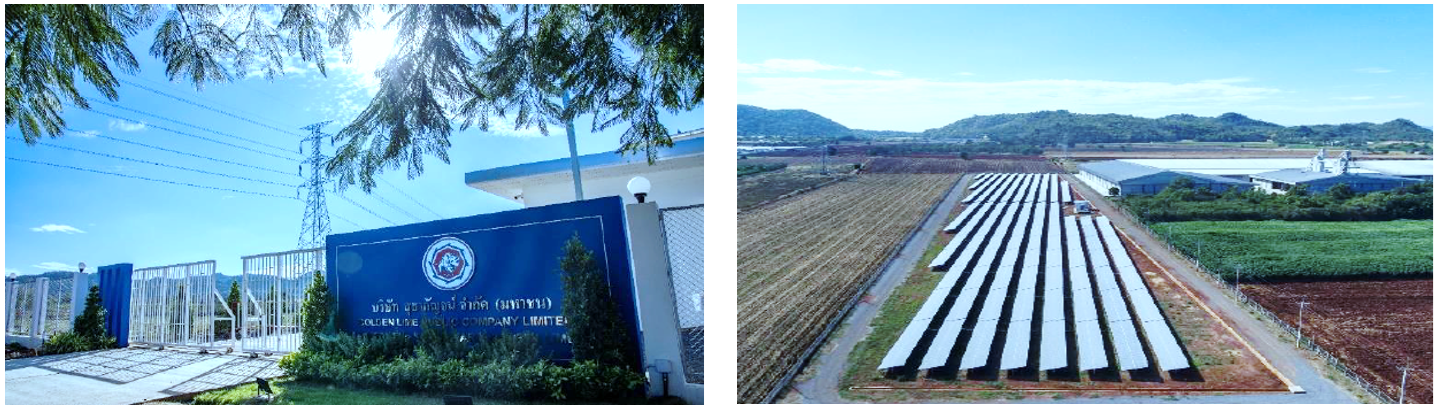
Solar Farm Phase III Project, 1.5 MW (on progress)
The expansion of the Solar Farm Phase III project, initially planned to increase capacity from 1.0 MW to 1.5 MW across three phases for 2024 investment purposes, has been postponed. This decision follows the reduction in tax incentives by the BOI and an evaluation indicating that returns on investment do not align with established safety thresholds. The postponement allows for further assessment of alternative investment opportunities and ensures optimal management of returns and risks.
At present, land acquisition for project construction has been completed. Subsequent actions, including approval processes and investment allocation, are undergoing thorough review to ensure efficient utilization of resources.
Status Update for 2025:
No additional progress or further investment considerations are scheduled for the project in 2025.
The goal for electricity management
Estimated from the total electricity consumption in all branches in the base year 2019, with the amount of electricity purchased 26,499,722, a decrease of 7 percent or 1,854,980.54 kilowatt-hours compared to the base year.
Has Set Targets
Yes
Targets
| Target | Base Year | Base Year Value | Target Year | Target Year Value | Target Change (%) | Unit |
|---|---|---|---|---|---|---|
| Reduction of electricity purchased for consumption | 2,019 | 26,499,722 | 2,025 | 18,548,980.54 | 7 | Kilowatt-hour |
| Reduction of fuel consumption | 2,022 | 1,154,674 | 2,025 | 57,733 | 5 | Litres |
Energy — Performance & Outcomes
Has Performance Results
Yes
Performance Description
Energy management : fuel consumption
Electricity and Fuel Management Targets:
The Company mainly uses coal and other solid fuels like petroleum coke and various types of coal in its lime kiln process. To manage fuel resources efficiently, it implements energy projects such as Flex Fuels to ensure flexibility and cost control, reduces dependency on a single fuel source, and mitigates market price fluctuations from geopolitical conflicts through a multi-source fuel strategy.
For fuel selection, the company reviews options like bituminous coal, steam coal, and petcoke, and assesses key factors for each.
Fuel quality and properties
Heating value
Relevant physical properties
Price trends
Quantity and consistency of deliveries
Transportation costs
Quantity offered, price, and storage space
Working capital or credit lines ready for fuel procurement.
The Company has both domestic and international fuel sources. For international purchases, it receives support from Premthai Energy, a fuel expert consultant, who sources quality fuels and coordinates transportation and logistics services for importing fuel from abroad.
During the period 2023–2025, the company shifted its fuel selection from primarily bituminous coal to petcoke, while retaining bituminous coal as a supplementary fuel for some furnaces as per customer requirements.
Petcoke is chosen for its higher calorific value and lower ash content, which help reduce fuel use and minimize ash management needs, supporting cost-saving efforts. The company will continue to use both fuels as needed to meet customer requirements and product applications.
Renewable Fuel Management Goals for Coal Replacement
The Company is working to reduce its reliance on fossil fuels, which are scarce, by exploring sustainable renewable energy solutions. Their efforts include developing strategies and starting projects like biomass initiatives to replace fossil fuels and address upcoming energy needs and environmental concerns.
Biomass Project Study and Development (2022–2024)
Throughout 2022–2024, the company conducted a Biomass Project study and development to assess the feasibility of using biomass energy to replace coal and fossil fuels in the lime production process. The primary objective was to reduce greenhouse gas emissions and support the organization's sustainability goals. Key Project Progress and Activities:
Assessment of Domestic Biomass Raw Material Availability:
Evaluation in Actual Production Environments:
|
|
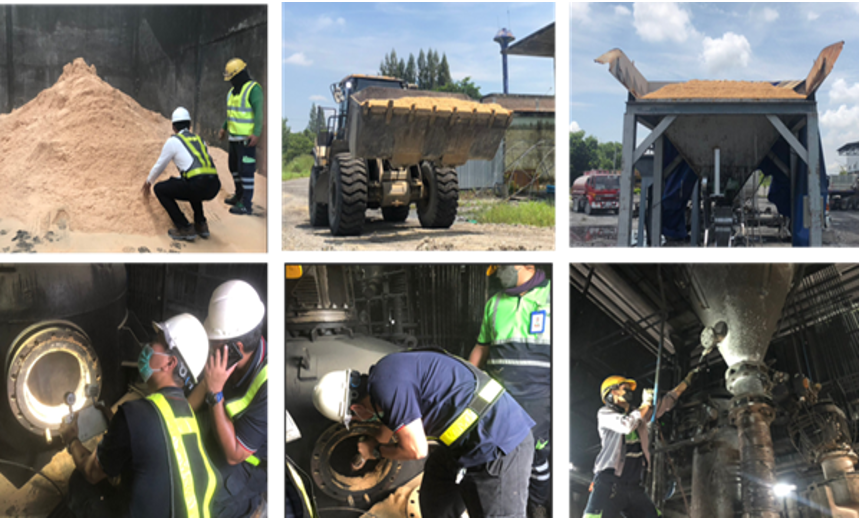
Support from the Carmeuse Group:
The company received appropriate technical advice and best practices from the Carmeuse Group, which enabled the company to design experimental approaches suitable for the characteristics of locally available biomass.
Project Evaluation and Ongoing Directions: Technical review shows biomass as a main energy source needs substantial investment and currently offers limited returns. Despite this, the company values its environmental and sustainable potential, so it has designated the project as a Long-term Strategic Project included in future investment plans.
Maintaining the Project Status in the Long-Term Investment Plan:
Although the current returns do not meet the investment criteria, the company believes that the Biomass Project still has the potential to be resumed if the right supporting factors are present, including:
Provided that the company maintains adequate cash flow and an additional investment budget, the project may swiftly be reconsidered for restarting operations.
Future government support: If there are measures such as:
- Investment incentives
- Tax reductions or clean energy benefits
- National greenhouse gas reduction promotion –an improved return on investment in accordance with the company's established criteria
3. Improved commercial viability:
- If biomass raw material prices become more stable, or if technology is developed that reduces processing and fuel preparation costs.
- The project has the opportunity to return in a more economically viable form.
Future directions:
The company will revisit the study results when supporting factors emerge.
Push the Biomass Project towards becoming a future investment project.
Prepare production processes for future biomass energy use.
Conduct studies on other clean energy technologies concurrently to continuously achieve the organization's greenhouse gas reduction target (Scope 1).
Investment value in the Biomass Project:
Expenditures related to research, experimentation, and the installation of essential testing equipment at the Huai Pa Wai branch are allocated for investment in the Bio Fuel Project. The investment is valued as follows:
Investment in research and development (Biofuel Project) | Year | 2022 | 2023 | 2024 | Total investment |
Machinery and equipment during installation. -SCAP-HW-Biofuel Ref:189500-HW-Biofuel: Property under construction | THB | 432,964 | 722,624 | 59,810 | 1,215,398 |
Fuel Management Goals: Diesel, Gasoline, NGV
In lime production, fuels are critical for several operations:
Diesel powers company trucks and production support vehicles like loaders, forklifts, water trucks, and other utility vehicles.
Gasoline is used in executive, marketing, sales, and support vehicles.
Natural gas fuels company transport trucks equipped with NGV systems.
To cut diesel and gasoline use, the company is launching an EV Project targeting reduced vehicle fuel consumption.
The Electric Vehicle (EV) Project is designed to cut down on energy use and, as a result, lower greenhouse gas emissions.
Through this initiative, older or high-maintenance gasoline vehicles will be replaced with electric vehicles, including BEVs, PHEVs, HEVs, and others. By investing in the EV Project, organizations can minimize energy expenses and vehicle upkeep while supporting sustainability goals related to reducing greenhouse gases. The project’s investment scope is outlined below:
Vehicle Types | Scope: |
1. Production support vehicles | For supporting internal factory operations, such as EV front loaders, EV forklifts, etc. |
2. Logistics/ product Transportation | Tractor-trailer trucks for regular routes, such as EV trucks for transporting raw materials, or transporting rock within quarries on regular routes, or EV trucks for transporting goods to customers on regular routes. |
3. Executive EV cars | Company cars with expired service life or high repair expenses. |
Project Objectives:
Reduce energy costs (fuel costs) and maintenance costs.
Enhance the operational efficiency of logistics and production support.
Reduce greenhouse gas emissions (CO2e) of the corporate fleet.
Support the organization's ESG/Carbon Neutrality goals.
Scope of Investment:
Vehicle types: production support, logistics (internal/external), and executive cars.
Replacement based on company mileage/age policies or high maintenance/repair costs.
Investments cover charging stations (AC/DC), energy management systems (EMS), and safety training.
Business and Operational Benefits:
Switching to BEVs can lower corporate CO2e emissions by about 60–70% per vehicle, depending on emission factors and usage patterns.
Fuel expenses can decrease by 40–60%, as electricity costs less per kilometer than gasoline.
Maintenance costs may drop by 30–50% because there are fewer moving parts, and no engine oil is required.
The transition also strengthens ESG reputation and supports sustainability policy reporting within management frameworks.
EV Project | Year | Number | Value (mTHB) | Total investment (mTHB) |
EV Charger | 2025 | 2 | - | Included in the purchase |
Production support – EV front loader | 2025 | 2 | 5.23 | 10.46 |
Production support – EV forklift | 2025 | 2 | 0.96 | 1.92 |
Logistics / delivery – EV truck | 2025 | 1 | 6.70 | 6.70 |
Executive car | 2025 | 1 | 1.04 | 1.04 |
Total | 16.89 | |||
Water — Plan & Guidelines
Introduction
Golden Lime Public Company Limited recognizes the importance of water resources as a component of ecosystems and living organisms. To create awareness and understanding of the value of water towards personnel and stakeholders so they can participate in water management covering water resource conservation, optimizing water use for optimal benefit, reducing water consumption, and reusing water under the circular economy principle. The Committee, therefore, formulated a policy to lay out a framework for water resource management to secure the availability of water and water resources to suffice the production process and consumption for business operations to build confidence that the Company's operations will leave no impact on the community. It is also consistent with the laws and guidelines to proceed with water resource management under Thailand's national strategy including joining the social communities for sustainable water resource management.
Has a Water Management Plan
Yes
Plan Description
The 4 core strategies are listed below;
1) Governance
The water management is assigned to the Sustainability Development Committee to supervise and assign responsible persons to push forward the implementation of integrated water management by establishing a 10-year strategy to reduce water consumption and creating stability of water resources for production and consumption including managing the risk and mitigating water shortage due to the climate change.
2) Water Stewardship
All water users in the supply chain take responsibility for their influence on a shared resource and work together to manage it sustainably under the responsible planning and management of resources is required for optimizing water use in production and water reuse, finding ways to reduce water consumption, applying technology or innovation to improve water management and wastewater treatment for water reuse including managing clean water for good sanitation for all.
3) A collaboration in water management, initiatives for water management
Networking with government agencies, private sectors, industrial sectors, and the agricultural industry can achieve water resource management or collectively contribute to the development of sustainable water sources in the conservation and development of water resources, wastewater treatment, clean water production or clean water for consumption, Natural water retention for use, etc.
Risk assessment of the Company’s operations towards the water stress for production and consumption
Natural water retention measures that aim to safeguard and enhance water storage such as rainwater storage or increasing natural water sources, such as artesian water from underground wells that have been licensed as a sustainable water resource for business operations.
Monitoring and surveillance for possible drought to ensure sufficient long-term water resources including providing areas to retain rainwater as water reserve to reduce the impact of a drought and groundwater scarcity
Implementation of water management according to a circular economy with a commitment to reduce water consumption and increase the use of water circulation adding wastewater treatment for the sedimentation process with lime and reusing the slugged water.
Implementation of preventive measures to prevent effluent wastewater with a high alkaline value released to the outside so as not to affect the social community.
4) Practices guidelines
Understand water resources: studying various factors related to water resources within the organization.
Access to water resources: studying the feasibility and the extent to which water resource management can be undertaken.
Water resources development: analyzing data from the study. Use of technology, innovation, collaboration and participation in the operation to set up a framework for implementation and development towards sustainable water resource management.
Understand water resources:
In respect of the risk assessment in the aspect of water shortage as an impact of water scarcity in general, SUTHA involves its location of the establishment and the use of water in business operations; yearly water demand for production consumption, and consumption in general which entail in the following main areas:
Preparing raw materials before manufacturingfor minimum impurities such as mud or soil left on limestones before conveying to the silo and burning in the kiln, lime stones as raw materials shall be washed to remove dirt or dust and then fed onto the conveyor belt to the kiln.
Reducing Air Pollutionin a Lime manufacturing by wet scrubbing processes so liquid or solid particles are removed from a gas stream by transferring them to a liquid can eliminate and reduce the amount of gas before releasing into the air.
Production of hydrated limeby mixing with water as a medium to convert quicklime to hydrated lime (CaO + H20 -> Ca(OH)2)
Cleaning solar panelsfor the efficiency of the solar power generation system
General use of water in the plantsto spray water on raw material and roads to reduce the amount of dust diffusion from storage, conveying and transportation, including watering trees as a source of terrestrial ecosystems to increase trees and forest areas. Planting one perennial plant can absorb an average of 9 – 15 kg of CO2 per year.
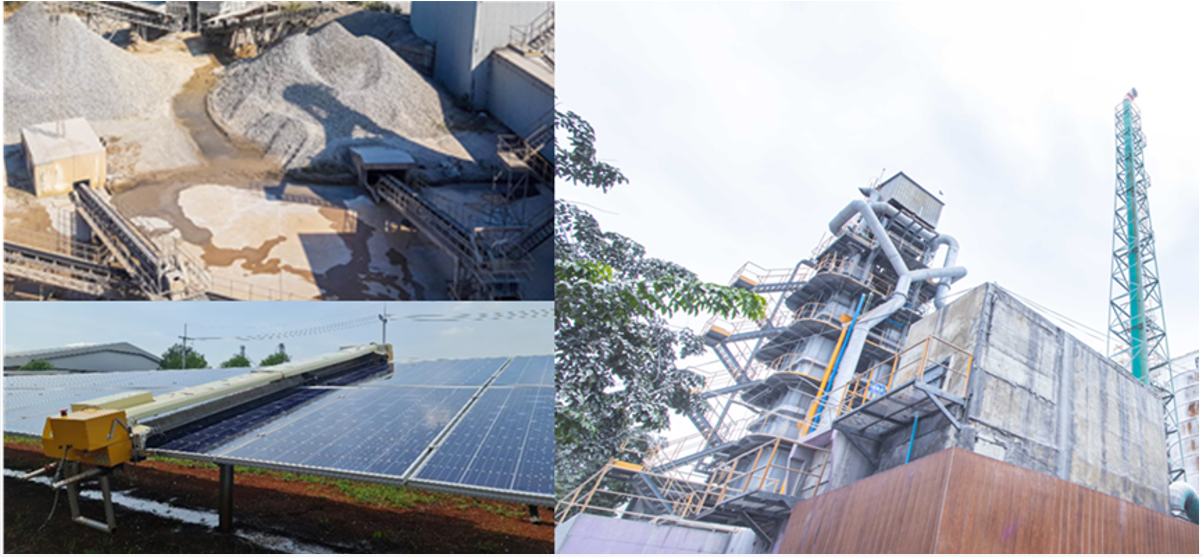
Main water resources are; 1. Groundwaterfrom the artesian that has been legally permitted. Water supplied from artesian wells is used in the production process and general consumption within the establishment. 2. Ponds for collecting rainwater and water reusein the plants The used water will flow through the pipe to stabilize in the clarifier to circulate the precipitated water then back to the process again as water circulation to reduce water consumption from groundwater. |
|
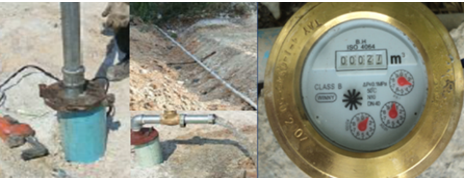
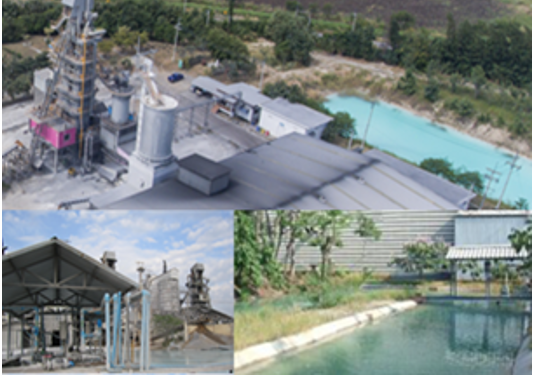
Guidelines in managing groundwater sources are as follows:
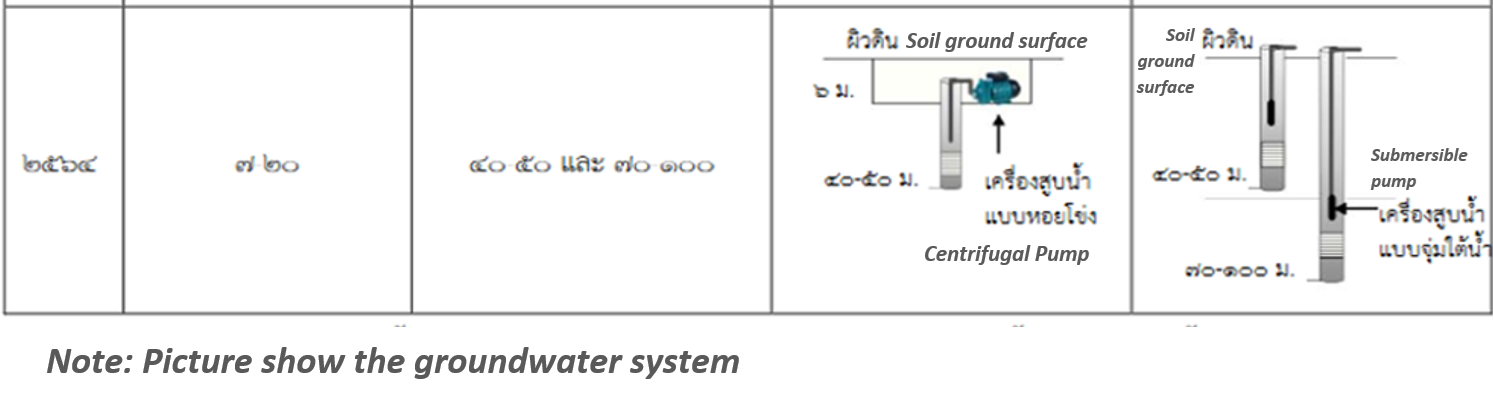
1. In case of new artesian, a legal drilling permit shall be grantedin accordance with the rules for granting permission in drilling groundwater wells
2. Maintenance of the pump
3. Measures to reduce water consumption or increasing the water reuse
Guidelines for rainwater storage, circulation ponds and sediment ponds management
1. More lines for circulating water to for waste treatment at the sedimentation clarifier.
2. Pond Dredging to remove accumulated sediment to increase pond capacity in water retention.
3. Improving the surrounding landscape
Water Resource risk assessment
SUTHA has conducted an evaluation of the risks associated with water resources in light of potential water scarcity by utilizing the Aqueduct Water Risk Atlas 4.0 tool (source: https://www.wri.org) created by the World Resources Institute (WRI). This tool analyses the water conditions in diverse regions globally.
Water Stress Risk (From Water Risk Atlas Tool) Freshwater stress in the area Assesed areas in Phra Phutthabat District, Saraburi Province and Phatthana Nikhom District area Lopburi Province | Risk Level: Extremely high |
| /* Water stress pertains to regions where freshwater resources are being utilized. The worldwide demand for freshwater is projected to rise, particularly in the agricultural sector, which represents 70% of the overall freshwater consumption. The agricultural use of water constitutes merely a segment of the total natural freshwater extraction for human economic endeavors. When assessed against the total renewable freshwater supply, this usage can reflect the degree of water stress in a given area. According to United Nations (UN) criteria, regions where freshwater withdrawal exceeds 25% are classified as water-stressed areas. |
Water Depletion Risk (From Water Risk Atlas Tool) Assesed areas in Phra Phutthabat area, Saraburi Province and Phatthana Nikhom District, Lopburi Province | Risk Level: High |
| Assess the overall rate of water consumption in the region that has access to renewable water resources. ( Water Depletion) Water Depletion Description: Baseline water depletion measures the ratio of total water consumption to available renewable water supplies. Total water consumption includes domestic, industrial, irrigation, and livestock consumptive uses. Available renewable water supplies include the impact of upstream consumptive water users and large dams on downstream water availability. Higher values indicate larger impact on the local water supply and decreased water availability for downstream users. Baseline water depletion is similar to baseline water stress; however, instead of looking at total water demand (consumptive plus nonconsumptive), baseline water depletion is calculated using consumptive withdrawal only |
Riverine Flood risk (From Water Risk Atlas Tool) Assesed areas in Phra Phutthabat area, Saraburi Province and Phatthana Nikhom District, Lopburi Province | Risk Leve: Extremely high |
| Riverine flood risk Description: Riverine flood risk measures the percentage of population expected to be affected by Riverine flooding in an average year, accounting for existing flood-protection standards. Flood risk is assessed using hazard (inundation caused by river overflow), exposure (population in flood zone), and vulnerability.16 The existing level of flood protection is also incorporated into the risk calculation. It is important to note that this indicator represents flood risk not in terms of maximum possible impact but rather as average annual impact. The impacts from infrequent, extreme flood years are averaged with more common, less newsworthy flood years to produce the “expected annual affected population.” Higher values indicate that a greater proportion of the population is expected to be impacted by Riverine floods on average. |
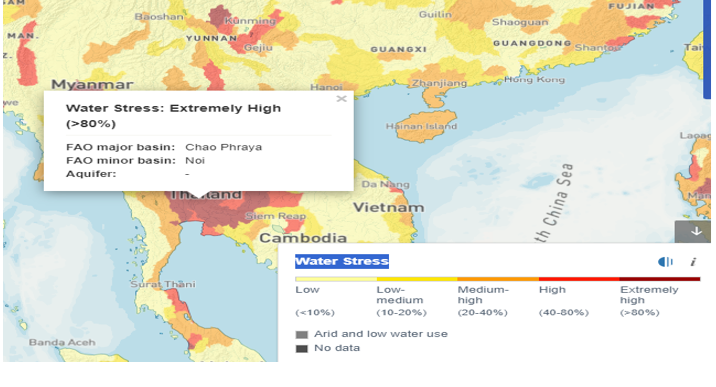
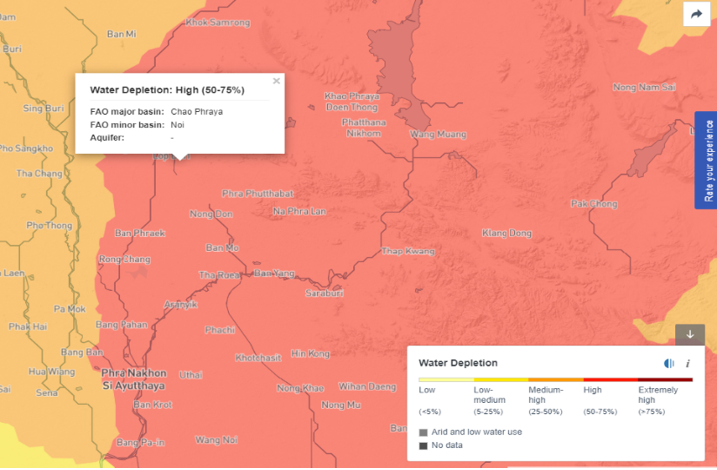
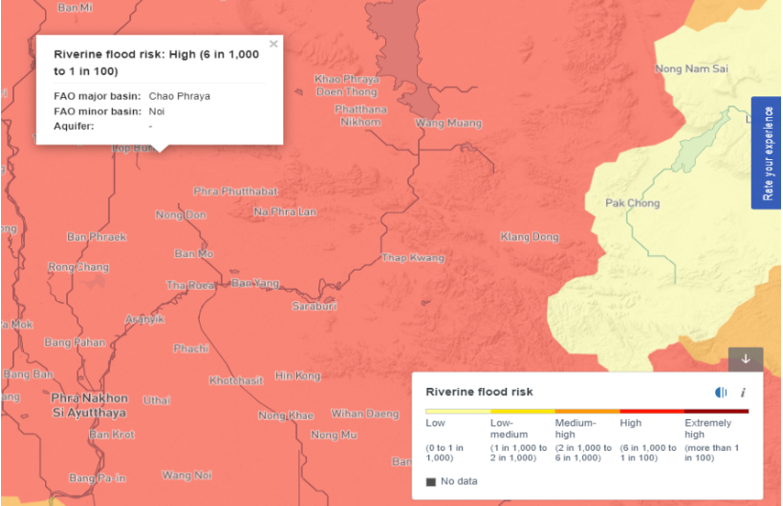
Ground water Table Decline Risk (From Water Risk Atlas Tool) Assesed areas in Phra Phutthabat area, Saraburi Province and Phatthana Nikhom District, Lopburi Province | Insignificant Trend |
| Groundwater Table Decline Description: Groundwater table decline measures the average decline of the groundwater table as the average change for the period of study (1990–2014). The result is expressed in centimeters per year (cm/yr). Higher values indicate higher levels of unsustainable groundwater withdrawals. |
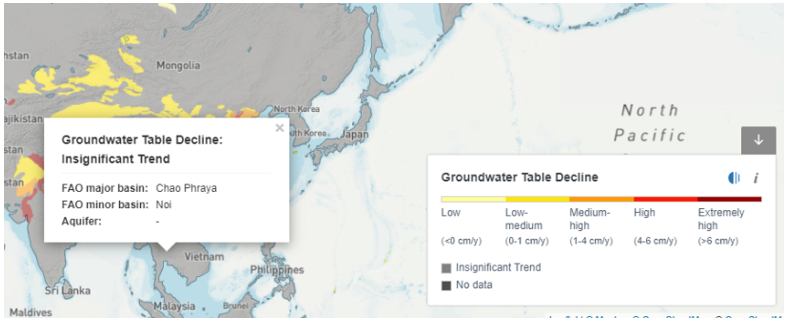
Local water resources assessment The dams in Lopburi and Saraburi are Pa Sak Cholasit Dam Located at Ban Kaeng Suea Ten, Tambon Nong Bua, Lop Buri Province, Pa Sak Cholasit Dam, the longest clay cored dam in Thailand, with a length of 4,860 meters, a height at the highest point of 36.50 meters, and a storage capacity of 765 million cubic meters. |
|
The water stress was conducted particularly where our establishments are located in Saraburi Province and Lopburi Province where groundwater is mainly consumed. By the way, water sources in other areas in the same province, are both groundwater and tap water.
According to the Provincial Waterworks Authority, Lop Buri Branch (data as of September 30, 2019), Lop Buri Province has a water production capacity of 5,456 cubic meters per hour. The amount of tap water produced is 837,446 cubic meters, the amount of water sold to users is 15,796,504 cubic meters, and the amount of water sold for public use is 15,796,504 cubic meters. and leaked 6,511,166 cubic meters, the amount of water used in the system was 438,189 cubic meters. The number of tap water users is 82,084 users. The highest number of tap water users is Mueang Lop Buri District with 48,961 users, followed by Khok Samrong District. 10,442 users and Ban Mi District 7,465 users, respectively, as shown in Table 9 by Phatthana Nikhom District at line 8th, Chong Sarika where the main production of the Company is located, there is no tap water supply. The water from groundwater, permitted artesian wells and water from the circulation system from natural water basin are used as the main water resources for production. |
|
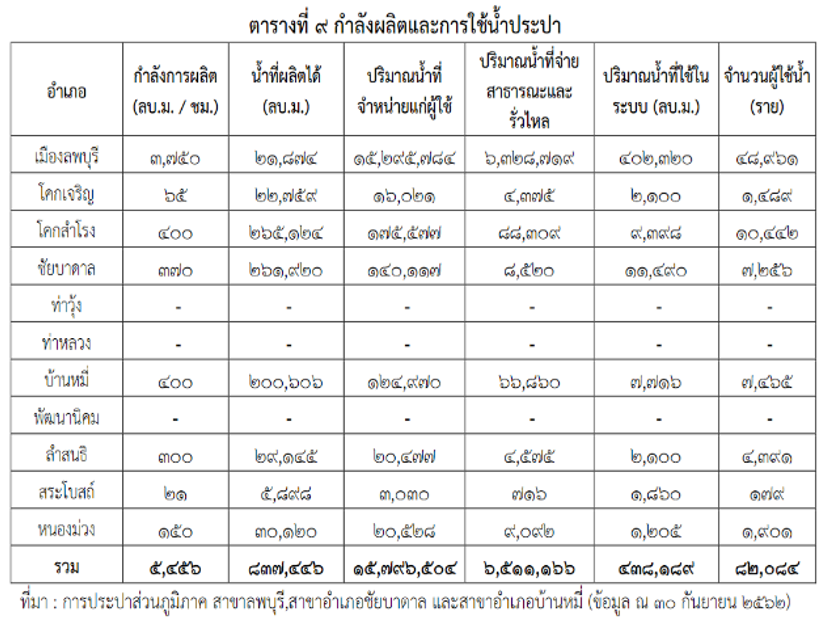
Assessment of water stress situation in business locations
Groundwater Resources
Following the Office of Natural Resources and Environment, Lopburi Province as of December 31, 2019, groundwater sources; artesian wells and the amount of groundwater granted to private sectors in Lopburi as of 2019 total at 1,035 wells, mostly for an agricultural sector ,followed by the business and consumer sectors, respectively. The average water consumption is 134,323 cubic meters/day or 49.028 million cubic meters/year, which SUTHA's water consumption is compared to the total water consumption of the entire area of Lop Buri Province is at 0.39 percent.
SUTHA uses water in the proportion of less than 1 percent of the total water consumption from provincial groundwater sources when compared to the water situation in the area apart from Phatthana Nikhom District and the other 2 districts that have no tap water supply. Other areas with tap water supply were found much less consumption compared to the volume of water produced. The situation of water then still has a low risk of water scarcity.
However, to secure water supply as a mean to develop business sustainability needs to find more water resources including reducing water consumption to reduce water demand exceeding the sustainable supply capacity.
The Department of Groundwater Resources, under the Ministry of Natural Resources and Environment, has released a report based on a survey of groundwater sources in Phatthana Nikhom District. This report compares the survey data with published sources to evaluate water use stress, which refers to the ratio of water withdrawal to the total available water in the area. It also assesses the availability of fresh water for local use and maps potential water-related risks for SUTHA's operations. The findings indicate that SUTHA is not significantly impacted by water resource shortages. This conclusion aligns with the groundwater depletion assessment from the Ground Water Table Decline Risk (Water Risk Atlas Tool), which shows that groundwater depletion levels are not significantly reduced. The Lopburi Province benefits from surface water due to local rainfall and water storage from the Pasak Jolasid Dam, as well as overflow from the coast, all of which contribute to groundwater replenishment.
Risk and impact assessment:
According to the report from the Department of Groundwater Resources under the Ministry of Natural Resources and Environment, a survey was conducted in Phatthana Nikhom District to assess groundwater sources. This survey, along with data from published sources, was utilized to evaluate water use stress. This assessment measures the ratio of water extraction in the area to the total available water, indicating the sufficiency of freshwater resources. Additionally, mapping efforts were undertaken to identify potential risks related to water availability.
SUTHA's operations have remained unaffected by the significant water resource shortages. The evaluation findings align with the groundwater depletion assessment performed by the Ground Water Table Decline Risk (utilizing the Water Risk Atlas Tool), indicating that groundwater levels have not experienced substantial decline. This stability is attributed to the Lopburi Province's access to surface water, which is influenced by local rainfall, water storage from the Pasak Jolasid Dam, and the overflow from coastal areas, all of which contribute to groundwater replenishment.
Riverine Flood risk assesment
The evaluation of flood risk along the riverbank reveals significant findings. According to the Aqueduct Water Risk Atlas 4.0 tool, the Riverine Flood risk assessment for the Phra Phutthabat area in Saraburi Province and the Phatthana Nikhom District in Lopburi Province indicates a risk level categorized as extremely high or high.
SUTHA has conducted an analysis of the current natural flood crisis in Thailand, particularly referencing the severe flooding event of 2011 that impacted Saraburi, Lopburi, and Nonthaburi Provinces, where the company operates. Fortunately, the company’s facilities were not directly affected, as they are situated in elevated areas above sea level. Additionally, these locations are aligned with the provincial waterworks system, which does not supply water to these high-elevation areas, relying instead on underground water sources or artesian wells.
As a result, SUTHA assesses the risk of flooding impacting its assets and operations to be low.
Nonetheless, there may be indirect consequences stemming from flooding in nearby areas, which could hinder transportation and logistics. To address these potential challenges, the company has established measures and guidelines for managing the impacts of flooding on transportation routes and the movement of goods affected by surrounding flood crises as follows;

Drain cleaning both in the Company’s establishment and surrounding areas to ensure drainage flow
Providing limestone chips and sand fill for land fill to mitigate effects on the community.
Provide temporary work station to work instead of the flooded area and temporary accommodation to accommodate employees whose residences are located in the flooded area to facilitate commuting to work andthat allowemployees to work from home
The groundwater resources development by Bureau of Groundwater Development
The groundwater development projects for water security, totaling 85 locations in the fiscal year 2023, with 3 projects in 2 styles, in Lopburi (both styles implemented) and Saraburi (1 style implemented), to increase the groundwater to reduce groundwater shortage.
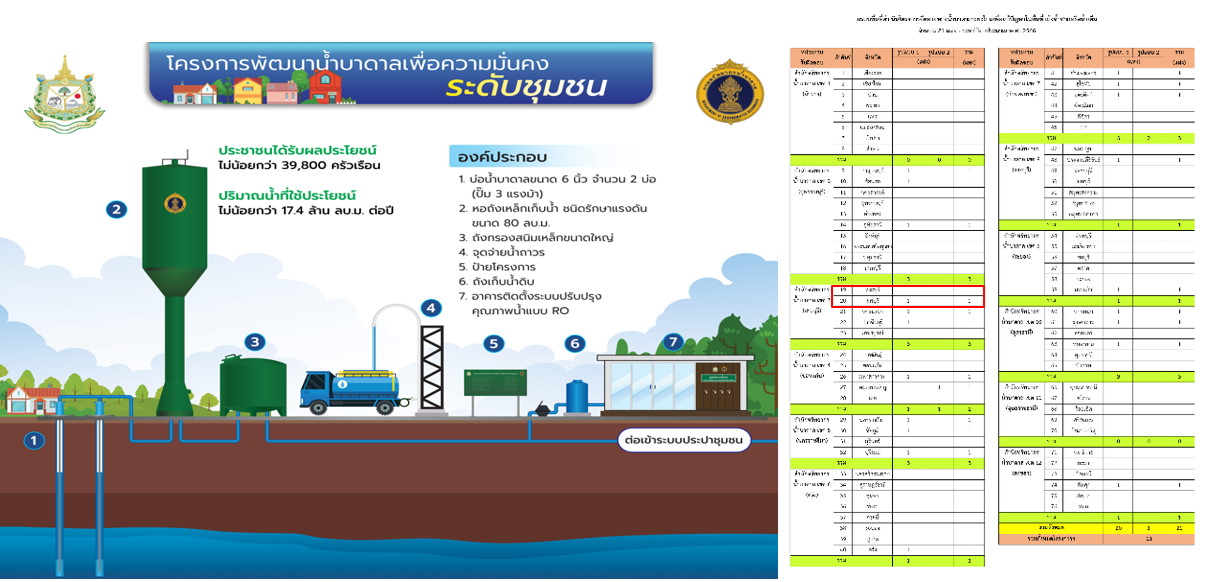
Provide ground water resources to solve problems in drought-prone or saline areas in Lopburi
: https://www.dgr.go.th/bgd/th/newsAll/292/9145
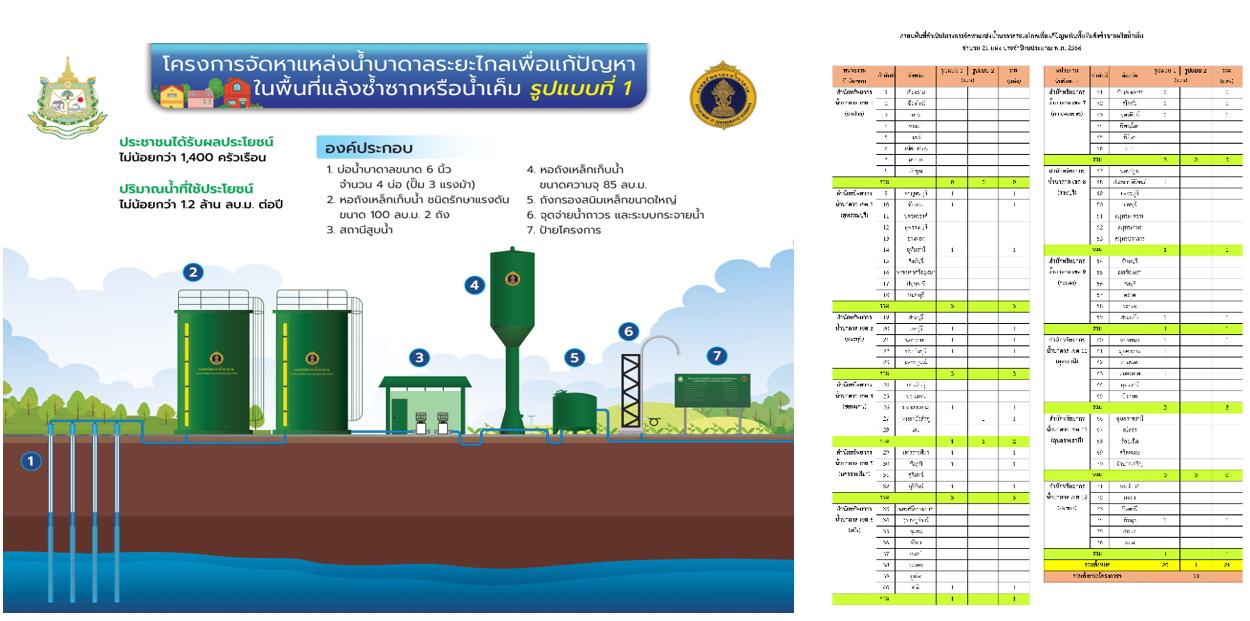
The Company has evaluated its existing freshwater resources. All freshwater is sourced from permitted drilling wells located at each of the Company's operational sites. Consequently, there are no issues or effects resulting from the communal use of these freshwater sources.
Water treatment for water circulation and quality of wastewater As a lime producer, lime is considered a suitable for the chemical wastewater treatment to neutralize acidic wastewater and. force contaminants that are dissolved in wastewater to separate more easily for stabilization of sewage sludge. The water utilized in the business operations mainly for the raw material washing process is circulated for reuse by outflowing wastewater to clarifier for sedimentation then some will seep into the soil and some flows through the drainage system inside the factory to the clarifier for sedimentation for reuse. The sludge from the limestone washing process will be dredged out for useful purposes such as adjusting the plant ground, donating to temples, schools, villagers, for landfill. What cannot be utilized will be properly disposed to the landfill within the Company's area etc. Water recycles data of the Company following industrial wastewater discharge standards prescribed in the notification of Ministry of Industry, No.2 B.E.2539 (1996), issued under Factory Act B.E.2535, reported the quality of used water as follows: |
|
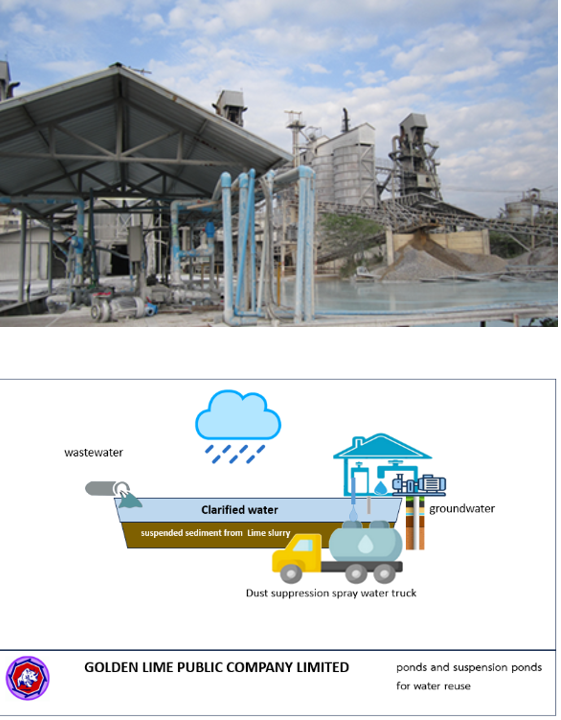
Quality of effluent from the water recycle system in the factories
For the Company’s activities, water is used for the production process, including spraying water to wash stone before entering the burning process in the kilns. A water consumption system includes the pit and installation of piping system to circulate the used water back to the cesspit by sedimentation in the pit. After going through a sedimentation process, the water is reused. Sludge in the pit, which includes bits of earth, mud from washing stone mixed with the dust of lime from the production process, will be dumped, scooped out for utilization such as use to adjust the factory areas, donation to the temples, the schools, the villagers for land fill, etc.
As to Water recycle system based on the standard of industrial wastewater according to notification of the Ministry of Industry No. 2 1996 (B.E. 2539) issued under the Factory Act 1992 (B.E. 2535), the Company has measured the quality of used water as follows:
Water (effluent) discharge
quantity | unit | 2023 | 2024 | 2025 |
cubic meter | No water discharged | No water discharged | No water discharged | |
Note: The factory’s wastewater/process water system is internally recirculated and does not release any water into public utilities. As a result, it does not impact external wastewater discharge. | ||||
Measurement | Method | Standard | 2023 | 2024 | 2025 |
pH* | pH Meter | 5.5-9 | 12.2/1 | 12.400/1 | 12.000/1 |
Suspended Solids | Dried at 103-105 oC | 50 mg/l | 4,670/2 | 110.000 | <3 |
Total Dissolved Solids | Dried at 103-105 oC | 3000 mg/l | 1,950 | 980.000 | 1050 |
BOD5 | Azide Modification | 20 mg/l | <2 | <2 | <2 |
COD | Closed Reflux | 120 mg/l | <5 | 9.000 | <5 |
Oil & Grease | Partition & Gravimetric | 5 mg/l | <5 | <5 | <5 |
(Latest year data presented) (*) 1) The Water quality test report shown is of the Chong Sarika branch published in the annual report. Every plant obtains this kind of report in accordance with the specified standards, except for the pH value, where the pH value (pH) ranges between 5.5 - 9.0
2) Suspended solids; solid particles that are floating or drifting in the waterthat remain suspended in water and act as a colloid.
3) Due to the recirculation of water back into the sedimentation pond, measurements of the water from the sedimentation pond will show high levels of suspended solids resulting from sediment accumulation during the process.
Water — Withdrawal, Discharge & Consumption
Water Withdrawal, Discharge & Consumption
| Metric | Current Year | Previous Year | Two Years Ago | Remark |
|---|---|---|---|---|
| Total water withdrawal (Cubic meters) | 446,968 | 366,337 | 365,247 | |
| Total water withdrawal by third-party water (Cubic meters) | ||||
| Total water withdrawal by surface water (Cubic meters) | ||||
| Total water withdrawal by groundwater (Cubic meters) | 446,968 | 366,337 | 365,247 | Overall water usage is rising in other branches and subsidiaries because the current recycling system cannot meet total demand, particularly for dust control and pollution reduction. |
| Total water withdrawal by seawater (Cubic meters) | ||||
| Total water withdrawal by produced water (Cubic meters) | ||||
| Percentage of wastewater treated before discharge (%) | ||||
| Total water discharge (Cubic meters) | ||||
| Total water discharge to third-party water (Cubic meters) | ||||
| Total water discharge to surface water (Cubic meters) | ||||
| Total water discharge to groundwater (Cubic meters) | ||||
| Total water discharge to seawater (Cubic meters) | ||||
| Total water consumption (Cubic meters) | 446,968 | 366,337 | 365,247 | |
| Recycled water (Cubic meters) |
Water — Targets
Introduction
A new objective has been established for 2026 to further decrease water consumption in production. The aim is to achieve a 5 percent reduction from the 2022 baseline,
This equates to a reduction of 14,925 cubic meters for Golden Lime Public Company Limited.
This equates to a reduction of 3,096 cubic meters for Thai Marble Corporation Limited (Subsidiary).
Has Set Targets
Yes
Targets
| Target | Base Year | Base Year Value | Target Year | Target Year Value | Target Change (%) | Unit |
|---|---|---|---|---|---|---|
| Reduction of water withdrawal | 2,022 | 298,502 | 2,025 | 14,925 | 5 | Cubic meters |
| Reduction of water consumption | 2,022 | 61,910 | 2,025 | 3,096 | 5 | Cubic meters |
Water — Performance & Outcomes
Introduction
Water management: Water withdraw by source
Water Management performance of Golden Lime Public Company Limited_SUTHA | |||||||||
Year | Consumption forecast (cubic meter) | Actual Consumption / year (cubic meter) | Cost (THB) | Performance against target | |||||
Volume | Cost | % | |||||||
Consumption reduction target 5% + | |||||||||
2022 | 471,536/2 | 100% | 298,502 | 63% | 2.63 | 783,996.50 | Based Year 2022/2565 | ||
2023 | 471,536/2 | 100% | 278,268 | 59% | 2.63 | 730,737.88 | - 20,234 | -53,134.93 | - 7% |
2024 | 471,536/2 | 100% | 265,561 | 56% | 2.63/3 | 715,301.13 | - 32,941 | -88,728.14 | - 11% |
2025 | 471,536/2 | 100% | 338,908 | 72% | 2.63 | 949,859.76 | 40,406 | 106,267.78 | 14% |
Note: 1) Year 2020 - 2024, increased volume of water consumption from solar cell cleaning activities. 2)Revise the target figures to align with the updated water demand from the 2024 report. 3) The adjusted unit water cost for 2025 shows an average of 2.69, while the correct average is 2.63, unchanged. The displayed average of 2.69 resulted from adjustments for minimum usage costs due to faulty equipment, where actual usage was lower than the billed value for groundwater. | |||||||||
In 2025, some branches reduced water usage by upgrading from wet to dry dust removal systems. However, overall water usage is rising in other branches and subsidiaries because the current recycling system cannot meet total demand, particularly for dust control and pollution reduction. Subsidiaries’ increased water usage reflects efforts with government and local businesses to address PM2.5 and PM10 issues, with higher consumption during March–April and October–December to comply with dust reduction policies near concession areas.
Water Management performance of Thai Marble Corporation Limited (Subsidiary) | |||||||||
Year | Consumption forecast (cubic meter) | Actual Consumption / year (cubic meter) | Cost (THB) | Performance against target | |||||
Volume | Cost | % | |||||||
Consumption reduction target 5% ++ | |||||||||
2022 | 100,000 | 100% | 61,910 | 62% | 2.63 | 162,823.30 | Based Year 2022/2565 | ||
2023 | 100,000 | 100% | 86,815 | 87% | 2.63 | 228,323.45 | 24,905 | 65,500.15 | 40% |
2024 | 100,000 | 100% | 100,776/1 | 101% | 2.63 | 265,040.88/1 | 38,866 | 36,717.43 | 63% |
2025 | 100,000 | 100% | 108,060 | 108% | 2.63 | 284,197.80 | 46,150 | 19,156.92 | 75% |
Note: 1) In 2024 (B.E. 2567), the water consumption figures for Marble Co., Ltd. were revised. The reported amount for 2024 was adjusted from 55,260 to 100,776 cubic meters, reflecting the actual total water consumption for the entire year
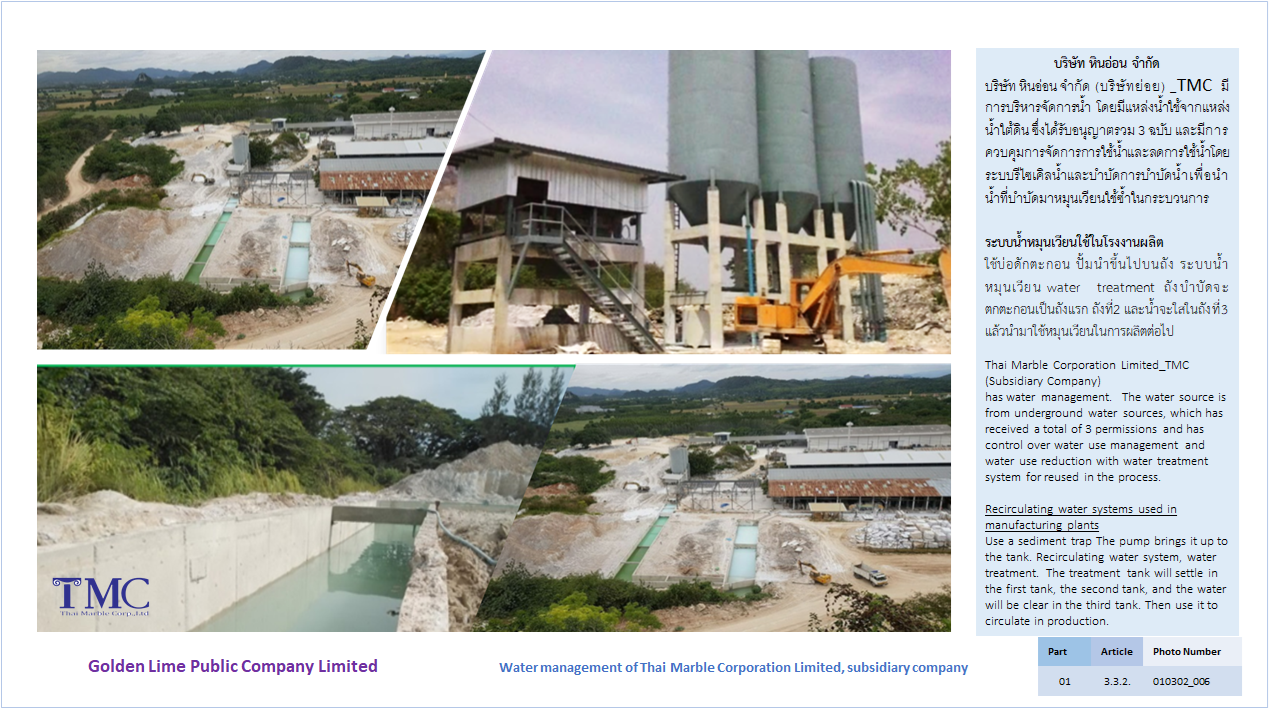
Has Performance Results
Yes
Performance Description
Water saving Development
Water saving The sustainability development team will adopt information obtained from the study and notion regarding the sustainable water resource management to initiate annual activities to manage water resources in order to secure water resources sustainably for business operations. During Y2022 - 2025, there are water saving scheme taken to reduce water consumption based on continuous water consumption monitoring during the process to be selected to take further action. The regular lime production where water is used for air and gas pollution treatment with current two systems used namely a wet scrubbers and a dry fabric filter. The Chong Sarika existing wet scrubber observed wear and tear was replaced with the bag filter likely to Huay Pa Wai as an efficient air pollution control approach. In 2022, GLE, a subsidiary, was appointed to install the bag filter for one kiln at Chong Sarika, adding 2 installations in the year 2023 and the other one was installed in 2025, bringing the total number of installed points to four for the Chong Sarika branch.
|
|
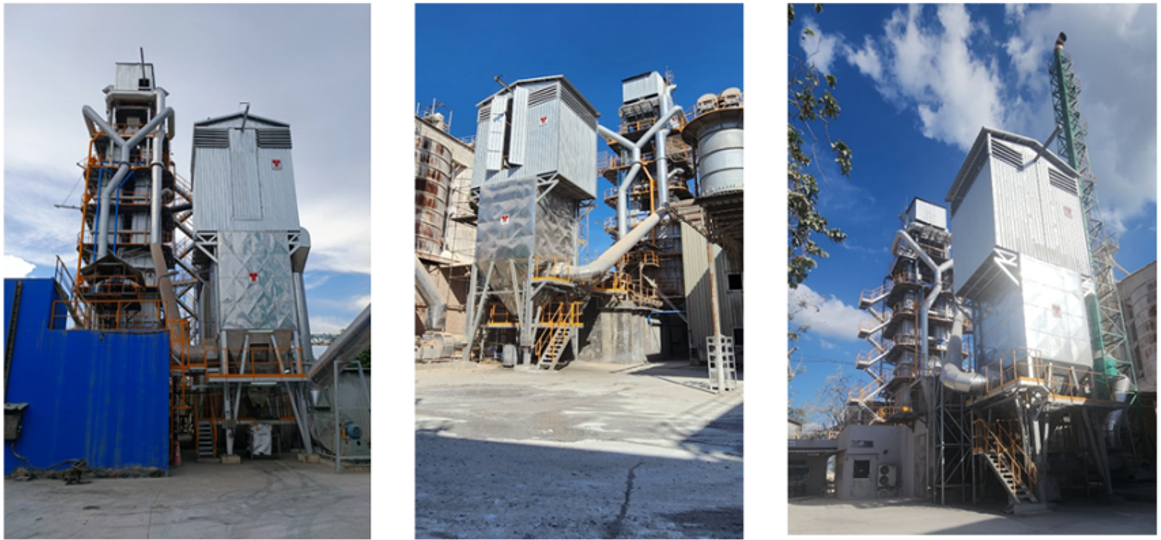
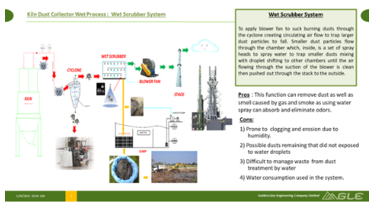
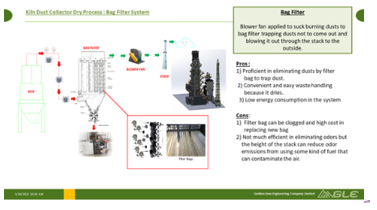
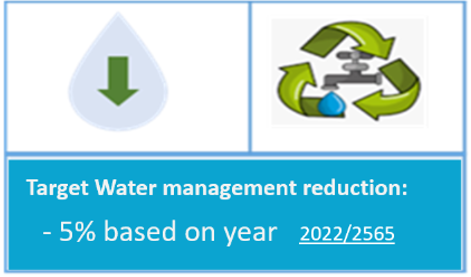
Waste — Plan & Guidelines
Has a Waste Management Plan
Yes
Plan Description
Waste management plan
Golden Lime Public Company Limited primarily engages in lime production. This process generates waste, including dust and ash. Some of this waste can be processed and sold, while the remainder is either used within the plants or provided to the community for land filling at designated locations. The Company seeks permission from government authorities to transport waste outside the factory. Waste is only transported to community members in areas that will not disrupt nearby residents, ensuring it is properly buried and placed only in approved locations.
Waste and sewage disposal management
SUTHA has established protocols for managing hazardous and non-hazardous waste and surplus materials to comply with legal requirements. This framework includes collection, storage, contractor selection, and transportation of waste beyond the plants, as detailed in the operational license and environmental management system, along with safety and occupational health guidelines.
1. Sorting of waste or unused materials
1.1 General waste or unused materials or scraps such as food scraps, Styrofoam boxes, plastic bags, leaves, candy bags, milk cartons, etc.
1.2 Wet Waste, i.e. easily decomposed waste such as food scraps, vegetables, fruit peels, etc.
1.3 Recycle Waste such as garbage, waste or leftover materials. which can be reused and for sale such as glass bottles, beverage cans, used paper, plastic bottles, plastic scraps, metal scraps, etc.
1.4 Hazardous Waste i.e. wastes or scraps of unused equipment containing or contaminated with hazardous substances as specified in the announcement of the Ministry of Industry, such as batteries, fluorescent lamps, various types of batteries, chemical containers, cleaners containers, spray paint cans, engine-oil rag, grease, pen, etc.
2. Identifying and labeling all waste containers
General wasteblue label
Wet wastegreen label
Recycling Wasteyellow label
Hazardous wastered label
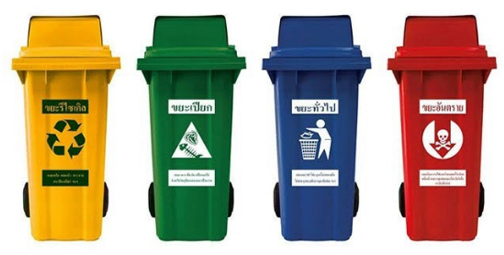
3. The hazardous and non-hazardous waste management in accordance with waste management legislation
Management of sewage or controlled hazardous waste adhering to the legislations and law requirements are as below;
- Application for permission/renewal of permission for the transferring of industrial waste out of the plants by the management representatives or authorized persons to contact/employ authorized permitted contractors to transport or disposal of waste or unused materials
- The assigned management or personnel submits Form SoKo.2 for requesting a permit for off-site waste management.
- Collection of sewage or unused materials according to the containers specified.
- The assigned person examines the disposal of sewage or unused materials to specified containers at least once a month throughout the plants
- The occupiers of facilities may store the hazardous and other wastes for a period not exceeding ninety days and shall submit theform prescribed by the government agency (So Ko. 1) for an extension of storage period of hazardous waste beyond 90 days
- Transferring sewage and unused materials out of the plants, the management representative or assigned personnel contact the contractor to pick up at the designated area and time.
- The management representative or assigned personnel has to report to the authorities every time the details of industrial waste that is transferred for disposal outside.
- The management representative or assigned personnel has to submit by March 1 of the following year the WasteSummary Report (So Ko 3)
Plan Document Link
https://goldenlime.co.th/en/Waste_and_sewage_disposal_management/
Waste — Generation, Disposal & Recycling
Waste Generation, Disposal & Recycling
| Metric | Current Year | Previous Year | Two Years Ago | Remark |
|---|---|---|---|---|
| Total waste generated (Kilograms) | 1,286.73 | 637.18 | 2,078.34 | |
| Non-hazardous waste (Kilograms) | 386.73 | 277.18 | 238.34 | |
| Non-hazardous waste - Landfilling (Kilograms) | 0 | 0 | 0 | |
| Non-hazardous waste - Incineration (with energy recovery) (Kilograms) | 386.73 | 277.18 | 238.34 | |
| Non-hazardous waste - Incineration (without energy recovery) (Kilograms) | 0 | 0 | 0 | |
| Non-hazardous waste - Other disposal operations (Kilograms) | 0 | 0 | 0 | |
| Hazardous waste (Kilograms) | 900 | 360 | 1,840 | |
| Hazardous waste - Landfilling (Kilograms) | 0 | 0 | 0 | |
| Hazardous waste - Incineration (with energy recovery) (Kilograms) | 0 | 0 | 0 | |
| Hazardous waste - Incineration (without energy recovery) (Kilograms) | 0 | 0 | 0 | |
| Hazardous waste - Other disposal operations (Kilograms) | 900 | 360 | 1,840 | Hazardous waste – Others : used lubricating oil recycled to produce fuel blending (042) |
| Total reused/recycled waste (Kilograms) | 6,237 | 637.18 | 2,078.34 | |
| Reused/Recycled non-hazardous waste (Kilograms) | 5,337 | 277.18 | 238.34 | |
| Reused non-hazardous waste (Kilograms) | 0 | 0 | 0 | |
| Recycled non-hazardous waste (Kilograms) | 5,337 | 277.18 | 238.34 | Non-hazardous waste sent for recycling: -HQ : 386.73 kgs. -CS : 4,560 kgs. Total: 5,337 kgs. |
| Reused/Recycled hazardous waste (Kilograms) | 900 | 360 | 1,840 | |
| Reused hazardous waste (Kilograms) | 900 | 360 | 1,840 | |
| Recycled hazardous waste (Kilograms) | 0 | 0 | 0 |
Waste — Targets
Introduction
SUTHA is committed to effective waste management, striving to minimize the volume of scraps or materials requiring disposal in landfills. This commitment is reflected in the establishment of waste management targets as a key component of its environmental management objectives, aligning with the Sustainable Development Goal 12, which focuses on promoting sustainable production and consumption practices.
| SDG’s Target 12 Ensure sustainable consumption and production patterns
|
Has Set Targets
Yes
Targets
| Waste Type | Disposal Approach | Target | Base Year | Base Year Value | Target Year | Target Year Value | Target Change (%) | Unit |
|---|---|---|---|---|---|---|---|---|
| Non-hazardous waste and hazardous waste | 2758 · Description: Reuse · 2759 · Description: Recycle · 2760 · Description: Landfilling · 2763 · Other name: Categorize and store data for management purposes. · Description: Other | Increase waste utilization | 2,022 | 5,630 | 2,025 | 169 | 3 | Kilograms |
Waste — Performance & Outcomes
Has Performance Results
Yes
Performance Description
Enhancing the segregation of waste, unused materials, and recyclable resources
Units of increase: Activities/Projects/Volume
The company has set an overall framework for this goal.
Enhancing the segregation of waste, unused materials, and recyclable resources is essential.
Relevant internal departments have utilized this framework to evaluate, investigate, and analyze the processes or areas involved in identifying opportunities for recycling. They are also tasked with exploring solutions for the separation of materials, waste, spare parts, or related items for recycling purposes. Additionally, these materials may be directed to external departments for energy production or fuel use. Each plant's personnel responsible are encouraged to seek methods for managing and executing projects, collecting data, and submitting reports.
Goal: Achieving Zero Landfill Waste
The Company has set long-term objectives by collaborating with the business development unit to enhance knowledge application and coordination with internal and external experts. Supported by an educational organization and Carmeuse's primary shareholders, the focus is on optimizing material use and integrating waste into operations. The initiative aims to create economic value and achieve continuous development, ultimately striving to eliminate material disposal.
Reuse/Recyclable Waste (Kgs) |
In 2025, waste sorting data will be added by collecting data from the Chong Sarika branch | ||||
Year | Target | Amount of an organizational waste (Kgs) | |||
Kgs. | HQ | CS | Total | ||
2022 | Base year | 49.72 | 5,580 | 5,630 | |
2023 | 169 | 238.34 | 1,840 | 2,078 | |
2024 | 169 | 277.18 | 360 | 637 | |
2025 | 169 | 366.73 | 5,850 | 6,237 | |
Waste reuse/recyclable compared to the target | Achieved | ||||
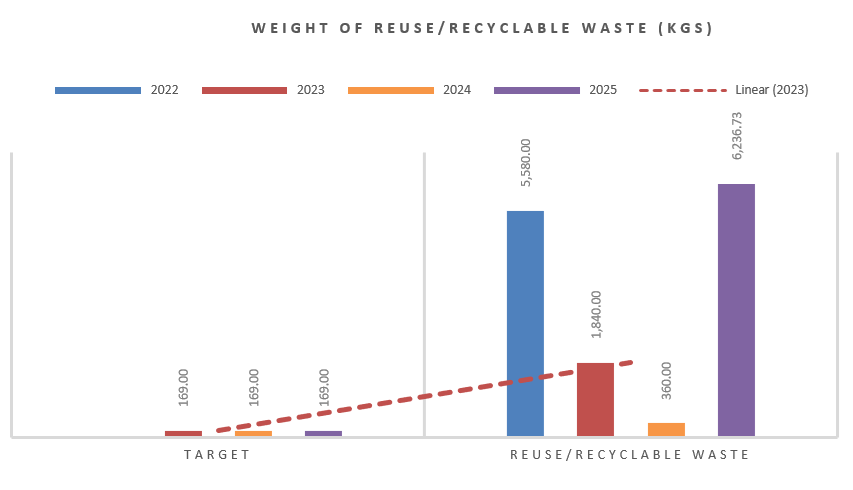
Activities: Waste Sorting
This initiative was launched at the head office and is part of a project by the Thai Listed Companies Association, of which our company is a member. The association is a local organization focused on environmental sustainability. The waste sorting initiative aims to reduce waste pollution and promote resource efficiency. SUTHA is actively participating by sorting materials and waste to enhance the overall industrial ecosystem.
The program, which began in October 2022 and aims to achieve its target in 2023 using the 2022 base, focuses on separating recyclable waste for the country's circular economy. The separated waste is then sent to recycling collection points located near the business premises. The sorted waste will be sent to a nearby recycling facility. Organizations that receive the sorted materials can utilize them in various beneficial ways, such as:
Aluminum wires or materials sent to the International Association of the Physically Disabled for the production of prosthetic legs.
ld calendars, which accumulate annually, can be donated to the Foundation for the Blind in Thailand under Royal Patronage for the creation of Braille materials for the visually impaired.
“Ting To Trash” Representatives from SUTHA received an award of commendation for their concrete contribution to the “Ting To Trash” project from Dr. Kobsak Pootrakul, Vice President of the Thai Listed Companies Association, at the Securities and Exchange Commission (SEC) on May 30, 2025. This reinforces the company's image as a serious ESG (Environmental, Social, and Governance) driven organization. The “Ting To Trash” project is organized by the SEC, in collaboration with the Thai Listed Companies Association and Kid Kid Co., Ltd., with the goal of creating an environmentally conscious corporate culture through efficient waste management using a system that can be tracked and measured. |
|
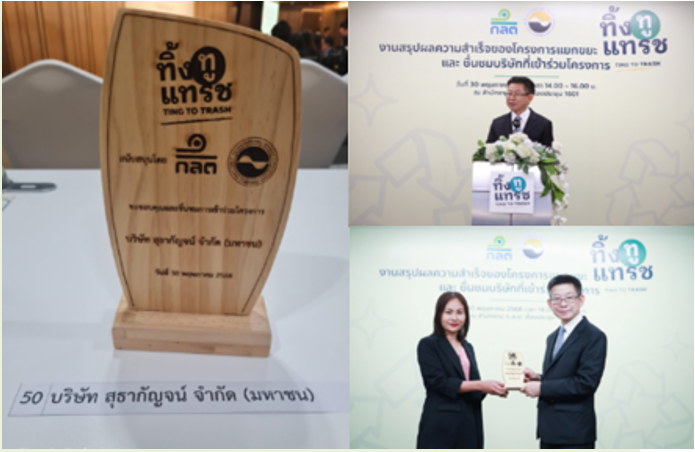
The waste sorting initiative goes beyond merely encouraging employee involvement; it also serves to foster discipline and support social causes, particularly those related to disability rights and human rights advocacy. This project is rooted in a commitment to environmental engagement through systematic waste sorting, aiming for the following goals and advantages:
Good governance
As an organizational accountability to reduce greenhouse gas emissions in line with the Climate Change Action Policy.
To promote circular economy for both the organization and the broader community.
Social:
As astakeholder engagement with the capital market , joining Stock Exchange Working Group and the Thai Listed Companies Association through the “Waste Sorting Project.”
To raise awareness and educate to encourages employees in demonstrating environmental responsibility.
Project Outcomes
Overall, the quantitative results in waste management at SUTHA may not be very high, as the project's primary goal focuses on cultivating a sense of social responsibility and fostering socially and environmentally conscious behavior. However, if personnel within the organization become increasingly aware and cooperate consistently, this behavioral positive impact will extend to colleagues and even family members.
Therefore, the true indicator is not just the amount of 'reduced waste,' but the amount of 'individual participation' in sharing and caring for the same social space. If everyone becomes aware and willing to take shared responsibility, the small contributions of each individual will combine to create a powerful force that helps improve society, the environment, and our world, in line with our motto:
“We contribute to a better world.”
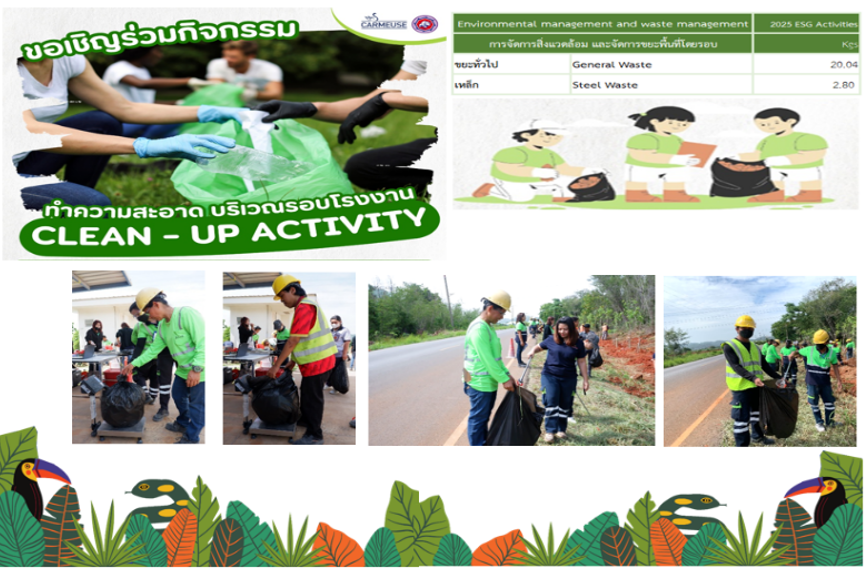
Environmental:
to reduce greenhouse gas emissions by waste management effort
The other activities:
To promote circular economy throughout organization.
1. Preventative maintenance extends the life of the machine and reduces the estimated cost of replacing machine parts and equipment. 2. separating waste into distinct categories and processing each type of waste in the most appropriate way to reduce the amount of wasteenabling easier recycling or disposal 3. Reducing consumption with technology for paperless in the Workplace, using renewable energy to replace purchasedelectricity, selecting fuels to reduce fuel consumption, turning off lights in areas not in use. 4. Reusing such as used pallets, used packaging when necessary, circulating water from water treatment, and circulating energy in the kiln process according to the Generative Vertical Shaft Kiln technology to reduce energy consumption in the kiln process. |
|
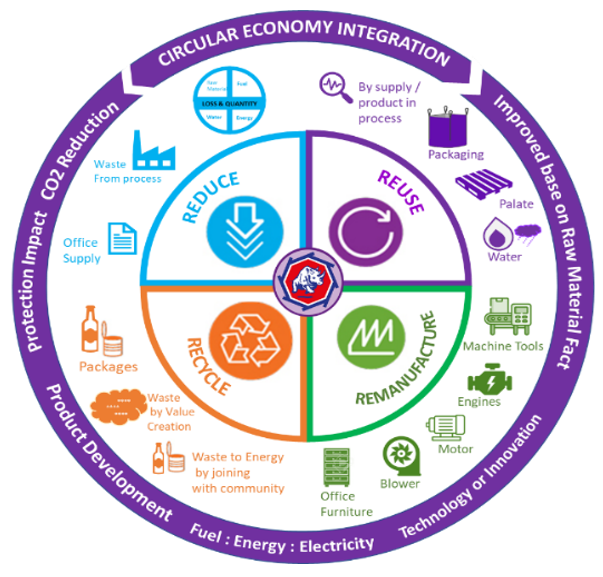
GHG — Plan & Guidelines
Has a GHG Management Plan
Yes
Plan Description
Golden Lime Public Company Limited is a key player in the basic chemical sector recognized as one of the principal industries in Thailand as it serves as a vital production hub for raw materials that support various significant sectors, including steel, chemicals, sugar, paper, construction, mining, energy, food, and agriculture.
The Company's operations involve the use of heat and fuel combustion during the production process, leading to the emission of carbon dioxide, a major contributor to greenhouse gases associated with climate change. Notably, the production of lime is one of the primary activities responsible for these greenhouse gas emissions.
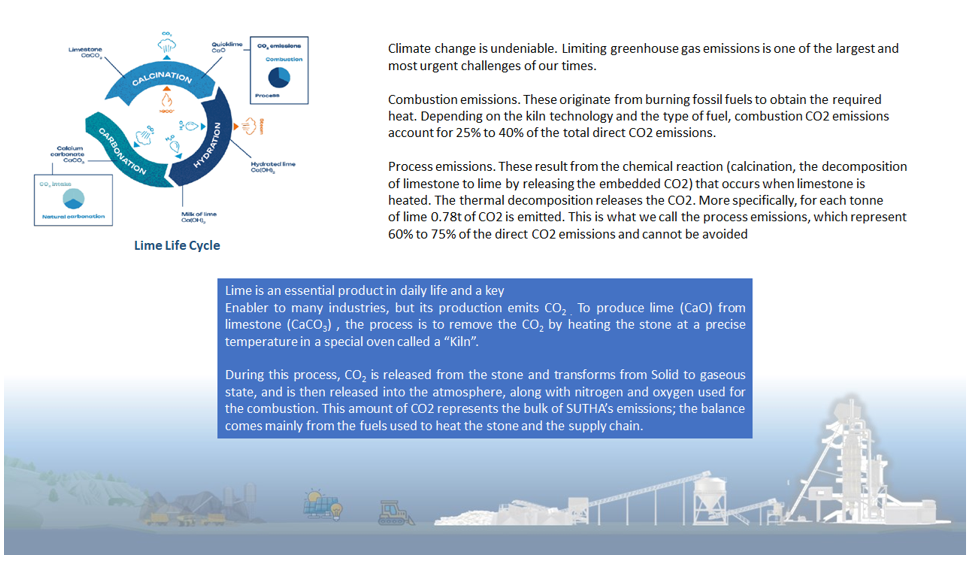
The Company is dedicated to enhancing corporate governance in alignment with the sustainability framework, incorporating the Climate Change Management Policy and Risk Management as key components of its environmental management strategies, as outlined below.
E3. Climate management
Principles
Changing weather patterns may pose the most dramatic risk to businesses large and small then may lead to opportunities or risks in business continuity which require strategies and plans to deal with such situations to reduce risks that may occur to the organization and business.
Guidelines
Establish policies and guidelines to reduce the impact and set GHG reduction targetand/or initiate or take part in activities that can help reduce greenhouse gas emissions.
Set quantitative target to measure performance and adapt strategies
Disclose GHG performance to stakeholders
The establishment of climate change management guidelines is a crucial component of SUTHA's sustainability framework, aimed at addressing the impacts of climate change at both international and national levels. On the international front, driven by policies from indirect major shareholder, the Carmeuse group, that has committed to achieving net-zero greenhouse gas (GHG) emissions by 2050. In Thailand, the draft Climate Change Act is being developed to facilitate the country's goal of reaching net-zero GHG emissions by 2065 or 2068.
Additionally, regulatory bodies such as the SEC and the Stock Exchange of Thailand are promoting corporate governance practices among listed companies. They are also encouraging collaboration among these companies and key stakeholders across various sectors to define strategies for managing the risks associated with rising global temperatures. This includes addressing physical risks from severe disasters and transition risks stemming from evolving legal requirements and standards. Effective governance and risk management are essential to prepare for and mitigate potential impacts on business operations throughout the supply chain, both directly and indirectly.
Climate change associated risks and impacts
Physical Risk
- Flood-related disasters may impact the transportation of goods for delivery to customers.
- High temperatures can lead to various disasters that may impact certain customer industries.
Transition Risk
- Participate in the execution, advocacy, and enhancement of collaboration aimed at achieving carbon neutrality and Net Zero, while addressing both national and international climate change objectives.
- The SEC Office requires the preparation and disclosure of information related to climate change, following the IFRSS2 standard. This involves gathering GHG Scope 1, 2, and 3 data from the Company and its subsidiaries as part of the consolidated financial statements. Additionally, verification and certification must align with the GHG Protocol 2004 standard. The data collection is expected to be finished by 2028, and the auditor-verified disclosure of GHG 1, 2, and 3 data is due by 2029
- Financial institutions are increasingly restricting their lending practices to focus solely on businesses that actively take steps to lower greenhouse gas emissions.
- Carbon Tax trend
- Additional costs from research / investment / system development / testing
+ Opportunities for distributing products to mitigate the effects of air pollution.
Greenhouse Gas Management Strategy
Mitigation measures for the effects of climate change
- Implement the established policies
- Develop strategies and assess SEC, Stock Exchange, Climate Change Act, and Carbon Tax regulations.
- Manage climate change-related risks in line with IFRS S2(
- Foster business partnerships and engage stakeholders in projects to reduce environmental impacts and greenhouse gas emissions.
- Appoint personnel to the Risk and Sustainability development Committee for better representation in climate change sub-committees, aligned with the Committee's sustainability framework.
- Provide training on regulatory standards to enhance disclosure for One Report and financial statements, ensuring compliance with ISSB IFRS S1and S2standards, which the SEC will enforce for all publicly listed companies by 2030.
Plan Document Link
https://goldenlime.co.th/en/climate_management/
GHG — Emissions
Introduction
Golden Lime Public Company Limited put its efforts to develop new technology and innovation to lower greenhouse gas emissions but maintain the product quality for customers expectation. Lime, anyway, also offers benefits to environment as the most available and cost-effective neutralizing agent among all alkali materials that treat wastewater. Lime is often employed to treat hazardous wastes. Lime stabilizes most metals by converting them to more chemically stable forms that are less likely to leach and, as a carbon sink, lime absorbs CO2 from the atmosphere and helps mitigate climate change by reducing greenhouse gas emissions.
The company has established business operation guidelines with management processes to reduce environmental impacts by mitigating risks from climate change and natural disasters as follows:
- Focus onthe development of technology and innovation such as Eco designing to minimize environmental impacts of machinery and production processes
- Reducing greenhouse gas emissions, addressing resource depletion and environmental pollution, and optimizing waste management
- Increase of renewable energy consumption
- Set a feasible target for CO2 / GHG emission reduction and roadmap
- Innovate and develop lime products that offer environmental benefits for customers
- Engaging personnel and stakeholders in environmental activities such as waste sorting, waste management , creating eco-friendly materials, or equipment, etc.
- Form a team to oversee operations and engage stakeholders in the company's value chain.
- Educate more personnel in GHG reduction and data collection
- Participate in stakeholders’ activities in promoting GHG emission reduction
- Registering Solar Farm project to Voluntary Offset Programs - Carbon Offset
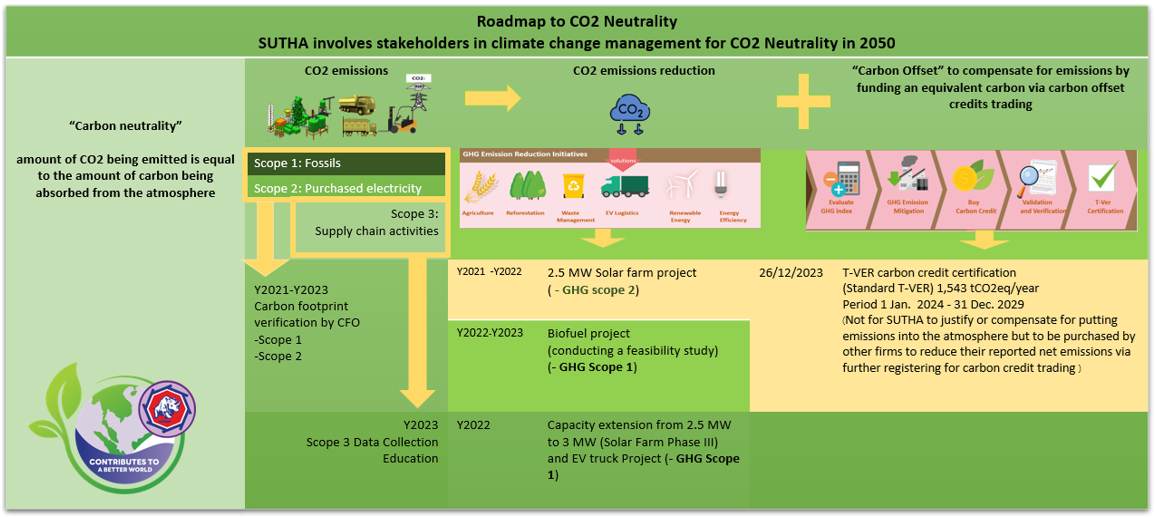
GHG initiatives and engagement as a value creation (GRI 305-5)
Renewable energy: Solar Farm
|
| CO2 neutrality Solar farm 2.5 MW in total formally registered (Standard T-VER) with its GHG emission/result in carbon sequestration at 1,543 tCO2eq per year of the period registered January 1, 2023 - December 31, 2029 |
Expansion of the 1 MW solar farm is underway, with plans to combine an additional 5 Rai of land with the existing 5 Rai for a total capacity of 1 MW. The project is currently in the licensing and permission process to reduce GHG Scope 2 emissions. | ||
| Enhancing engineering and design businesses and their personnel to provide environmentally friendly products, services, and solutions. | |
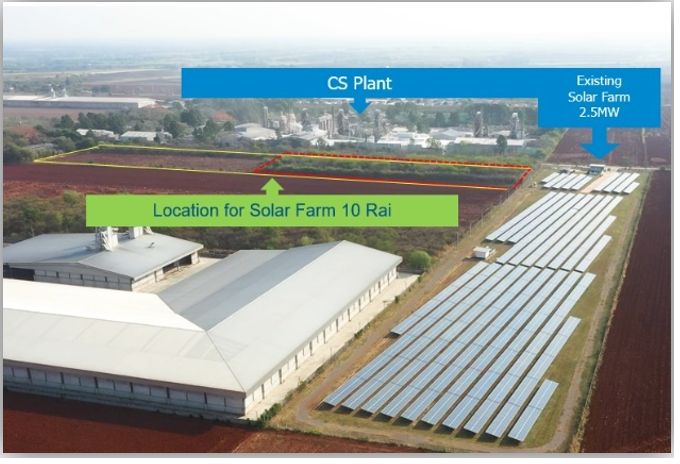
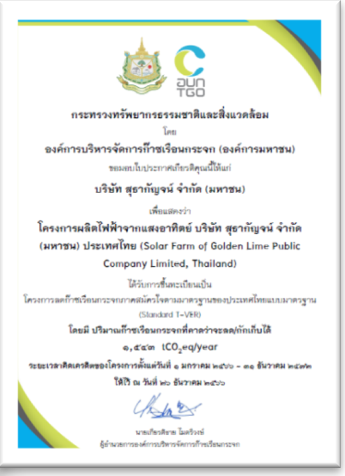
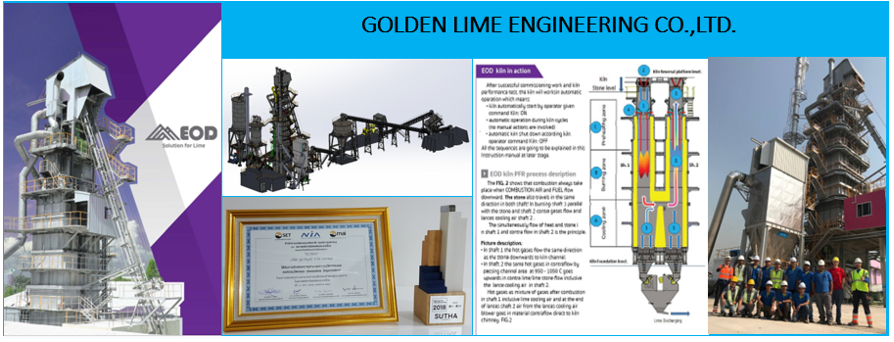
For 2024-2025, the Company has allocated investment funds to implement EV systems as an alternative energy solution to reduce fossil fuel use. The current investments are:
EV Project Golden Lime PCL | Year | Number | Value (mTHB) | Total investment (mTHB) |
EV Charger | 2025 | 2 | - | Included in the purchase |
Production support – EV front loader | 2025 | 2 | 5.23 | 10.46 |
Production support – EV forklift | 2025 | 2 | 0.96 | 1.92 |
Logistics / delivery – EV truck | 2025 | 1 | 6.70 | 6.70 |
Executive car | 2025 | 1 | 1.04 | 1.04 |
Total | 16.89 | |||
The Company is also encouraging its subsidiaries to switch to alternative energy sources, even though complete energy consumption data needed for greenhouse gas emission calculations is not yet available. Still, these subsidiaries have already implemented policies to include electric vehicles (EVs) as part of their plans to replace older vehicles. Their EV-related investments include:
EV Project Thai Marble (Subsidiary) | Year | Number | Total investment (mTHB) |
Electric front loader (EV front loader) | 2025 | 2 | 10 |
Installation of EV charging stations | 2025 | 1 | 2 |
Total | 12 | ||
The project aims to cut diesel and gasoline use starting in 2025, supporting efforts to lower greenhouse gas emissions as part of project 1.
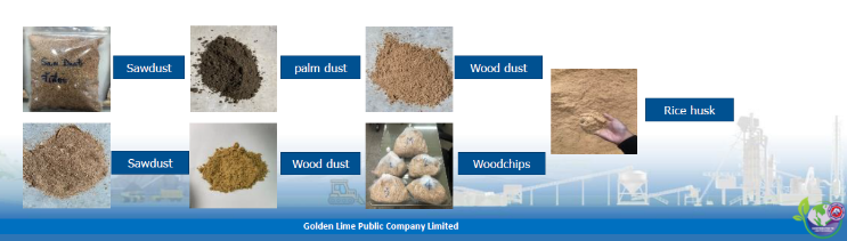
Substituting coal with biomass as fuel demands not only a suitable and quality biomass source with proper temperature and calorific value, but also a dependable and consistent supply of raw materials. Additionally, developing methods to grind and pulverize biomass into powder for solid fuel injection into kilns is essential. According to research from 2023 and 2024, these development initiatives need substantial investment and are currently undergoing evaluation, feasibility studies, and monitoring. Ongoing oversight of government policies supporting investment and tax incentives is important to ensure investments are both secure and efficient.
GHG Emissions
| Metric | Current Year | Previous Year | Two Years Ago | Remark |
|---|---|---|---|---|
| Total GHG emissions (Metric tonnes of carbon dioxide equivalent) | 337,972 | 362,475 | 350,590 | |
| Total greenhouse gas emissions 1 (Metric tonnes of carbon dioxide equivalent) | 329,123 | 352,718 | 340,369 | |
| Total greenhouse gas emissions 2 (Metric tonnes of carbon dioxide equivalent) | 8,849 | 9,757 | 10,221 | |
| Total greenhouse gas emissions 3 (Metric tonnes of carbon dioxide equivalent) | 0 | The greenhouse gas emissions Scope 3 for the year 2024 amount to 14,661 tonnes of carbon dioxide equivalent and are currently undergoing verification. |
GHG — Emissions Verification
Introduction
Carbon Credit from Solar Farm (GRI 305-5)
Year | Unit: (MWh) Solar generated | Unit: Tons CO2e / (2565- 2564) | % Credit | ||||||||
Scope 1 | Scope 2 | Scope 3 | Other | Total | Scope 1 | Scope 2 | Scope 3 | Other | Total | in scope 2 | |
2021/* |
| 3,058 |
|
|
|
| 1,528.5 |
|
|
| 12.43% |
2022/* |
| 3,384 |
|
|
|
| 1,691.8 |
|
|
| 15.15% |
2023 | 3,434 | 1,716.7 | 16.80% | ||||||||
2024/* | 3,396 | 1,697.5 | 17.40% | ||||||||
2025 | 3,177 | 1,588.1 | 17.95% | ||||||||
Remark: * Updated information
Scope 1 Direct emissions from owned operations, including company-owned vehicles and buildings; carbon dioxide emission occurs during the decarbonation of limestone to lime and remains from fuel burning, thermal energy derived from coal petroleum coke, Bituminous coal. Additionally, burning fuel in our fleet of vehicles, gas consumption or the amount of CO2 consumption for fire extinguishers, etc.
Scope 2 Indirect emissions from the generation of purchased electricity, heating, and cooling consumed by the organization, not directly owned or controlled by the organization but are related to its energy consumption.
Scope 3 Other Indirect GHG Emissions that originate from activities outside an organization’s scope of control upstream as well as the downstream emissions, such as those emitted by suppliers and customers, transportation of goods, employee commuting, business travel, and waste disposal in which the Company is studying and considering data to keep.
Emissions Verified by a Third Party
Yes
Verifying Body
2656
Verifying Body — Please Specify
SGS (Thailand) Limited
GHG — Principles & Standards
Principles & Standards Applied
| Standard |
|---|
| 2671 |
| 2677 |
GHG — Targets
Has Set GHG Targets
Yes
GHG Targets — Net Zero
Introduction
SUTHA is a network organization operating under the management policies of the Carmeuse Group, Europe, Middle East & Asia. It has adopted and applied strategies to reduce greenhouse gas emissions through the knowledge and management approaches set by Carmeuse shareholders. The group has established medium- and long-term strategies to reduce greenhouse gas intensity by 25% within Scope 1-3 by 2030, based on the 2019 baseline for its European companies, and by 20% for its North American companies. Although no specific targets have been set for the Asian network, SUTHA is committed to contributing to global improvement. SUTHA will develop and apply medium- and long-term targets to reduce greenhouse gas emissions, initially aligning with the group's management policies to achieve carbon neutrality. The targets will be applied starting in 2021, the year when GHG data collection for Scope 1 and 2 began, using year 2022 as the baseline year and the cumulative reduction target from 2022 to 2030 is 25% of the baseline, equivalent to a total reduction of 108,500 tons of greenhouse gases by 2030.
GHG Targets — Carbon Neutrality
Introduction
Setting carbon neutrality targets |
Based on the major shareholder, the Carmeuse goal: carbon neutrality by 2050 > 5 core strategies
SUTHA aims to act on climate change and collaborate with commercial stakeholders through Application engineering and support to design environmental product to combat climate change and reduce carbon emissions |
Note : The target format according to set by the eOne Report date platform guidelines.
Carbon Neutrality Targets
| Emission Scope | Carbon Neutrality Certified | Certifying Body | Certifying Body — Please Specify | Base Year | Base Year Emissions | Target Year | Target Year Emissions | Target Change (%) | Unit |
|---|---|---|---|---|---|---|---|---|---|
| 2716 | Y | other | SGS (Thailand) Co., Ltd. | 2,022 | 434,099 | 2,030 | 108,525 | 25 | Metric tonnes of carbon dioxide equivalent |
GHG — Performance & Outcomes
Has Performance Results
Yes
Performance Description
During Y2022 - 2025, the Company excluding its subsidiaries started collecting emission data to be verified and certified by a certification body certified by the Greenhouse Gas Management Organization (TGO), as per the following Scope 1 and Scope 2.In 2024, data collection and verification of Scope 3 began, but the goal could not be achieved due to obstacles in data collection and compilation. The data collected for Scope 3 did not meet the standards set by the verifiers, thus preventing data verification. Furthermore, due to budget control policies stemming from economic consequences, the company hired expert consultants to advise on data collection and verification. However, the Scope 3 verification plan was postponed until data collection is complete. The scope of data collection in Scope 3 includes categories such as employee travel, business travel, goods transportation in the procurement process, fuel and energy activities, capital goods, purchased goods and services, and transportation and distribution in the delivery process. The following activities and operations have been developed and implemented:
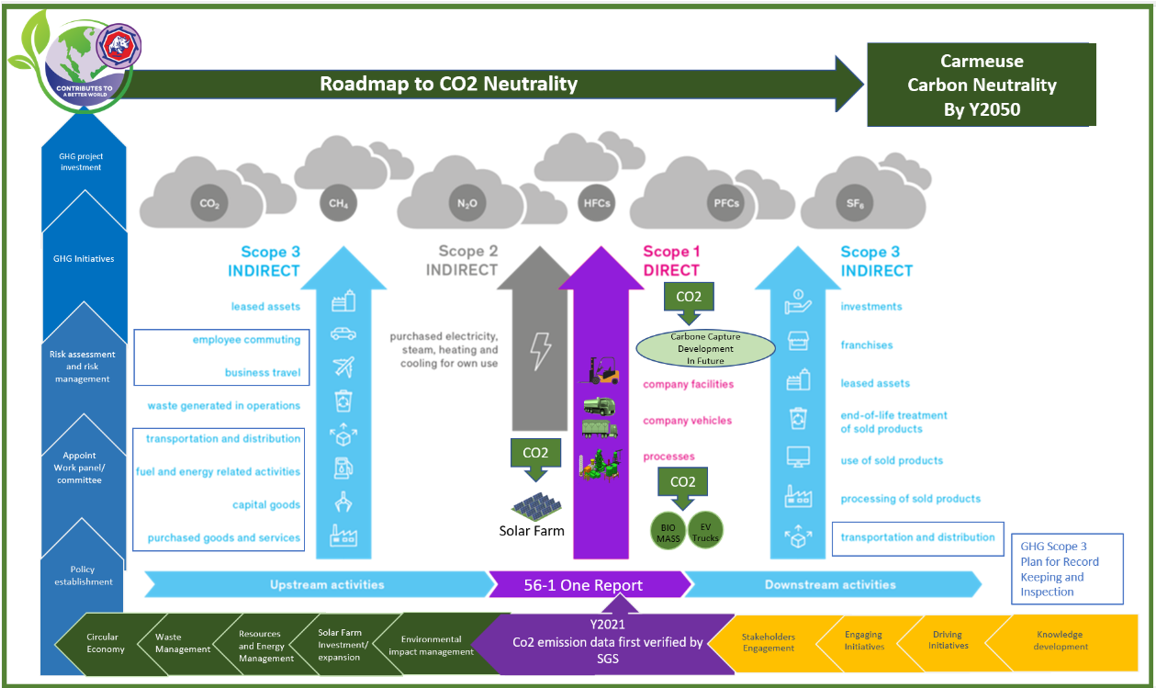
Performance and outcomes of greenhouse gas management
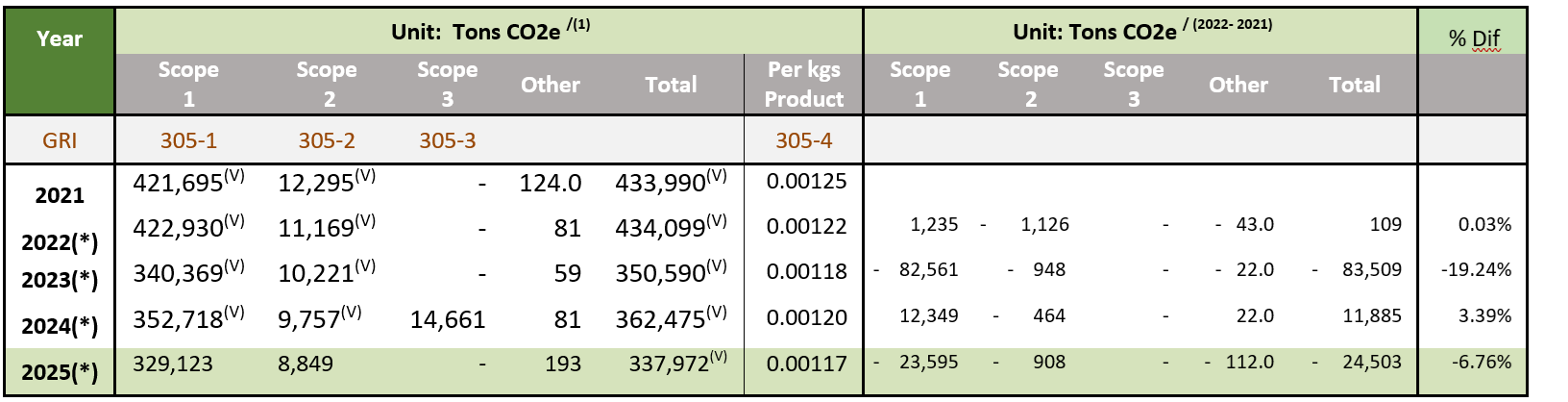
Remark: Updated value (*)
Environmental Legal Incidents
Number of Incidents — Introduction
Details on breaches of legal regulations or environmental harm.
- The company group has no disputes, issues, or incidents of legal violations or environmental impacts that contravene laws or regulations related to environmental protection, resulting in damage to natural resources or living organisms.
- The company group has no non-financial impacts, meaning no actions or omissions that violate environmental laws or regulations, causing damage to the environment in ways that cannot be directly monetarily assessed but harm quality of life, ecosystems, cultural heritage, reputation, and business operations. Examples include a decline in wildlife, extinction of endemic plants, denial of project permits, or health impacts on the population due to company activities.
- The company group has no financial impacts, meaning no actions or omissions that violate environmental protection laws or regulations, causing financial damage to the organization.
- The company has no expenses for environmental remediation due to violations, such as chemical spills, wastewater treatment, or hazardous waste disposal.
- The company has no incidents requiring compensation for the loss of natural resources, with costs following legal plans for reforestation or land rehabilitation from mining activities, without expenses due to the loss of natural resources like forests, wildlife, and water sources, causing long-term economic damage.
- The company has no violations resulting in fines or civil damages, and no actions that could lead to fines or compensation to affected parties.
Environmental Complaints
Complaint: an allegation or narrative expression of dissatisfaction that highlight problems or areas for improvement, resolution to alleviate suffering or request for action.
Number of environmental complaints (GRI : 308-2)
2023 | 2024 | 2025 | |
Number of cases filed | 4 | 4 | 8 |
Number of cases closed | 4 | 4 | 8 |
Number of cases pending for rectification | 0 | 0 | 0 |
Legal Violation Incidents
| Metric | Current Year | Previous Year | Two Years Ago |
|---|---|---|---|
| Number of cases or incidents of legal violations or negative environmental impact (cases) | 0 | 0 | 0 |
Other Environmental Management
Introduction
The Biodiversity Management Data
Target and indicators
SUTHA has Monitoring progress in biodiversity action to jointly develop and drive positive biodiversity, SUTHA has set the following targets:
Biodiversity Target | Data source | Indicators | |
| Biodiversity Check /1 Core production Area assessed every 3 years / or as appropriate or when there is a new project or property or there is a significant change. | - Registration area, factory operating license - Location map, main activities - Environmental Audit Checklist - Animal and plant conservation account information and registration of conservation areas, forest reserves or important heritage sites in each area | - Distance between 1 , 5, 10, 20, 25 km. from the protected area |
Target | Performance | ||
100% | 100% | ||
| A process/project that restores biodiversity or restores the environment from the results of operations and use of land or resources according to the rehabilitation plan of the project or area specified in accordance with environmental management measures. | - Number of projects with annual implementation plans - Implementation of the plan | - Percentage of plan implementation |
Target | Performance | ||
- Area of the concession number 32499/15852Khao Ngob | - Planting a total of 446 trees as per the plan, with a budget of 68,000 baht. | ||
- Area of the concession number 32517/16065Khao Khao | - Planting a total of 108trees as per the plan, with a budget of 39,240 baht. | ||
| Area/project/process located in an area protected by IUCN / 2 definition. ( project) | - Site inspection According to the specified distance and criteria | - Number of projects or establishments located within a distance from the protected area |
Target | Performance | ||
- No project in IUCN area | - No project in IUCN area | ||
| Collaborating with external organizations to create positive biodiversity or engaging stakeholders in management, promoting the increase of green spaces and promoting sustainable ecosystems. | - Plans and activities related to the promotion of biodiversity, environmental impact mitigation, or related matters. | - Number of projects - Expenditure budget - Benefits |
Target | Performance | ||
- rganize and participate in environmental initiatives like tree planting and biodiversity projects. | Tree planting project to reduce environmental impact June 2024/and | ||
| managing impacts on biodiversity and create opportunities from biodiversity value with offering products to reduce environmental impacts. | - Sales volume of products in groups that promote the environment, agriculture, food and the promotion of good life | Proportion of sales of environmentally friendly products and products that promote sustainable living |
Year | Target - compared to the previous year | Performance | +/- |
2022 | Upward trend | 43% | - 4% |
2023 | Upward trend | 53% | +10% |
2024 | Upward trend | 50% | - 3% |
2025 | Downward trend | 36% | - 14% |
| Adequate information is accessible, and the communication and sharing of biodiversity management data are conducted in compliance with relevant standards. | - Preparation of biodiversity assessment reports - Disclosure of biodiversity performance data - Channels for receiving complaints regarding violations related to biodiversity | - Complaints related to biodiversity and complaints about business process impacts - Sustainability assessment results on biodiversity operations |
Target | Performance | ||
- Completed Evaluation report - Successful Annual data disclosure - No complaints about biodiversity | - Y2025 report prepared. - Y2025 disclosure in the Annual report - No complaint in Y2025 | ||






Management Approach and Strategy
Commitment to biodiversity management
SUTHA, as an organization, that dedicates to manufacturing products and providing services that convey the value and advantages to the production sectors, encompassing both industry and agriculture, both domestically and internationally. Recognizing the significance of biodiversity, the Company integrates its operations and practices within the context of its business activities by formulating a development plan that aligns with the objectives outlined in the National biodiversity strategies and action plan.
The Office of Natural Resources and Environmental Policy and Planning (ONEP) has disclosed the international cooperation framework that emerged from the Kunming-Montreal Global Biodiversity Framework meeting held on January 30, 2023. The summary of the collaborative biodiversity framework among the conference participants is categorized into three distinct groups;
1. Mitigate risks to biodiversity by enhancing and expanding regions rich in biodiversity, minimizing pollution, and eradicating invasive alien species that pose a threat to ecological balance.
2. Ensure the sustainable utilization of biodiversity through the adoption of bio-based products and the environmentally responsible management of agricultural and fishery sectors.
3. Establish frameworks to encourage the integration of biodiversity considerations across all sectors, fostering inclusive participation.
The ONEP has established a national strategy to drive biodiversity. 2023 – 2047 ( Long-term Strategy Approach to Mainstreaming Biodiversity of Thailand) consists of:
Strategy 1: Promote biodiversity by ensuring that all relevant government agencies actively implement policies at the governmental level.
Strategy 2: Integrate biodiversity into the operations and practices of the business sector, particularly in key economic areas such as agriculture, services, industry, and finance.
Strategy 3: Foster biodiversity within society to enhance the quality of life and overall well-being for all individuals.
The Company is dedicated to the principles of sustainability development. On November 10, 2023, the Board of Directors endorsed the Sustainability Development and Environmental and Social Responsibility Policy, which establishes a framework for environmental management and the integration of biodiversity (E 6). This policy outlines guidelines for managing biodiversity as an integral component of sustainable environmental development.
Principle
As the business activities of the Company and its subsidiaries are related to resource groups and rely on natural resources for production, which in the business area may affect and/or create an impact on the ecosystem, the Company has established management guidelines to prevent risks that may arise from violating regulations that may affect the ability to renew the licenses for business operations of the Company and its subsidiaries, including preventing damage to reputation, and has established business guidelines to be consistent with the guidelines for preserving the ecosystem and biodiversity.
Guidelines
The Company has established and disclosed a biodiversity policy that recognizes and aims to reduce impacts from business operations and promotes and places importance on the maintenance of biodiversity. It is considered a business responsibility and one of its duties to help drive development to maintain and return value to the ecosystem and to place importance on restoring nature and enhancing biodiversity, including the life cycles related to the ecosystem (Ecosystem) which are related to the Company's business operations. It has set guidelines to support biodiversity management and set guidelines for land use of the Company.
Actions are being taken to preserve or protect biodiversity. or there is restoration of the natural environment or ecosystem in the activities or departments that may be affected by the business process
Governance Structure
Formulate practices for the oversight and assessment of environmental management, ensuring that biodiversity initiatives are integrated into the development processes guided by the environmental policies of the Company and its subsidiaries. The collaborative supervision and execution include:
Board of Directors
1. Evaluate, endorse, and assess existing biodiversity management policies and guidelines that align with environmental conditions and risk factors, encompassing business activities and stakeholders across the value chain, with periodic reviews as necessary.
2. versee business operations to ensure adherence to applicable laws, regulations, policies, and practices, while actively encouraging the practical application of these policies.
3.Guide and assist management in performing a Biodiversity Check to guarantee effective risk management.
4. Review the proposed annual biodiversity performance outcomes and offer recommendations that may assist management in fostering appropriate development and enhancement.
5. Advocate for and assist management in integrating biodiversity management into the organizational operational culture.
Executives
1. Develop criteria, procedures, and guidelines for conducting biodiversity analysis and assessment (Biodiversity Check), ensuring that biodiversity management guidelines are tailored to the specific context and comply with the relevant policies, procedures, and laws of the country where the business operates.
2. Create an organizational framework that defines clear responsibilities and roles, while ensuring the allocation of adequate and appropriate resources.
3. Set forth objectives, targets, strategies, plans, and indicators to facilitate effective and comprehensive biodiversity management.
4. versee, manage, and assist employees, business partners, allies, and key stakeholders in adhering to laws, policies, measures, and regulations pertaining to biodiversity, while enhancing practices for improved efficiency.
5. Foster and advocate for a culture of ecosystem and biodiversity protection by effectively communicating the importance of these values to all employees and relevant stakeholders.
6. Prepare performance reports detailing the outcomes of biodiversity initiatives for presentation to the Board and stakeholders.
7. Establish mechanisms for reporting and addressing complaints regarding breaches of biodiversity management, including procedures for complaints and protections for whistleblowers, complainants, and reporters.
Designated personnel for environmental matters or the Risk Management and Sustainability Development Committee.
1. Develop clear strategic plans, action plans and biodiversity management measures that are consistent with the business context.
2. Establish a process for disclosing and reporting biodiversity management information that is clear, transparent and accountable.
3. Conduct a biodiversity assessment ( Biodiversity Check) and provide guidelines for prevention and mitigation of actual or potential impacts.
4. Report information on significant biodiversity issues (if any) to the management regularly and report immediately when any unusual events occur.
5. Internal control, risk management and monitoring of policy compliance to ensure efficiency and strictness, including reporting and following up with relevant departments to ensure regular adjustments.
6. Monitor, inspect, collect data and prepare reports on biodiversity management, as well as manage disclosure of information to the Company's executives, board of directors and stakeholders on an annual basis in order to comply with the framework set by regulatory agencies.
7. Coordinate and integrate cooperation with relevant individuals, agencies or stakeholders to jointly determine measures, management, control mechanisms, responses and problem solving.
8. Participate in reviewing biodiversity policies to ensure compliance with relevant laws, regulations, practices and standards.
Employee
1. Learn, understand and comply with relevant laws, regulations, rules, policies and practices, including standards.
2. Communicate and transfer knowledge about the company's biodiversity policies and goals to business partners, customers, communities, business partners and relevant stakeholders.
3. In the event of observing any misconduct or actions that could potentially breach the policy, kindly submit the information or file a complaint via the company's whistleblowing channel.
Plan Description
Target and indicators
SUTHA 's sustainability “ We contribute to a better world.” | ||||
SUTHA 's Biodiversity Management Objectives and Strategies | ||||
Mitigate risks to biodiversity |
Sustainable use and promote sustainable society and consumption |
Encourage the integration of biodiversity considerations across all sectors, fostering inclusive participation | ||
1. Biodiversity Check is conducted at business establishments and kept reassessed as needed, especially when new projects or assets are located or when significant changes occur. 2. Oversee environmental restoration efforts based on established plans and strategies to prevent and reduce impacts from land or resource utilization. 3. Refrain from engaging in business or investing in areas, projects, or processes situated in protected regions as classified by the IUCN. | 4. Partnering with external organizations to enhance biodiversity, involving stakeholders in management efforts, expanding green spaces, and fostering sustainable ecosystems.
| 5. Adhere to all laws, regulations, and mandatory standards concerning biodiversity and forests. 6. Implement land use and operational management strategies to prevent and reduce impacts on biodiversity. 7. Utilize a "tiered mitigation" strategy that prioritizes avoiding significant impacts, minimizing effects through operational improvements, and restoring or offsetting any losses. 8. Incorporate biodiversity value opportunities into SUTHA's business growth and marketing strategy. 9. Ensure that adequate information is accessible and that biodiversity management details are communicated and disclosed according to relevant standards. | ||




Communication, policy communication channels and training
The Company disclosed its Biodiversity Policy through its website and electronic communication methods, such as email, while also storing it in a Share Folder that contains various company policies. Key individuals within the organization, including directors, executives, and staff, will receive policy documents through suitable internal communication channels. These individuals can access information for training purposes. The HR department will conduct orientation sessions to familiarize employees with the Company’s policies, ensuring they understand the best practices. Additionally, designated personnel will effectively communicate with relevant stakeholders and choose suitable methods to share knowledge about biodiversity, enhancing employees' understanding of the topic such as
https://www.youtube.com/watch?v=Rfe9bDz2QM8 or https://www.facebook.com/watch/?v= 1418018581586465
https://www.youtube.com/watch?v=kaJFJ3-jIgs
Whistleblowing
All who observe actions that could potentially breach the policy are encouraged to submit a complaint and provide information via the following channels:
https://goldenlime.co.th/en/complaints/
The procedure will adhere to the Whistle-blowing Policy. The individual making the complaint or acting as a whistleblower will receive protection, and all information will remain confidential, ensuring that their position and compensation are not impacted during the investigation and after its conclusion. | Contact Location GOLDEN LIME PUBLIC COMPANY LIMITED Internal Auditor/Internal Auditor Coordinator 7 Soi 11, Sai 3, Moo 12, New Saraburi-Lom Sak Chong Sarika Subdistrict Phatthana Nikhom District Lopburi 15220 Phone: 036-436 178 Email: complaint@goldenlime.co.th The secretary to the audit committee 89, Cosmo Office Park, 6th Floor, Unit H, Popular Road, Banmai Sub-district, Pakkret District, Nonthaburi Province 11120 Tel. 0 2017 7461-3 Fax.0 2017 7460 E-mail : complaint@goldenlime.co.th |
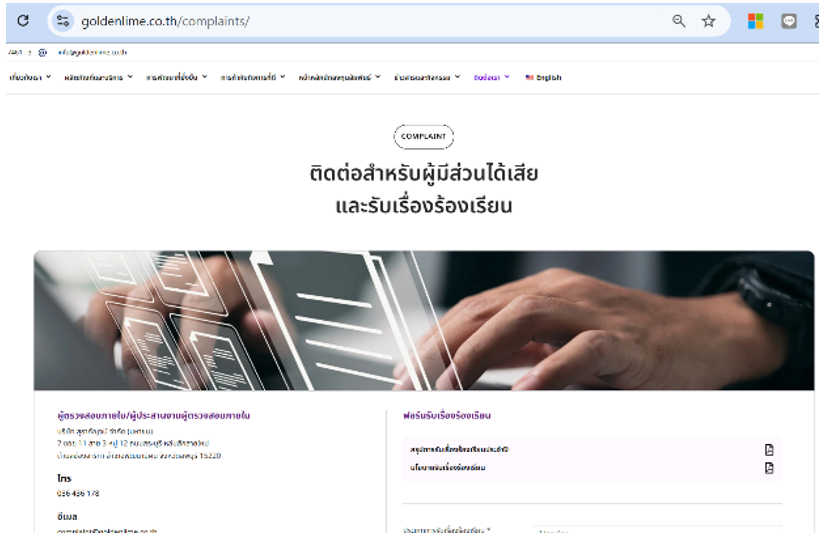
Punishment
The Biodiversity Policy is a fundamental component of the Company's operational framework, which Directors, Executives, and Employees shall follow as part of established policies and procedures. Any breach or failure to comply with this policy will lead to penalties for actions that contravene the Company's policies or procedures.
Performance and previous initiatives
1. The company successfully managed the documentation of its policies and statements of intent related to biodiversity. It carried out biodiversity assessments and presented the resulting policies, management plans, and strategies, along with the biodiversity assessment report, at the risk management sustainable development committee meeting held on February 18, 2026.
Biodiversity Policy and Statement | Biodiversity Check Report |
|
|
Assessment of risks and impacts on biodiversity
1.1) The property's location and proximity to protected areas, involving an assessment of its geographical position relative to national parks, wildlife sanctuaries, forest parks, non-hunting zones, and marine protected areas
Result : Non - Impact
The survey conducted on the locations of assets utilized for primary business operations and production processes, which engage with the ecosystem and resource utilization, has identified a total of 11 sites, including head offices and branches. Notably, all 11 sites, encompassing both factory locations and areas designated for limestone and marble quarrying, are situated at a considerable distance from national forest reserves, with the nearest reserve being over 200 kilometers away. Furthermore, these locations are not situated within protected areas or regions characterized by high biodiversity, such as national parks, wildlife sanctuaries, forest parks, non-hunting zones, marine and coastal protected areas, or any areas that may be adjacent to or potentially impact biodiversity protected under international law.
1.2) Reliance on ecosystem services, freshwater supplies, and the utilization of natural resources or assets, including land, minerals, energy, and fuels.
Result: Business operations rely on ecological services, including fresh water from underground reserves.
1.3) Plant and animal species on the IUCN Red List in the specified areas within the scope of the provinces of the business establishments
Result: The Company has not conducted a survey in the area to assess the distribution of the mentioned plant species. In terms of production and related processes, there is no utilization of raw materials or any materials that may include species or plants listed for conservation. To reduce impact, the Company plans to utilize the data from the survey to collaborate with local agencies for future management strategies.
1.4) Water stress in the area and the risk of water shortages ( From tools and from areas and business impacts)
Risk and impact assessment on water shortage in SUTHA 's business processes : The Department of Groundwater Resources, under the Ministry of Natural Resources and Environment, has released a report based on a survey of groundwater sources in Phatthana Nikhom District. This report compares the survey data with published sources to evaluate water use stress, which refers to the ratio of water withdrawal to the total available water in the area. It also assesses the availability of fresh water for local use and maps potential water-related risks for SUTHA's operations. The findings indicate that SUTHA is not significantly impacted by water resource shortages. This conclusion aligns with the groundwater depletion assessment from the Ground Water Table Decline Risk (Water Risk Atlas Tool), which shows that groundwater depletion levels are not significantly reduced. The Lopburi Province benefits from surface water due to local rainfall and water storage from the Pasak Jolasid Dam, as well as overflow from the coast, all of which contribute to groundwater replenishment.
1.5) Pollution from business processes and there are measures to monitor and control and inspection from certified external agencies.
Result: In 2025, three locations received eight complaints about dust pollution affecting the community. All complaints were resolved without any environmental disputes or negative consequences.
1.6) “Hierarchical mitigation” measures ranging from avoiding severe impacts, minimizing impacts by improving operations, restoring and compensating for losses.
Mitigation measures for Water Depletion Risk
1. Develop guidelines for managing water resources and implement strategies to oversee water usage, enhance water recycling, and minimize water consumption.
2. The issue of freshwater scarcity due to limited tap water availability has been mitigated by obtaining authorization to access underground freshwater sources from the Department of Groundwater Resources. Requests have been made to drill artesian wells in various locations to serve as a freshwater supply for both consumption and production needs.
3. Ensure the provision of drinking water that complies with consumption standards as a benefit for employees, while also supporting local drinking water preferences, which are vital for public services, including distribution to community service points or agencies.
4. Water management practices are aligned with the principles of a circular economy, focusing on reducing water consumption, enhancing the use of recycled water, and improving the system for storing used water in lime sedimentation ponds for future reuse.
5. Establish preventive strategies to ensure that high-alkalinity water from the production process is not released into the environment.
Mitigation on Dust pollution
In addition to setting up equipment for pollution control, ISO international management standards serve as a framework for management practices.
Comply with applicable environmental laws and regulations.
Conduct environmental quality assessments as mandated by law.
Implement closed systems for operations that may produce dust and noise.
Install a water spray system to manage dust in raw material storage areas and to clean truck wheels.
Set up a Slan installation as a dust protection measure.
Use water spraying and cleaning methods to minimize dust accumulation on the Slan, trees, and the factory's surrounding areas.
Establish a cover system to shield moving or transporting points to limit dust dispersion.
Regularly inspect and repair any parts of the process system and machinery that could be damaged, leading to dust leaks or spread.
Plant trees strategically to mitigate dust around the factory.
Utilize solar energy to address environmental issues.
Manage resources effectively.
Reuse renewable resources.
Designate a responsible individual and management system, including structured measures to address issues and complaints promptly.
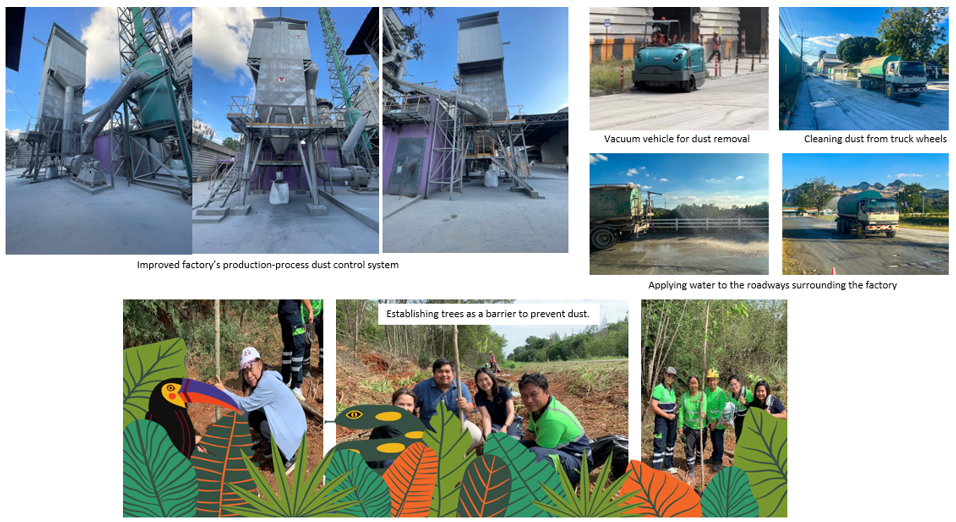
Mitigation on Carbon emissions
Establishing policies for effective Climate Change management.
Investing in solar power generation to enhance carbon offsetting.
Monitoring greenhouse gas emissions to identify reduction strategies.
Defining goals and executing initiatives to lower greenhouse gas emissions related to resource and energy management.
Expanding green areas and encouraging community involvement in tree planting efforts that aid in carbon sequestration.
Mitigation on Change in utilizing land
Control and supervision are in place to ensure proper compliance with laws and taxes.
Management to comply with the Biodiversity Action Framework
proper land use management.
Implementation of the plan for prevention and management of impacts, including monitoring of operations to ensure compliance with standards and compliance with relevant laws.
Tree planting plans are being implemented, with trees being planted in planned areas to offset land use from mining processes.
Monitoring is carried out to assess environmental quality according to specified criteria and standards.
Processed water is controlled to prevent it from being discharged into public water sources.
The quality of processed water and water quality from underground sources are monitored.
Mitigation on the utilization of natural resources
Adherence to applicable laws and regulations has been confirmed, along with the complete and accurate payment of all associated fees.
Resource utilization is being managed to ensure maximum benefit, with process controls established to address environmental, safety, and occupational health considerations.
Efforts are underway to explore and secure sufficient reserves to fulfill the production plan.
Sustainability development is being implemented.
2. The Company examines the relationship between its business activities and their effects on biodiversity and ecosystems to pinpoint potential risks and opportunities, which will lead to the development of businessactivities that considerthe sustainable use of natural resources.
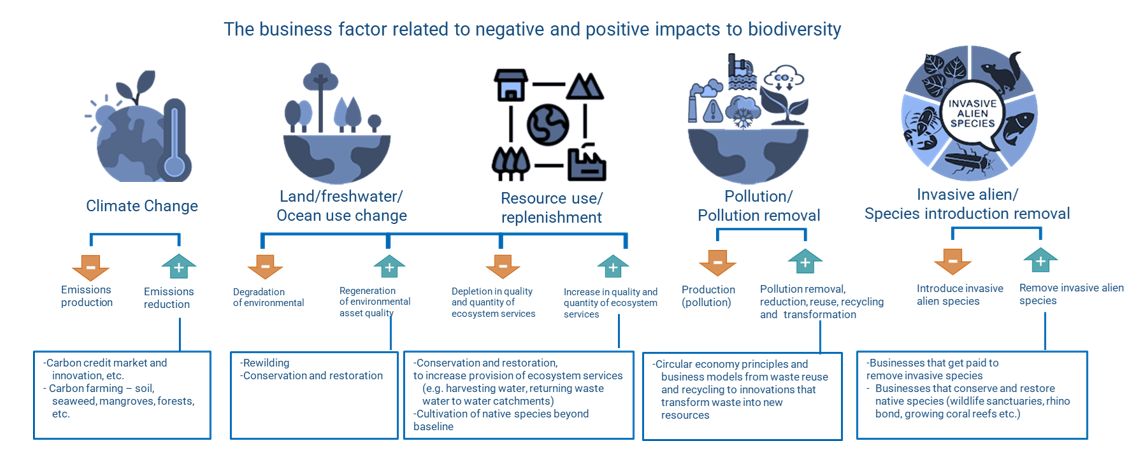
To develop management strategies for mitigating biodiversity risks and impacts through a collaborative stakeholder network. A comprehensive assessment of corporate responsibility for biodiversity has been created, which includes:
1) Strategy/Organization Management
2) Relevant stakeholders
3) Land, buildings and real estate
4) Procurement of raw materials, energy, water, etc.
5) Product development and production processes
6) Logistics and transportation system
7) Products and services
8) Sales and Marketing
9) Human resources
Details can be found in the Biodiversity Audit Report published on the website.
3. Announcement of the policy and training on biodiversity for employees and stakeholders, such as training employees and business partners of the company.
The company conducted training session focused on human rights, climate change, and biodiversity was arranged, involving employees from procurement, human resources, and core operations departments, as well as key business partners and contractors.
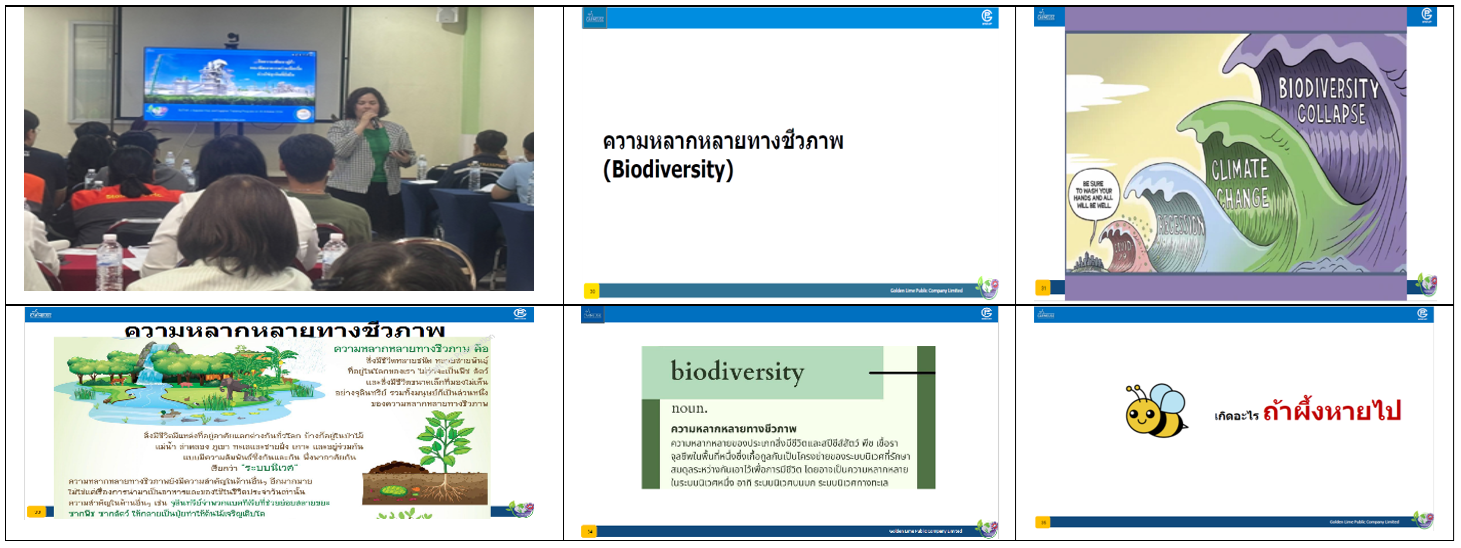
4.Manage the environmental restoration to prevent and mitigate impacts from land or resource use.
According to the rehabilitation targets and plans, including increasing green areas from land use according to the concession that Thai Marble Co., Ltd. (a subsidiary) has received a concession and license to use the land for marble and limestone mining.
According to the plan, tree planting has been carried out according to the plan to restore and compensate for areas from land use as follows:
Concession No. 32499/15852
The concession period is 10 years, starting from 21 April 2009. Expiry date 20 April 2019.
The concession certificate has been renewed for another 15 years, starting on 21 April 2019. The expiration date is 20 April 2034.
Land use after mining ends: Developed as a public water source.
Date of operation: 18/7/2024
Results of rehabilitation at the mine site in 6 locations, area 2 rai.
Measure: Plant trees along the edge of the road leading up to the mine. The mineral transportation route and the edge around the concession line are an area of 2 rai.
Planting area at the foot of the mountain to the north
Types of trees planted:
1. Bamboo, total 300trees, total budget 28,929baht
2. Neem trees, total 123trees, budget 32,161baht
3. Rain trees, total 23trees, budget 6,910baht
Total tree planting to compensate and increase green areas, total 446 trees, total value 68,000 baht
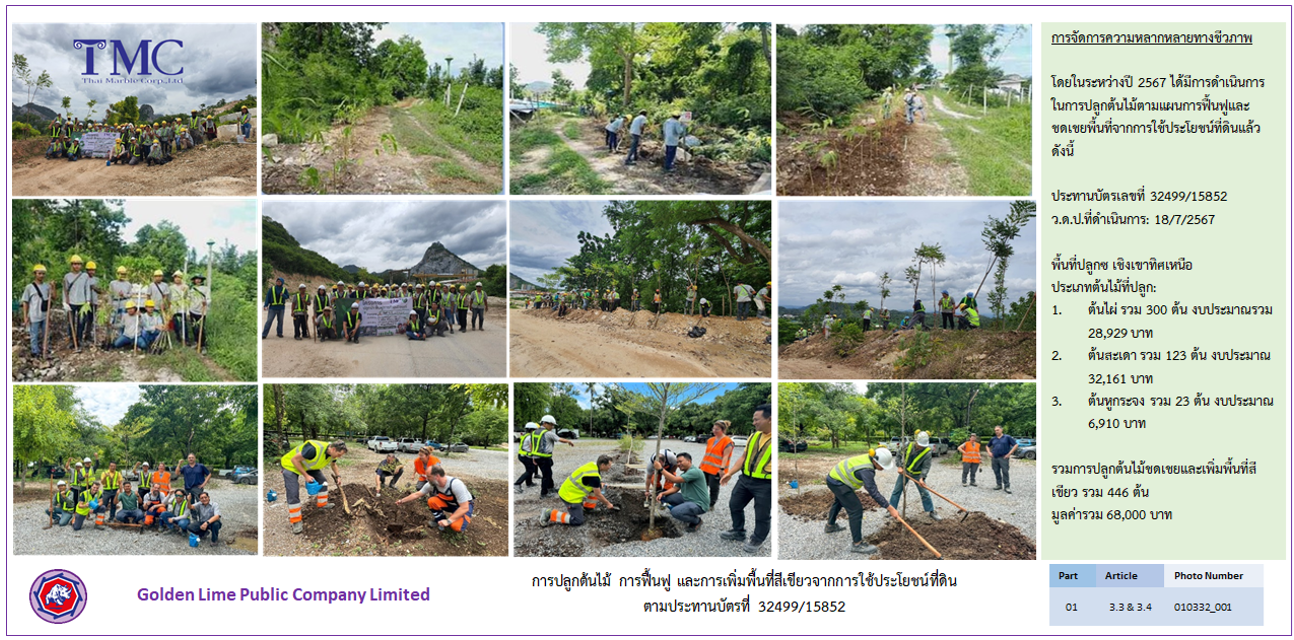
The water circulation system for water treatment and recycle
1. Dredging sediment from the area of the 1rai recycle water storage pond, with Daily dredging
2. Installing a filter press machine to treat water and recycle water for use in the process
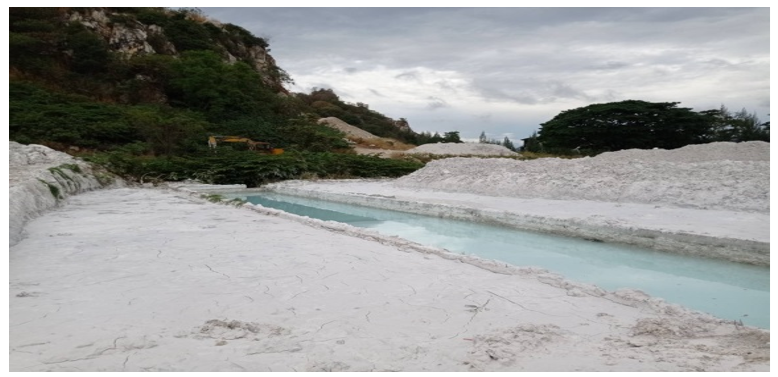
Concession No. 32517/16065 Khao Khao
Concession period 20 years, starting from October 29, 2023, expiration date April 28, 2043
Land use pattern after the end of mining: Developed as a public water source
This area has been permitted to use forest land and the Phra Phutthabat Self-Reliance Settlement area
Date of operation: December 2024
Planting area, distance 200 meters, total number of trees planted 108 trees
Details and budget
1. Backhoe Zx200, 3.8hrs., price 1,300baht, total budget 4,940baht
2. Backhoe 130, 6hrs., price 500baht, total budget 3,000baht
3. Soil, 600bags, price 8baht, total budget 4,800baht
4. Neem trees, 100trees, total budget 20,000baht
5. 1-inch Kuka wood, 200pieces, price 10baht, total budget 2,000baht
6. 1box of nails, 180baht, total budget 180baht
7. Cost of planting 108trees, price 40baht, total budget 4,320baht
Total operating budget 39,240 baht
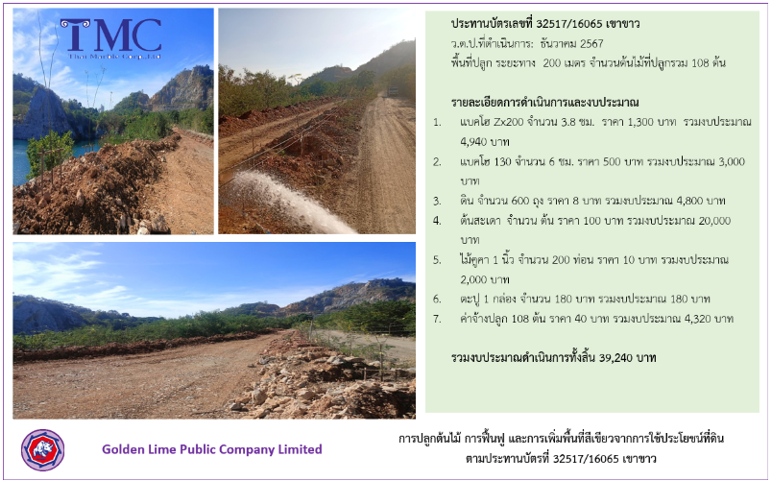
5. rganizing and collaborating with other organizations to enhance biodiversity, engaging stakeholders, expanding green spaces, and promoting sustainable ecosystems.
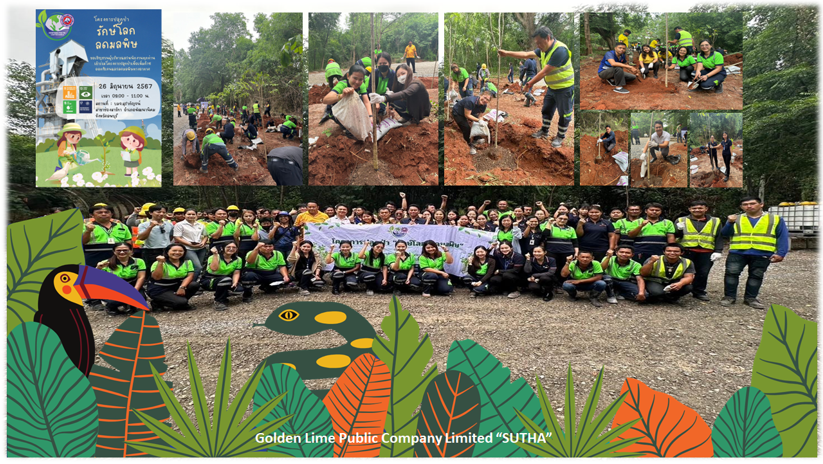
The company-initiated activities aimed at enhancing biodiversity and planted trees to mitigate pollution, working alongside community leaders, residents, and government agencies. This event took place on June 26, 2024, where trees and green spaces were established. A total of 250 trees were planted over an area exceeding 500 meters, featuring species such as Pink Trumpet Tree, Pradiphat Pine, and Indian Ashoka. Besides fostering environmental health and expanding green spaces to support the ecosystem and biodiversity, these trees serve as a dust barrier from the factory's production activities, helping to shield the community from dust exposure. This initiative is part of the company's commitment to responsible business practices that consider societal and environmental impacts.
Social Sustainability — Overview
Operating Results — Introduction
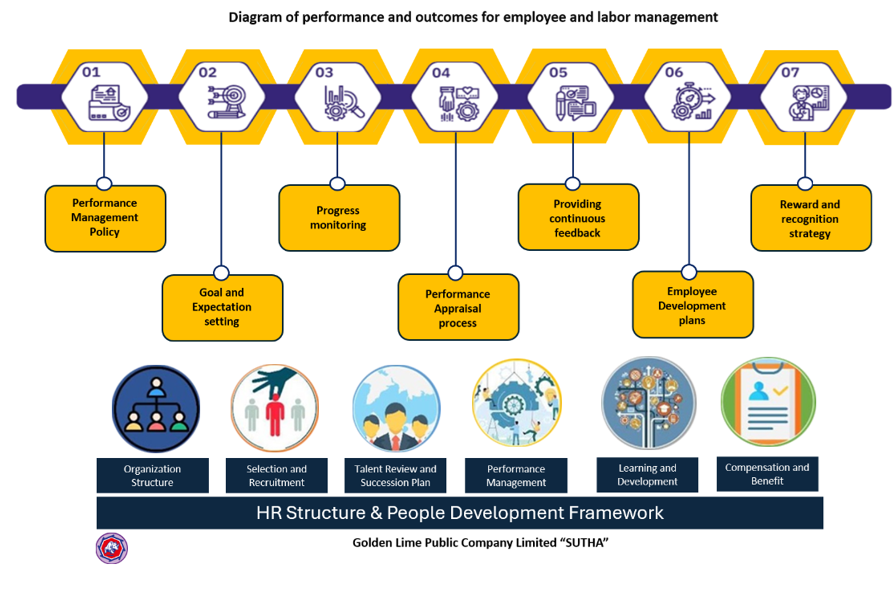
Employees — Plan & Guidelines
Has an Employee Management Plan
Yes
Plan Description
The Annual plan on employees and labor
Throughout Y2025, Zero Labor Disputes and none of violation of human rights at workplace. The Company provided knowledge and skill training that are relevant and consistent with its strategies and development plans.
Compliance training programs address the Code of Conduct, anti-corruption measures, and conflict of interest awareness. Every employee—across all job levels and within subsidiaries—participates in these programs, resulting in complete (100%) engagement.
No illegal labor, no child labor, No forced labor. According to the evaluation conducted by key stakeholders, there were no violations of human rights, nor any instances of illegal labor, child labor, or forced labor identified.
The treatment of foreign workers follows the established procedures, goals, and measures to prevent human rights violations among foreign workers.
Promoting employment of the disabled in a number as required by law and the establishment of a welfare committee, under Human rights principles in collective bargaining for welfare
rganizational restructuring, BC reduction, replacement on boarding, change management, and succession planning for key positions.
None of loss and damage compensation given to those who have suffered as no damage and impact arises
Promote creativity and inclusivity via encouraging constructive comments/suggestions and engagement via employee satisfaction survey and other means for personnel development
Encourage employees to take part in social and environmental responsibility via suppliers events, suppliers development programs, product responsibility program, process development for customer satisfaction
Promote employee involvement in social and environmental responsibility initiatives, as well as participation in value chain development alongside customers. Coordinate to developbusiness partners and freight ,logistics providersby delivering safety training and assessing adherence to human rights and labor standards. Additionally, advance product responsibility with innovation and optimize production methods to align with customer expectations.
Fair employment based on work performance, capability, and economic conditions.
Follow Personal Data Protection policy in compliance with thePersonal Data Protection Act towards employees and stakeholders as disclosed in the Company website.
Conduct the review of the Human Rights Policy in an appropriate manner.
Middle term / Long term Action Plan
Development of an HR information system to support sustainability-related data, create employee index and individual profiles for analysis and Personalized Development Programs, and provide end to end HR management through core functions such as Employee Self Service (ESS),allowing employees to manage personal information, submit leave requests, and request pay slips, and the Manager Self Service (MSS) system for supervisors to approve requests, manage team data, and evaluate performance. This aims to automate HR processes, integrate data, and enable strategic, long term workforce planning.
Evaluation and analysis of the organizational structure, workforce management strategies, capability development initiatives, and succession planning for critical roles.
Ensure proper staffing by developing internal talent or subcontracting as needed for each role.
Suggestions of employees are processed appropriately.
Complaints of employees (if any) are quickly and fairly resolved to reduce conflicts.
Employees are involved in various activities of the company and other units in the community.
Cultivate safety at work to minimize hazard at work and incident for zero LTI
Develop cooperation in enhancing human rights practices of key stakeholders in the business value chain.
Provide relevant and useful online training courses for employees aligning with the development objectives.
Plan Areas
| Plan Area | Other — Please Specify |
|---|---|
| Fair employee compensation | |
| Employee training and development | |
| Promoting employee relations and participation | |
| Migrant/foreign labor | |
| Child labor | |
| Occupational health and safety in workplace | |
| Others | SUTHA's Sustainability Development Policy on Social Responsibility and Human Rights Policy |
Employees — Workforce
Introduction
Employee Fair Treatment
SUTHA exhibits fair treatment in the workplace and honors employee rights following Law on Labor Protection and Welfare and ethics in promoting justice and safeguarding employee rights for a positive workplace environment. The Company also promotes progression opportunities, efficiency development, living wage standards in accordance with human rights and labor of the United Nations (United Nations) and human rights policy. Employees can exercise their rights to negotiate as a welfare committee where representatives of all employees participate to discuss and resolve any conflicts that may arise. The Company will not employ people against their will, and will not use child labor. The Company will comply with the employment laws and regulations of the equal and impartial treatment without stigmatization of minority or vulnerable groups. The Company provides a safe and hygienic working environment in compliance with the laws, international standards, free from drugs and fair treatment to all employees regardless of race, ethnicity, nationality, class, caste, religion, belief, sex, gender, skin color, disability or any status that is not related to work as well as fair employment and supervision to assure there are no threats ,no violations of personal rights among the directors and employees with the respect to the right of privacy personal autonomy under the privacy policy as disclosed on the company's website with link : https://goldenlime.co.th/en/social_and_human_rights/ |
|


Prevention on human rights violation for labor
The Company adheres to the human rights principles by laying down following practices and preventive measures in accordance with the human rights policy for human resources operations.
1. Strict compliance with local labor laws:
Wages: Employees are paid no less than the minimum wage specified for different areas of the country.
Working Hours and Leave: The law sets a maximum of 8 working hours per day and 48 hours per week, including the right to at least 6 days of annual leave after one year of service, in accordance with employment contracts.
In 2025, at the Nomination, Remuneration, and Corporate Governance Committee (NRCG) meeting on 4 April 2025, the Human Resources Department proposed to the Nomination, Remuneration, and Corporate Governance Committee (NRCG) to revise annual leave entitlements. The Nomination, Remuneration, and Corporate Governance Committee (NRCG) subsequently approved the revised vacation days, now determined by employees’ length of service as outlined below:
1–3 years: 6 days
3–5 years: 7 days
5–7 years: 8 days
More than 7 years: 10 days.
Welfare and Protection: Employees receive various benefits such as social security, sick leave, maternity leave, and leave for illness.
Workplace Safety: The company ensures a safe and hygienic work environment and provides appropriate protective equipment.
Rights and Freedoms Protection: The company operates in compliance with the law, treating labor fairly without discrimination based on gender, age, race, or religion.
Collective Bargaining: Employees form groups and establish a labor welfare committee to negotiate with the employer on issues such as wages and benefits.
2. FAIR and EQUAL EmploymentHuman Resources Policy and Code of Conduct
Hiring only workers aged 18 years and over, both company employees and business partners/contractors.
Hiring voluntary workers , no forced or unlawful workers both Thai and foreign workers
Hiring qualified , competent workerswithout discrimination.
3. Health and Safetyccupational Health and Safety(GRI:403-6)
Monitoring to ensure workplace free from violence and harassment to prevent sexual harassment, violence both physically and mentally
Annual health check for employees in accordance with operational risk issues
Medical Support
At the Nomination, Remuneration, and Corporate Governance Committee (NRCG) meeting held on 4 April 2025, the Human Resources Department proposed the implementation of a medical benefit for 2025. By setting an individual budget limit without restriction on the number of treatments or types of treatment. Dental care, vision care, cosmetic surgery, and alternative treatments (including acupuncture, traditional medicine, and chiropractic care) are excluded. HR determines allowance amounts according to the budget and company performance, then formally communicates this information to staff.
Provide proper work environment
Provide personal protective equipment for employees
Arrange occupational health and safety orientation training for new joiners and refreshment training including job risk assessment to set out preventive measures for current employees
The Company conducts thorough risk assessments to set prevention measures, including managing infectious disease risks and monitoring key health issues identified by the World Health Organization like tuberculosis, malaria, and emerging diseases.
The Company evaluates operational risks in procedural production to establish safety measures, such as controlling equipment hazards, reducing environmental impacts and emissions, preventing chemical spills, improving emergency preparedness, and assessing radiation risks if relevant.
Appoint occupational health and safety committee and the supervisor for patrol weekly safety patrol inspection to monitor and establish preventive measures.
4. Wages and Welfare - Human Resources Policy and Code of Conduct
Pay wage rates for skills according to skill standards and requirements of each position and not less than the minimum wage both Thai and foreign workers
Provide the right to collective bargaining via the welfare committee elected by employees to jointly improve the welfare with the employer representative.
5. Knowledge and skills development – Personnel Development
Provide needful and proper training for employees to develop their knowledge and skills
rganize training and study visits both domestically and abroad.
rganize the engagement activities to develop and increase employee potential
Based on the practice guidelines above, there is none of human rights violations related to labor either from the company and its business partners, or disputes from the company's business processes.
Information on the number of employees under contract of the company and its subsidiaries
In 2025, the company disclosed the total number of employees under contract, including those of Golden Lime Public Company Limited and its subsidiaries: Thai Marble Corporation Limited and the employees of Golden Lime Engineering Co., Ltd. had been transferred to Golden Lime Public Company Limited since 2024.
The reported figures, summarized over the past three years, include all employees hired and compensated during the year.
These figures differ from those in section 7.5, which shows the total number of employees of Golden Lime Public Company Limited and its subsidiaries as of December 31.
The Company adjusted the reported employee numbers for 2022-2024, previously disclosed through the ESG Data platform, which only included the number of employees of Golden Lime Public Company Limited.
Workforce — Introduction
The number of employees of the company and its subsidiaries as of December 31;
Male Employees by Position — Introduction
The number of male employees of the company and its subsidiaries as of December 31
Female Employees by Position — Introduction
The number of female employees of the company and its subsidiaries as of December 31
Employees with Disabilities — Introduction
Employment recruitment for Persons with Disabilities according to the Empowerment of Persons with Disabilities Act, B.E. 2550 (2007) and updated version (2nd edition B.E. 2556 (2013)) that requires both public and private organizations with more than 100 employees being mandated to hire persons with disabilities in the ratio of one disabled person to every one hundred regular employees (1:100) / One more disabled person can be employed if the number of regular employees exceeds the next 50 to promote inclusivity and improve the quality of life of people with disabilities by offering career opportunities. (Section 33 of the Empowerment of Persons with Disabilities Act, B.E. 2550) However, if the Company do not meet the government regulations, the Company is to contribute to the State Fund for Rehabilitation of Disabled Persons Fund on an annual basis. The contribution amount is calculated by multiplying the lowest rate of the minimum wage (prescribed in the labour law in the year before the year the money needs to be remitted to the Fund) x 365 (days) x the number of non-hired disabled employees. (Section 34 of the Empowerment of Persons with Disabilities Act, B.E. 2550)
However, if the Company do not meet the government regulations, the Company is to contribute to the State Fund for Rehabilitation of Disabled Persons Fund on an annual basis. The contribution amount is calculated by multiplying the lowest rate of the minimum wage (prescribed in the labour law in the year before the year the money needs to be remitted to the Fund) x 365 (days) x the number of non-hired disabled employees. (Section 34 of the Empowerment of Persons with Disabilities Act, B.E. 2550)
Workforce Data
| Metric | Current Year | Previous Year | Two Years Ago |
|---|---|---|---|
| Total number of employees (Persons) | 450 | 451 | 488 |
| Number of male employees (Persons) | 309 | 314 | 341 |
| Number of female employees (Persons) | 141 | 137 | 147 |
| Total employment of disabled persons (people) | 6 | 6 | 6 |
| Total disabled employees (people) | 6 | 6 | 6 |
| Total male disabled employees (people) | 4 | 5 | 5 |
| Total female disabled employees (people) | 2 | 1 | 1 |
| Total disabled workers who are non-employee (people) | 0 | 0 | 0 |
| Contributions to the fund for promoting and improving the quality of life for disabled persons | 0 | 0 | 0 |
| Total number of male employees in operational level (Persons) | 279 | 285 | 323 |
| Total number of male employees in management level (Persons) | 24 | 24 | 14 |
| Total number of male employees in executive level (Persons) | 6 | 5 | 4 |
| Total number of female employees in operational level (Persons) | 126 | 125 | 140 |
| Total number of female employees in management level (Persons) | 13 | 10 | 7 |
| Total number of female employees in executive level (Persons) | 2 | 2 | 0 |
Employees — Remuneration & Provident Fund
Introduction
Motivation and retention of employees (S3)
SUTHA prioritizes employees as a key stakeholder who plays an important role in a company's sustainability development and long-term success in expanding competitive advantages and growing the business. The role of employee retention in promoting sustainability business development encompasses rationale remuneration, compensation, and benefits both in the short term and long term according to the performances of employees at all levels.
1. Monitoring key performance indicators (KPIs) to implement a remuneration strategy that links performance to pay, to develop salary ranges and establish career development.
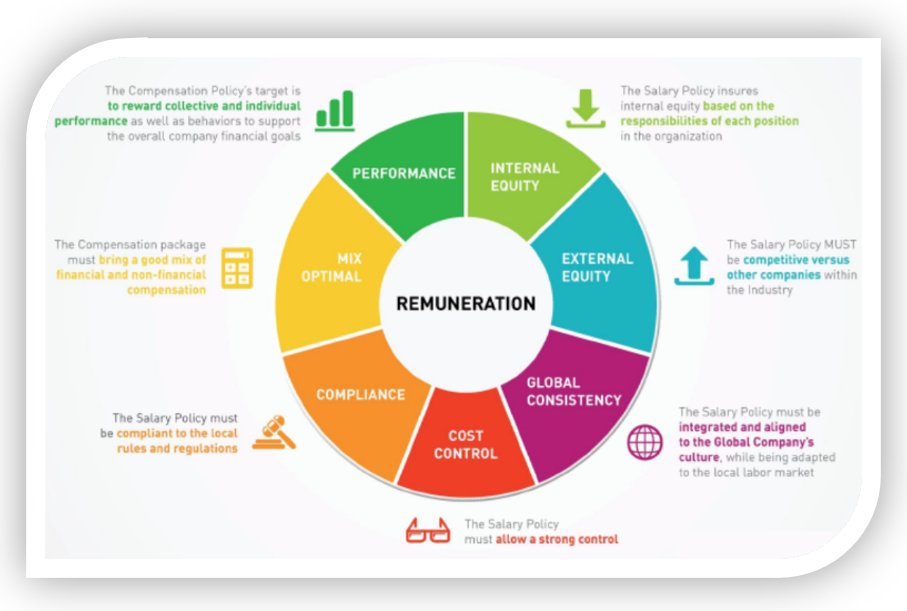
The Company develops an effective compensation scheme to ensure that pay levels are competitive externally and equitable internally allowing management to reward performance and skills development while controlling overall base salary cost and responding to internal controls requirements.
The objective of compensation is to reward individually collective performance and behaviors that respond to corporate financial goals.
Salary Policy ensuring that employees are compensated fairly and equitably based on their responsibilities to the organization, without discrimination.
Compensation consists of monetary rewards and non-monetary rewards
Salary policy is competitive pay that is equal to or exceeds the industry
Salary Policy follows the local law of compensation and benefits
Salary Policy is well balancing global and local approaches to compensation and benefits
Salary Policy strictly followed the corporate budget allocation of employee costs-based forecast.
Monetary Rewards include wages, salaries, performance rewards, and bonuses based on annual performance, and Non- Monetary Rewards include Leave days, arranged working environment, benefits, and treatment with fairness and law compliance.
1. Fixed Payincludes salary and duty allowances such as telephone bills, company vehicle, fuel allowance, accommodation expenses, etc.
Blue-collar employee : Wages payment 2 times / month
White-collar employee : Monthly payment
A 90-day performance reviews take place after an employee's first three months on the job.
Salary raise or increment is linked to ones performance as derived from process of Performance Appraisal as per KPI and corporate operating result determined in every March to be adjustedif any in April.
2. NON-Fixed Payare rewards, bonuses based on individual performance and the company's performance, performance incentives, project bonus, generous cash incentives
Annual performance results are evaluated based on comprehensive financial and performance metrics to determine eligibility for bonus payments or performance-based incentives. Assessment and disbursement occur in April of the subsequent fiscal year.
Based on project / initiatives achievement paid according to performance delivery
3. Fringe Benefitare a form of compensation given to employees that goes beyond their normal wages and pay such as paid car park, annual health checkup , paid annual leave, uniform, food allowance, annual end of year celebration, provident fund as a measure to retain employees
Compensation is a major factor in employee attraction, retention, and turnover so the Company formulates compensation philosophy according to the below practices;
Individual Performance Appraisal using KPI | |
Level | KPI Guideline |
Below standard | Fail to follow job standards practices and basic requirements
|
| Fail to always meet job requirements.
|
Meet job expectation | Capable to deliver as per job requirements.
|
Greater performance | Deliver greater performance than others in similar level of responsibility
|
Excel performance | extraordinary performance compared with past years and others performance.
|
Each department can engage in discussions and communication to help team members clarify issues or offer suggestions. This collaborative approach allows for joint analysis and the identification of ways to improve work. The formats, methods, and timing of these communications fall within the responsibilities of each department, alongside the performance appraisal process for personnel selection and evaluation within a designated timeframe. | |

 Follow job standard



2. Employee engagement and employee satisfaction surveys
In 2024-2025, the survey conducted for SUTHA employees, including those in subsidiaries, revealed that 97% of the total workforce participated. Among these respondents, 84% expressed a strong commitment to the organization. The survey gathered employee opinions across various aspects such as Engagement, Communication, Honest Feedback, Development (individual), Manager Relationship, Ownership, Positive Environment, Purpose, Recognition, Support & Collaboration, Work-life Balance.
The top three survey findings, each averaging over 90%, indicated that employees felt their skills and abilities were being utilized effectively, they experienced a sense of belonging to the organization's success, and they valued being part of a team that contributes to achieving organizational goals
3. Survey Results utilizedfor improvement
The company has updated its annual leave policy, now granting more days off depending on years of service: 6 days for 1–3 years, 7 days for more than 3–5 years, 8 days for more than 5–7 years, and 10 days for over 7 years. This arrangement will remain in place for at least five years unless there are changes in relevant laws or regulations. While the increased leave may lead to overtime for some employees, the company will continue supporting medical expenses up to 3,000 baht per visit. This coverage includes all treatments except dental care, eye exams, cosmetic surgery, and alternative medicine. Employees must provide a medical certificate and the original receipt to Human Resources for reimbursement.
Developing a framework to boost engagement through participation incentives, like the Cost Saving Program, and recognizing project achievements that yield financial benefits.
Promoting work-life balance by implementing remote work guidelines for eligible employees, with upgraded tools allowing designated work-from-home days.
rganizing initiatives to enhance employee happiness, including collaborative meetings and celebrations for events like New Year, Songkran, and birthdays, to foster joy and unity among staff.
Promoting Employee Health through the "Be Well Be Happy Be Active" Program, the "Be Well Be Happy Be Active" initiative aims to encourage employees to take proper care of their health. This program focuses on promoting self-care through regular exercise and balanced nutrition. The duration of the program is set for 180days.Throughout the program, employees' progress will be monitored based on their body fat reduction. Each month, the employee who achieves the highest reduction in body fat will be rewarded with a Super Sport gift voucher. At the end of the 180-day period, the overall winner, who has achieved the most significant reduction in body fat, will receive a cash prize. This initiative is designed to motivate employees to adopt healthier lifestyles and improve their overall well-being.
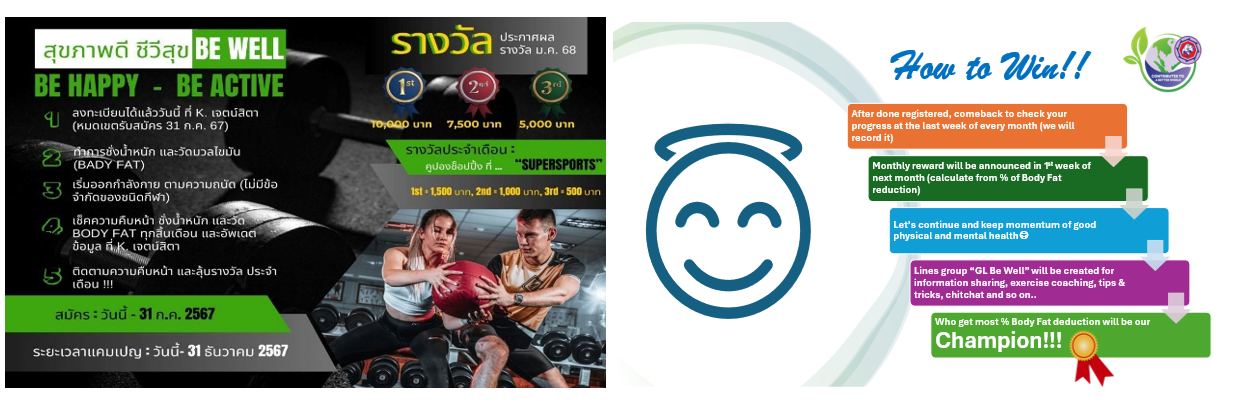
4. Internal mobility promotes retention.
The Company views internal recruitment as a strategy to keep talented employees and lower turnover rates by providing career growth opportunities for current staff. This approach aims to enhance personnel development and boost morale, while also fostering employee advancement, engagement, and loyalty to the organization. Internal recruitment encompasses promotions, succession planning, temporary or contract positions, re-hiring of former employees, and referrals or endorsements from existing staff.
To ensure fairness, equal opportunity, and the best fit for the vacant role, key steps involved in the process of internal recruitment and the best practices to follow for successful internal talent sourcing and selection.
Determine vacant positions to be recruited internally.
To define qualifications for an open role and determine whether recruiting internally for the role will benefit the company by collaborating with the hiring manager to develop a plan for communicating the job opening and the application requirements.
Post vacancies Internally
Clearly define what experience, skills and contributions will be required to be successful in this role and add the job post to the company’s internal job board.
Conduct a screening selection process.
Partner with frontline managers as well as senior leaders to scope out for the qualified and interested applicants in an internal job posting.
Respond to Every Internal Candidate
The HR dept. will respond to all applicants to communicate with them early and clearly in a clear and transparent manner to avoid disgruntled employees for positive internal recruitment experience.
Career growth for high-potential employees will be fostered alongside motivation and the development of job roles for operators in the following ways:
- Responsibilities may be adjusted or increased, with capable employees being considered for more significant roles and receiving higher compensation. For instance, safety officers with IT skills may take on IT helpdesk tasks, while safety officers in various branches can evolve into coordinators and co-developers of CSR initiatives.
- Qualified and efficient contractors will be promoted to permanent positions within the company.
-
Employees who demonstrate achievements will be given opportunities for career advancement, such as moving from senior roles to supervisory positions, and from supervisors to section managers.
- The possibility of rehiring former employees with a strong work history who have resigned will also be considered.
5. The succession planningprocess follows key steps, beginning with the creation of a list of key positions, which has already been completed, covering executive and key department head roles. This is followed by the selection of a talent pool, the evaluation of individuals in terms of potential and competencies, the development of individual development plans, and the monitoring of development results. The CarmeuseGroup's talent review framework is used for development. The identified key positions are presented in the succession policy and plan documents. Furthermore, the company has established employee qualification evaluation criteria to support succession planning and career path creation. These guidelines will be systematically applied to the organization's human resource management.
The company has implemented a systematic succession approach, starting with the identification of key positions that impact business continuity and selecting a talent pool with outstanding abilities and growth potential to support future succession.
The personnel evaluation process uses a five-dimensional framework covering performance, potential, maturity, role importance, and turnover risk. It also categorizes personnel according to the five Talent Tools, such as unique skills, high potential, and future leaders. The evaluation results are then used to create Individual Development Plans (IDPs) involve development activities such as project assignments, job rotations, coaching and mentoring, and quarterly progress monitoring to enhance skills and prepare individuals for growth.
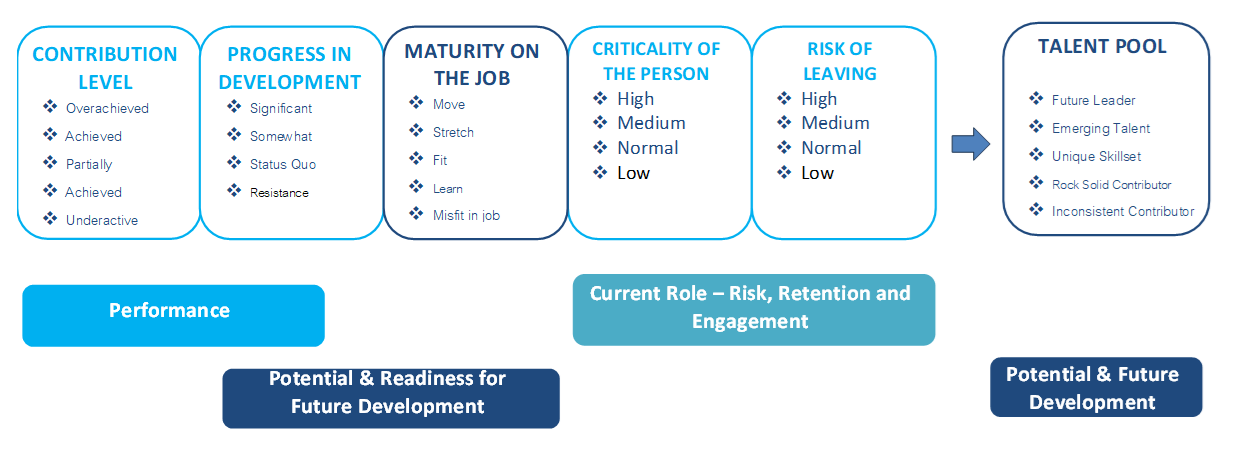
All of these approaches reflect the company's commitment to retaining outstanding talent, supporting career growth, and creating a sustainable human capital of effectively adapting to future changes.
6. Enhance the communication of engagement survey results and employee turnover statistics to demonstrate a commitment to ongoing development and the improvement of employee welfare.The executives overseeing human resource management within the corporate group have established an internal communication platform,
“Bee Keeper,” which grants employees access to a communication application that facilitates their participation and expression of opinions. The outcomes of the satisfaction survey will be shared with employees across all levels through suitable communication channels.
Compensation Payment:
The Company has a policy to consider compensation for employees based on fairness and appropriateness with their duties and individual responsibilities in consistent with wage management according to the ability of an individual employee and legal wage rates including the determination of fair and appropriate benefits and welfare.
The company will consider raising wages according to the legal wage rate, the Company yearly performance, plans and strategies together with capability and efficiency of employees as a department and individuality to offer proper welfare for benefits to employees at all levels according to their needs and the Company's performance and financial conditions regarding to social, economy conditions and consequently well-being of employees.
Remuneration & Provident Fund
| Metric | Current Year | Previous Year | Two Years Ago |
|---|---|---|---|
| Total disabled employees (people) | 187,998,298 | 179,808,330 | 169,074,326 |
| Total male employee remuneration (Baht) | 132,242,094 | 130,536,376 | 123,577,520 |
| Total female employee remuneration (Baht) | 55,756,204 | 49,271,954 | 45,496,806 |
| Number of employees eligible to participate in PVD (persons) | 450 | 451 | 488 |
| Total number of employees joining employee provident fund (Persons) | 285 | 278 | 214 |
| Percentage of total number of employees joining employee provident fund to total number of employees (%) | 63.33 | 61.64 | 43.85 |
| Number of PVD members / Total eligible employees (%) | 63.33 | 61.64 | 43.85 |
| Total amount of provident fund contributed by the Company (Baht) | 3,891,945 | 3,437,542 | 2,589,580 |
| Total amount of provident fund contributed by employee (baht) |
Employees — Training & Development
Introduction
S2. Employee development(GRI : 404-2)
Employee development is a strategic sustainability development engaging with key stakeholders that the company can greatly affect them and when they can greatly affect the company. As a key stakeholder, an employee plays an important role in a company's sustainability development and long-term success in making strategic decisions, minimizing risks, expanding competitive advantages, and growing the business.
Training and development programs enable employees to stay relevant, updated and acquire new competencies, thereby positively impacting the organization's productivity.
Potential and Knowledge development approaches
1) Training need analysis
1.1) Basic training needs analysis as an individual development plan
This level of analyzing training needs involves reviewing individual jobs and task performed. Comparing individual employees’ skills in a job category to the skills needed for a successful job performance can recognize the gaps that can be filled by training.
Orientation: conducted by the HR department to train and introduce new employees about their roles and company policies,the company's culture, values, and norms to help them assimilate faster and align their behaviour with corporate goals.
On the Job training: is a practical approach to acquiring new competencies, the practical skills and knowledge they need to perform their job via the program designed from their tasks and instructions manual.
1.2) Organizational training needs analysis
Aligning training with business goals to ensure that training will help the organization achieve its organizational business goals in responding to sustainability framework or stakeholders’ expectations such as major shareholders, governance authorities, the stock market, relevant government agencies that also offer specific and practical trainings and workshops e.g. ESG sustainability development practices, good corporate governance workshop by SEC, IOD, etc.
2) Segmenting training into its objectives
No. | Training/Workshop | Objectives | |
1 | Productivity and Efficiency To develop knowledge and comprehension among staff or to enhance skills that will lead to increased productivity and improved performance efficiency. | - Maximize performance efficiency to rectify trouble and handle with obstacles to prevent production discontinuation. | - perations staff and production support services |
2 | Laws and regulations To gain the knowledge and skills to manage legal permits, requests, certification, and continuing business worthiness as per the regulations and requirements | - To be aware and stay relevant on changing and new rules and regulations and adopt into corporate practices to mitigate consequencesfor non-compliance; fines, damage to the company's reputation, cancellation of operational permits | - Departmental chief and all relevant with authorities / rules and regulations |
3 | Occupational Health, Safety, Environment and Energy To be aware of environmental impacts under control, of continuously improvement of energy efficiency and of creating a healthy and safe work environment to create a safer and more environmentally conscious working environment in reducing the ecological footprint and preserving natural resources. | - To conduct safe operations under Occupation Health and Safety Policy and mitigate negative impact to communities. - To control the operation and activities related to the company's environmental factors and hazards, ensure that the process results sustainably meet the requirements of the environment and occupational health and safety policies, objectives, and indicators. - To ensure the realization of the energy efficiency toptimize the use of natural resources, thereby promoting responsible consumption and renewable energy consumption | - All relevant department and staff |
4 | HR Management Promote human resource management skills to meet the organization's objectives. | - Employees can handle personnel tasks to enhance and support human resources effectiveness in hiring, recruiting, benefits management, enforcing human rights, preventing conflicts, salary management, performance assessments, and fostering employee motivation and development. | Human resources dept. staff and relevant Welfare Committee members |
5 | Preventive Maintenance Dedicated to maintenance staff responsible for inspecting, repairing, and maintaining the equipment, systems, machines, vehicles, and facilities that keep the plant and process running. | - To execute the safe and careful upkeep of a facility and the assets within that facility and perform maintenance tasks safely and allow them to create preventive maintenance strategies, prolong the lifespan of machines and equipment, minimize costs associated with repairs and maintenance, or efficiently oversee repair and maintenance operations. | Operations and maintenance Dept. |
6 | ISO standards and risk assessment To learn how to apply, comply with and benefit to improve and enhance operations following the Company’s standardized practices regarding risk management, ISO 9001 , ISO 14001 , ISO 45001 | To build awareness and understanding of their roles concerning required standards and expectations for a greater understanding of the Company’s management system, and how it can be integrated into daily activities to prevent a variety of threats: operations, compliance, security, and reputation so employees can perform their jobs professionally and productively. | ISO relevant staff, daily workers, and contracted workers |
7 | Job-Specific Skills To upskill or reskill employees to become more effective at various tasks or job roles e.g. Driving, Loader, Forklift, Craftsman | To provide targeted professional training that focuses on the safe practices responding to immediate needs of an organization, particular safe work instructions, guided operational practices | Relevant staff to the courses provided, daily workers and contracted workers |
8 | Account & Financial To educate staff on accounting and financial responsibilities, including investment promotion, requesting tax benefits, training on internal controls for accurate financial data, and guidelines for approving financial transactions per the internal control manual. | To improve employees’ knowledge and comprehension of accounting standards, including any revisions or new definitions, as well as guidelines for financial management, control, and estimation to prepare complete and accurate financial reports, understand tax accounting, and follow procedures for investment promotion and proper use of tax benefits as they should be capable of conducting accounting practices and issuing financial reports according to established standards or methods, while also managing taxes effectively and in compliance with accounting and tax regulations. | Accounting/ Finance Department and relevant business units conducting finance accounting work routines |
9 | Good CG Policy, ESG Practices, Code of Conduct and Sustainability related Courses Sustainability framework such as corporate governance policy, business ethics, anti-corruption policy, DAP, DCP, CSR, ESG, greenhouse gases, Internal controls, and risk management, etc. | - To encourage personnel to perform their duties inconsistent with good corporate governance guidelines - To promote organizational sustainability development in workplace to create value to stakeholders. | Directors,Executives, employees related to business /activities |
10 | Language To gain knowledge and capability on communication | - Enhances communication and comprehension, promoting collaboration and motivation for work development with international stakeholders. | - Personnel working with foreigners |
11 | Corporate Team-Buildings and stakeholders engaging activities workshop, teamwork activities to foster knowledge sharing, organize activities, encourage teamwork, and strengthen relationships among team members, while also engaging with relevant stakeholders in value chain. | - Personnel acquire knowledge and foster relationships within the team. - Formulation of team strategies and initiatives. - Enhancement of collaboration among team members. - Minimization of conflicts and promotion of unity within the team. - share information and knowledge aimed at improving various processes in supply chain management. | Executives, employees related to business /activities |
12 | IT / Cybersecurity uses the KnowBe4 platform to deliver current cybersecurity training to all employees. The program helps staff recognize and respond to threats, like phishing, through interactive lessons and simulated tests. Employee participation is key to strengthening the organization's security culture and reducing cyber risks. The training program is delivered through Carmeuse’s IT network application, which provides automated, individualized training based on risk assessments and user behaviours testing related to IT security. The courses and training hours under this system are not included in the company’s general training evaluation or hour-tracking programs. | - Increases cybersecurity awareness (Cyber Awareness Culture) - Reduces the risk of attacks such as phishing and social engineering - Develops skills in responding to real-world threats including: Detecting malicious emails Password management Secure internet usage Protecting personal and customer data - Helps reduce the risk of organizational security incidents | - Personnel using IT application / system |
3) The Human Resources Department corporate with each department to determine the number of training hours as a KPI for individual employees. This KPI may subject to specific required training, such as accounting and finance.Training record /attendance is reported to HR department to prepare training records and progress evaluation.
4) Every August, each department submits a departmental training plan for annual budget allocation which is to be followed up by the HR department on its progress and implementation as planned.
5) The Human Resources Department keeps training records to track the personnel progress following the training objectives to assess personnel development individually for individual personnel development plans.
|
|
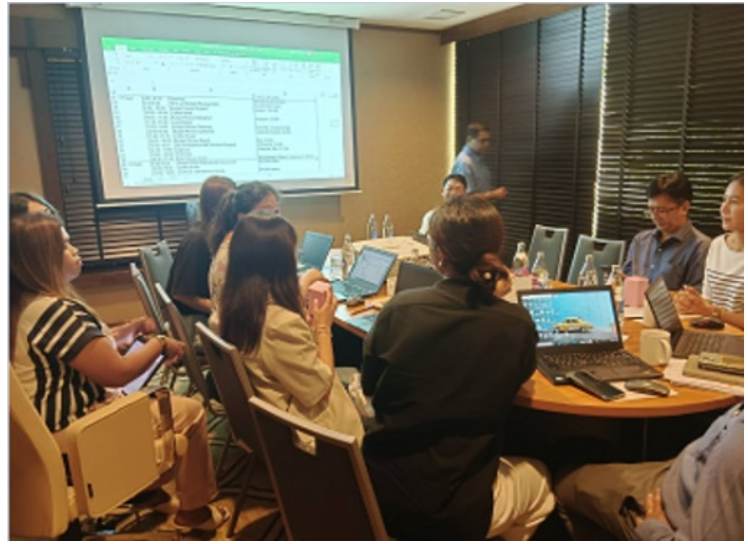
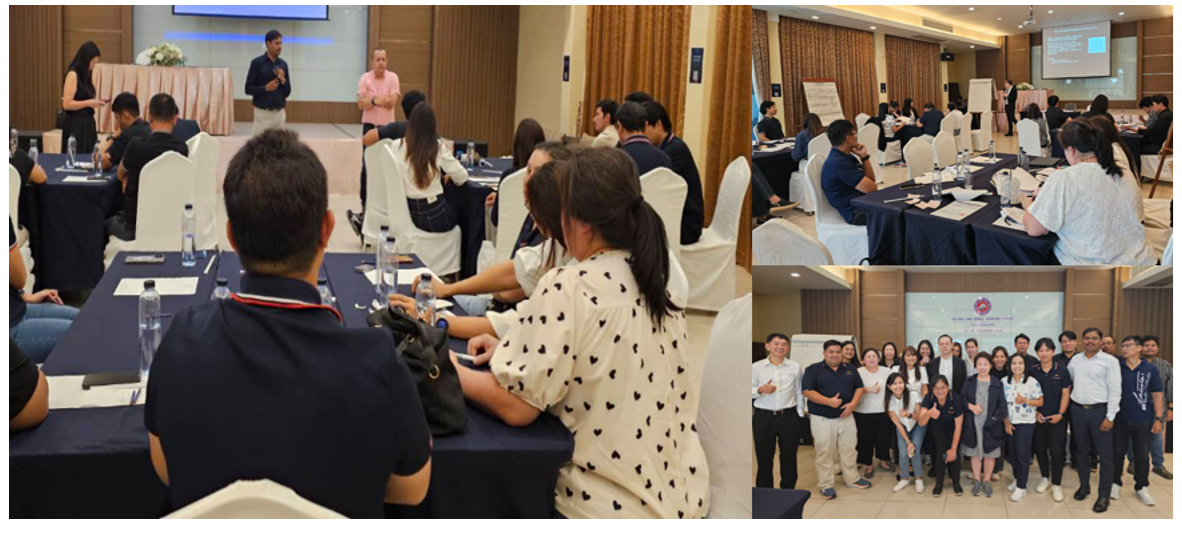
Training Courses (GRI : 404-2) | Training 2025 (Hours) | |||
GL | TMC /2) | SUTHA | ||
| - | 13 | 13 | |
| 375 | 883 | 1258 | |
| 20 | 6 | 26 | |
| 1,995 | 1368 | 3363 | |
| 21 | 6 | 27 | |
| - | 357 | 357 | |
| 87 | 714 | 801 | |
| 38 | 17 | 55 | |
| 49 | 77 | 126 | |
| 885 | 287 | 1171 | |
11 Computer, IT , Cyber securities | 264 | 51 | 315 | |
Summary report | unit | 3,734 | 3778 | 7,512 |
Training Results of the Company and Its Subsidiaries for the Year 2025 | Summary of Training Year 2025 (GL + TMC) | |||
GL | TMC | Total | ||
Total training hours: | Hour | 3734 | 3777 | 7512 |
Amount of participating personnel | person | 766 | 757 | 1523 |
Amount of headcount personnel/1) | person | 270 | 180 | 450 |
Participation average rate | Hour/person/year | 14 | 21 | 17 |
Training expense | THB/Year | 381,820 | 258,251 | 640,071 |
Note : 1) Amount of headcount personnel reference Number of employees report ended 31 December | ||||
2) In 2025, training data for Thai Marble Corp, Ltd. (TMC) (the subsidiary) began to be collected and disclosed in the report. | ||||
Training Data
| Metric | Current Year | Previous Year | Two Years Ago |
|---|---|---|---|
| Average employee training hours (Hours / Person / Year) | 17 | 11.3 | 13.5 |
| Employee development and training expenses (baht) | 640,071 | 480,780 | 277,600 |
Employees — Occupational Health & Safety
Introduction
2025 Occupational health and Safety Goal | ||
Prioritize safe operations and build a culture of safety in the workplace
| Indicator | Result |
ZERO LTI | Employee -0- Subcontractor - 0 - Behind the target | |
Comply with safety and occupational health laws. | 100% | 100% |
Establishments certified and controlled by environmental management system standards: Occupational health and Safety (ISO 45001) - Chong Sarika Branch [6kilns] certified - Huai Pa Wai Branch [1kiln] certified - Phra Phutthabat Branch [2 kilns] under control | Certified for 7 out of 9 kilns at the site, representing 78%. | 78% |
Fines or costs from safety or occupational health law disputes. | - | - |

Employees’ quality of life and good working environment Safety, Occupational Health, and Working Environment of Employees | ||||||
Yearly data | Unit | (excluding Subsidiaries) | ||||
Y2023 | Y2024 | Y2025 | ||||
Total working hours of all employees | Hour | 46,963 | 48,382 | 42,527 | ||
Accidents and injuries statistics | ||||||
> Lost time injury and Lost time incident | Time | 1 | 0 | 0 | ||
> Injured worker with more than a day away from work | Person | 1 | 0 | 0 | ||
> Work-related fatality | Person | - None- | - None- | - None- | ||
Accidents and injuries statistics of sub-contractor | (excluding Subsidiaries) | |||||
Unit | 2023 | 2024 | 2025 | |||
> Lost time injury and Lost time incident | Time | - | 3 | - | ||
> Injured worker with more than a day away from work | Person | - | 3 | - | ||
> Work-related fatality | Person | - None- | - None- | - None- | ||
Health and Safety at Work
(Occupational Health & Safety) Managed according to ISO 45001 standards
Implementation is carried out based on these policies:
Ensure employee health and workplace safety within a suitable environment.
Set and regularly review objectives and targets for occupational health, safety, and the workplace environment.
Maintain high standards of health and safety for all employees.
Assess safety measures for contractors and partners.
Focus on prevention and risk mitigation.
Record and investigate safety incidents, including metrics such as Lost Time Injury Frequency Rate (LTIFR), Lost Time Incident Rate (LTIR), and Absent Rate (AR).
Provide safety awareness training.
Promote safe work practices.
The company is committed to safe operations and upholding occupational health standards by setting clear performance indicators, with the objective of achieving zero accidents and zero lost time incidents or injuries.
Management Measures
Circulateincident reports for safety awareness, helps identify causes, and prevents recurrence.
Ensure a safe work environment by preventing injuries and illnesses
Cmply with all safety regulations
Eliminate hazards, reducing risk
Continuously improve health and safety systems
Engage suppliers, subcontractors or their representatives for feedback.
All employees, contractors, and partners receive safety training to prevent workplace accidents.
Safety projects undergo external evaluation and serve as benchmarks for management effectiveness
Key operations involve mining, sourcing raw materials, activities that produce dust, transportation by the company and its subcontractors, manufacturing, service provision, and supporting functions.
Relevant Stakeholders: The Board of Directors, executives, staff, shareholders, clients, partners, and community representatives all work together on environmental and safety efforts.
Operations are carried out with a strong commitment to minimizing potential impacts and incidents that may arise from the processes, as follows:
Process safety impacts and strategies for reduction and mitigation | Meeting goals for incident management and impact reduction. |
| Achieved Incidents persist. Incidents persist. Incidents persist. Through insurance management Incidents persist. Incidents persist. Achieved No serious accidents |
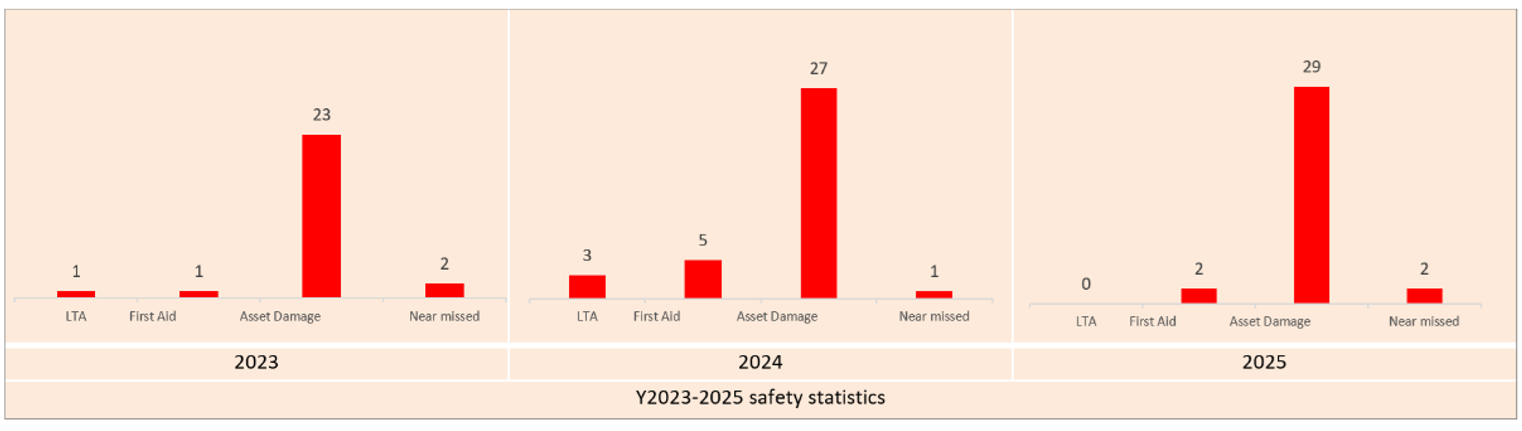
S4. Health and safety at work
Safety and Healthy work environment
The Company realizes and takes Safety First as a top priority for all personnel’s operations. The Company ,hence, considers Safety Management as a fundamental policy for business sustainability and building safety culture to the Company is one duty of employees and Stakeholders in order to parallelly drive operational safety management, personal safety management and occupational Health management to maintain international standards and to ensure that employees, contractors as well as key stakeholders in processes throughout the business value chain be able to work together safely in order to reduce hazards and mitigate the possible risk factors and impacts threatening to life and property.
Production process The Company has implemented the Operation Excellence Management System: OEMS that requires the risk evaluation in all operation units and there is an operation manual for dangerous tools and equipment to prevent and control the risks from the design, production process, maintenance and the annual standard verification in either normal or emergency state to maintain operational standards for safe and efficient production operations Reliability & Integrity management There are the machine's reliability & integrity in all plants of the Company monitored by the maintenance team to check and rectify for machines reliability with a database system to record maintenance and repair history to evaluate the maintenance performance. All machines will be assessed for to ensure Machine Integrity by Machine Integrity Checking process as well as being audited through the visualization system from a team of experts who provide technical services to analyze machine operation and stability covering all factors that may cause unplanned shutdown. By all these processes, there is a professional safety officer to co-inspect with the government agency including planning safety and occupational health training in all process. |
PLC workshop training for a basic knowledge and application of a digital computer-based control system commonly used in industrial automation to monitor and control machinery or processes. Machine maintenance software application “Factorium CMMS” to complete all PM/AM process from creating checklists, scheduling plans, setting reminders, finishing tasks to improve machine productivity
| |
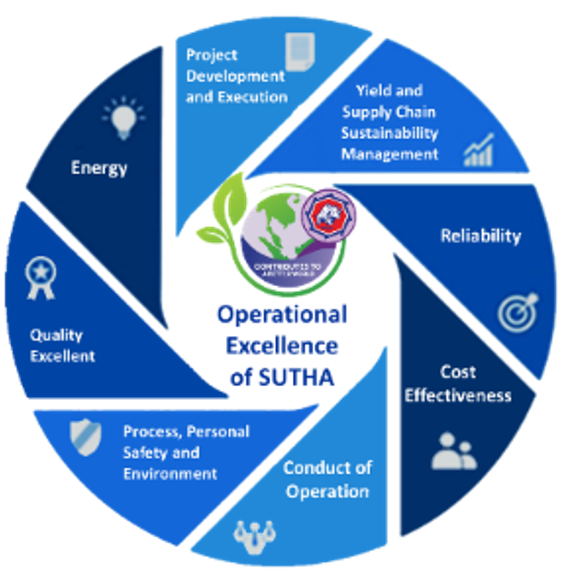
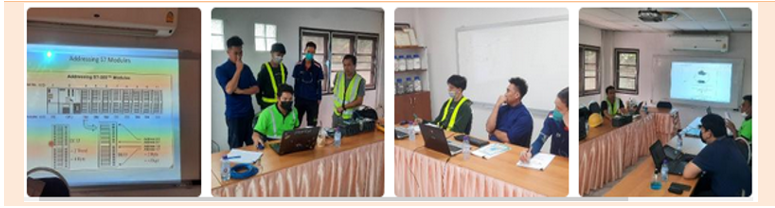
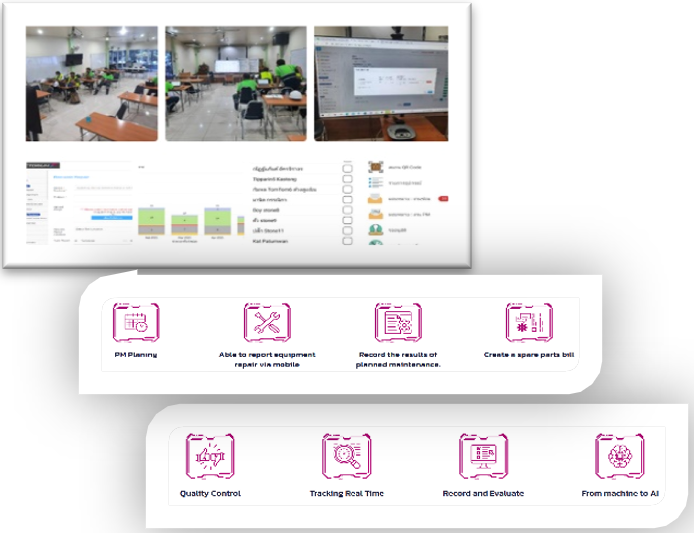
Cultivating a Culture of Safety
The company conducts personnel training to reinforce and provide fundamental knowledge on power source isolation and equipment lockout (LOckOUT TAGOUT - LOTO). This includes safety procedures for isolating machinery (electrical, mechanical, hydraulic) using lockout and tagout to prevent accidental activation during maintenance. The primary goal is to protect employees from serious accidents and fatalities, reduce workplace risks, and comply with safety laws. Safety practices are implemented in both theoretical and practical sessions for employees and contractors at all levels across all sites. The Safety Committee also conducts site inspections to monitor employee and contractor understanding, ensure adherence to procedures, and reinforce the principles of safety awareness and behavior across all levels. The training scope is extended to contractors, subcontractors, and key business partners to integrate safety into the overall culture.
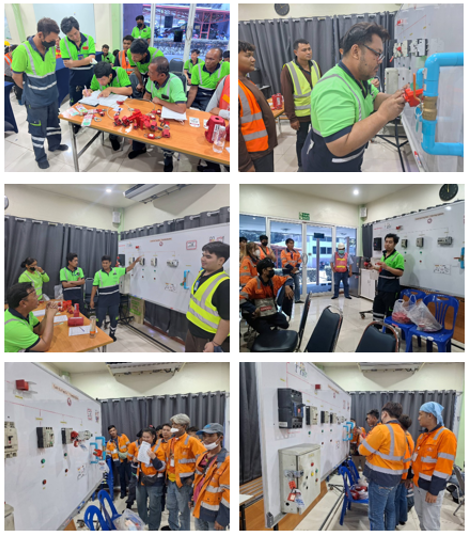
Personnel training educates employees to prevent accidents and minimize workplace risks.
Cultivating Safety behavior, known as Behavior-Based Safety (BBS),
This approach focuses on minimising workplace accidents among employees and their peers by promoting "Behavior-Based Safety (BBS)." It works by identifying hazardous actions and addressing them before incidents occur. The aim is to cultivate a strong safety culture where everyone stays mindful of their own conduct and observes the behaviours of others. Key steps include setting clear goals, offering immediate feedback about safe habits, and conducting training so people can regularly reflect on both individual and team activities.
SUTHA has refined its communication strategy to promote safety behavior, which includes the following key elements:
1. pen Mind: Engaging in open discussions, valuing diverse opinions, and fostering mutual respect as a foundation for collaboration.
2. bservation: Monitoring colleagues' safety practices during work to identify potential risks.
3. Intervention: Encouraging interaction through greetings, recognition of safe practices, and providing warnings when necessary.
4. RecordDocument the outcomes of interactions with colleagues, noting both positive feedback and concerns for the program department. These can be logged on the website and mobile devices.
5. Safety cultureby consistently applying all four steps across the organization, ensuring ongoing measurement and assessment.
Promoting occupational health and safety in the workplace
1) ISO 45001 compliance as a commitment to creating a safe and healthy workplace, aligning with global best practices.
> To develop a safer working environment for all employees to prevent workplace injuries, deaths and diseases through robust safety management systems and processes.
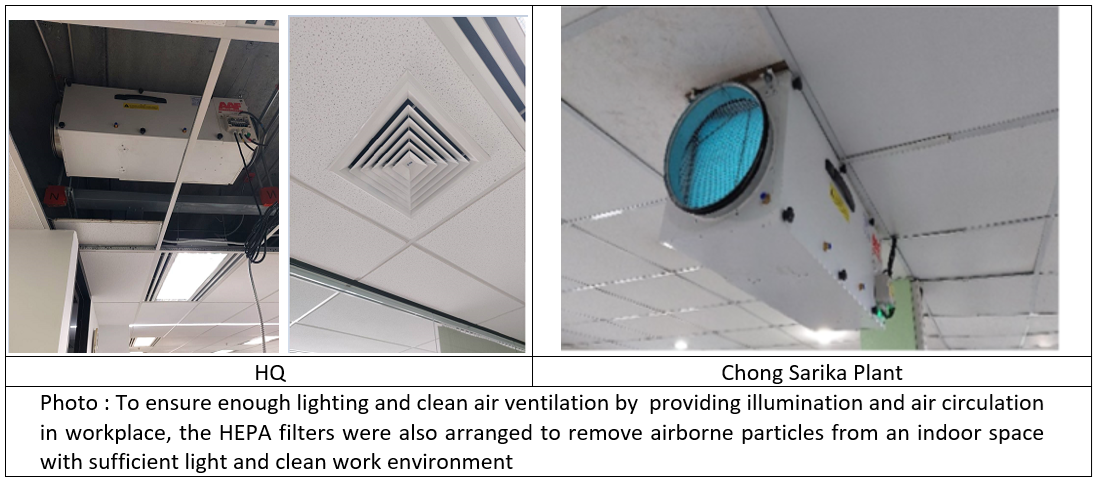
> The Company adheres to workplace compliance to maintain a clean, healthy, safe, accessible and well maintained and productive workplace for all employees so work can be carried out without risks to worker health and safety.
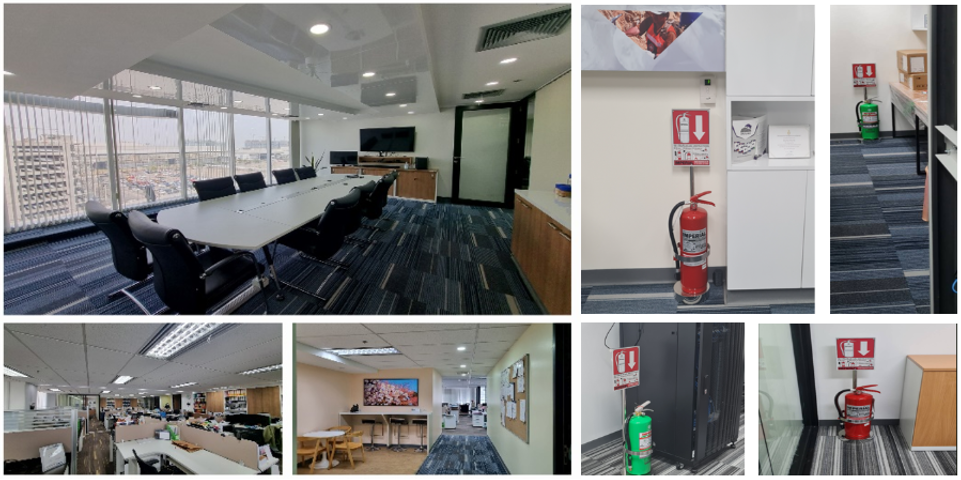
Workplace safety improvements
Designate the parking area for loading goods and the working area in the warehouse.
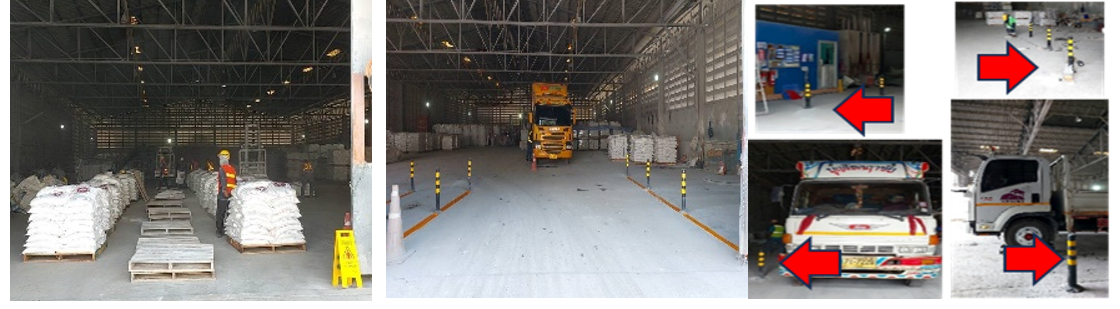
Install a railing beneath the silo tank to prevent falls. Add guards at the machine's pivot points.
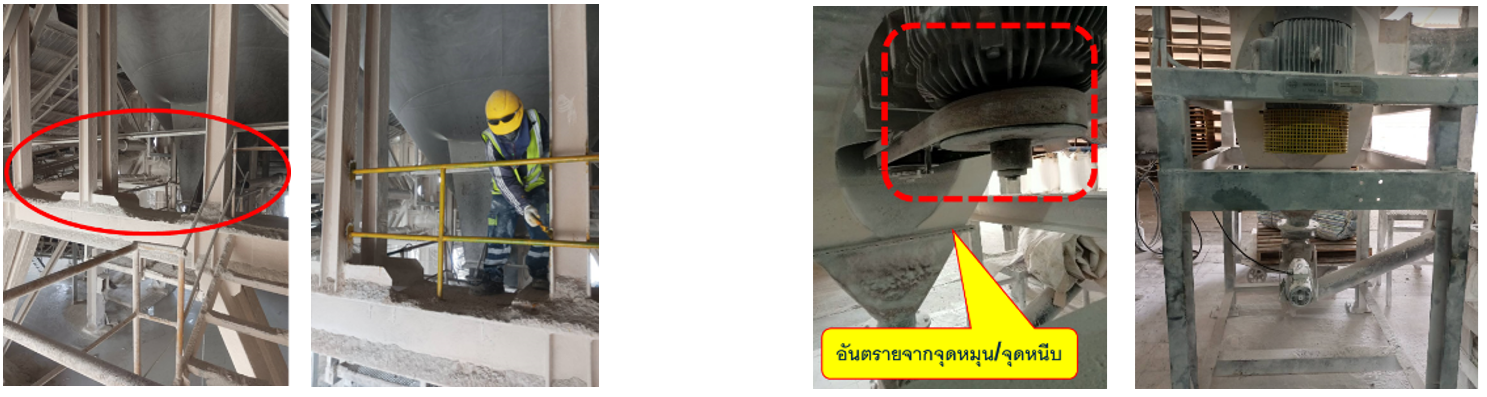
> Dedicated to adhering to legal and regulatory requirements, including regular updates and reviews to align with evolving legal standards.
> Committed to identifying and mitigating hazards, focusing on enhancing the safety of the Company and its subsidiaries.
Strengthening safety protocols in the factory environment through a safety assessment system that includes a Safety Committee (KPO) and safety officers at various levels. Operational teams collaborate to develop a Job Safety Analysis (JSA) to evaluate risks, increasing the number of JSA items from 120 to 230 since 2021. This initiative also includes adding over 300 assessment and inspection topics to encompass the entire operational area. Additionally, fines for violations have been raised from 500 baht to 1,000 baht to ensure that responsible employees recognize the importance of taking proactive measures to prevent errors and mitigate potential hazards.
Conducting annual risk assessments and addressing noncompliancethat fails to meet control standards in the operational area.
> Adhere to safe operations ,strictly follow safety rules, and always update safety regulations
> Eliminate risk and dangers in all establishments including subsidiaries’
Subsidiaries process improvement in response to inspection comments
Safety Committee (CSO), professional safety officers, and the operation team continuously implement JSA (Job Safety Analysis) to define and control the hazards of processes, jobs, and procedures. Breaking into 120 jobs in 2021 then increasing to 230 jobs in 2023 with 300 hazard assessments to ensure JSA applied throughout the operations. Increasing awareness with the fines and other penalties for violating the safety rules, a doubled fine from last year to insist the company safety focus and concern.
Annual risk assessment and corrective actions follow ups and controls
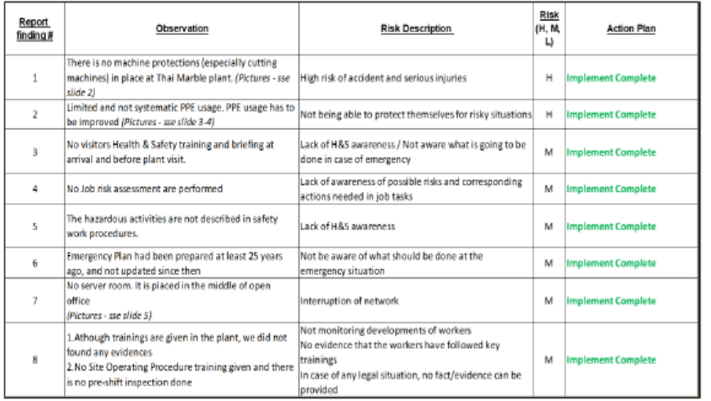
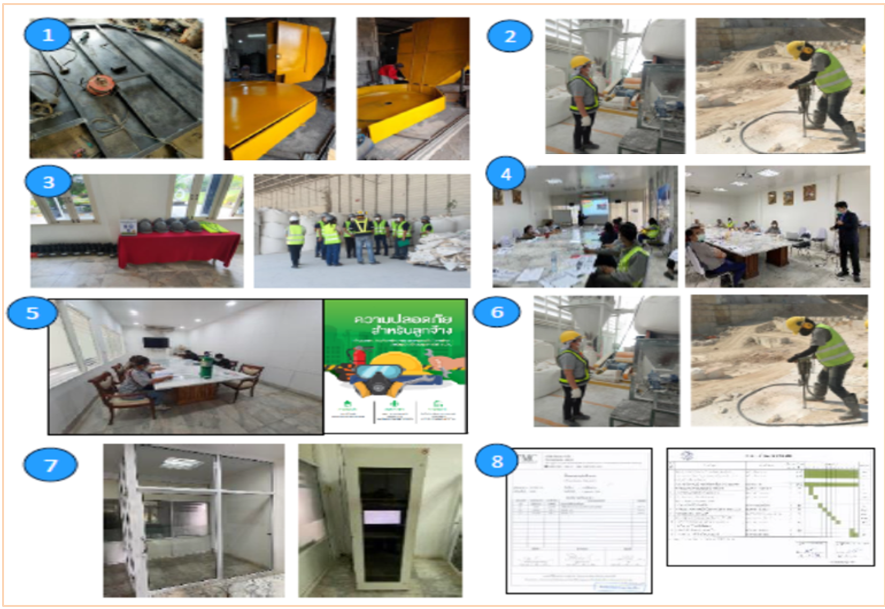
> Involve contractors and suppliers to manage supplier and contractor safety as operatives/workers must follow site rules and the safe system of works.
Road safety program for operatives/drivers include subcontractors as Supplier development programs as for a stakeholder engagement program |
|
|
Course : Keys To Safe Driving: The Smith System Venue : Chong Sarika Plant training room |
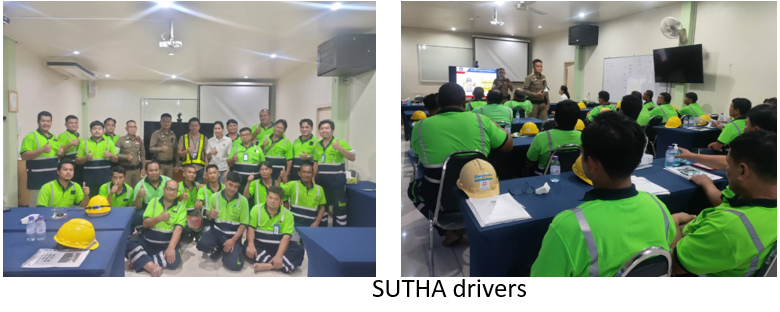
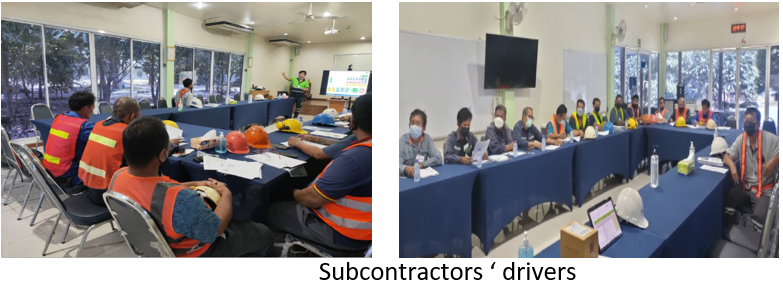
The Company allocates proper resources, time, budget, and training to promote ongoing occupational health and safety. Worker input and participation are essential, and this policy applies to all employees and will be accessible to the public and stakeholders.
This also covers assessing health and safety risks for employees and contractors during operations.
The Company encourages safety participation, so it encourages employees to mentor others; and gives them sufficient time, support, training, and facilities to perform safely at all levels and disclose safety performance effectively.
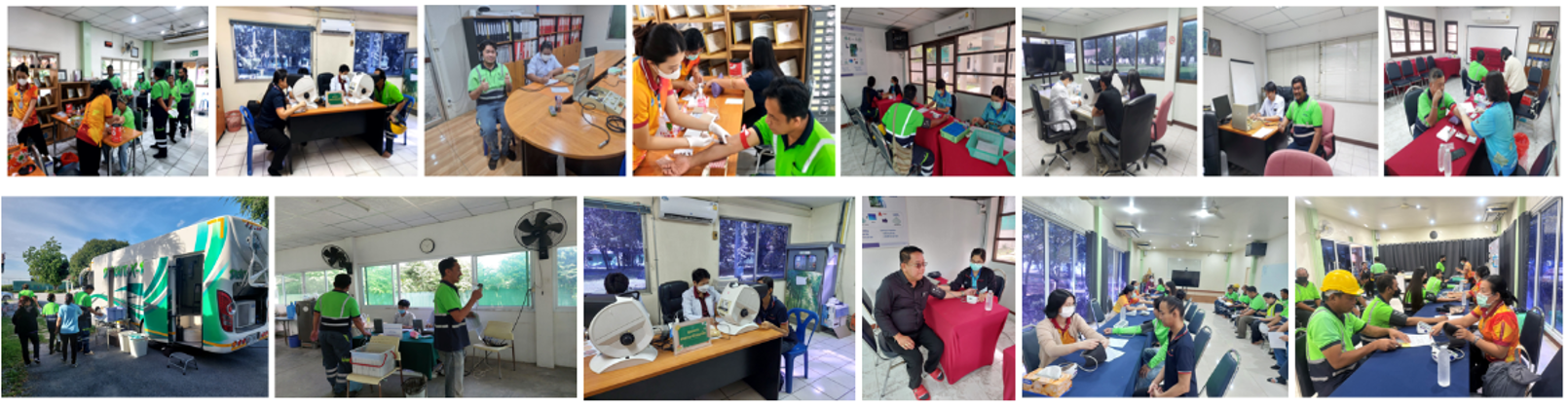
The company has set up a healthcare unit to organize annual employee check-ups at accredited facilities. Results showed no work-related health risks or issues among staff.
"Basic Firefighting and Fire Evacuation Drill"
The training provides essential firefighting knowledge and hands-on practice, enabling participants to handle emergencies, plan operations, rescue victims, and assess situations. It is certified by a fire prevention unit authorized by the Department of Labor Protection and Welfare.

Preventive and risk reduction measures for operations involve creating a Business Continuity Plan (BCP) for emergencies and holding quarterly emergency drills-known as Safety Snap Audits-that simulate different incidents at every branch
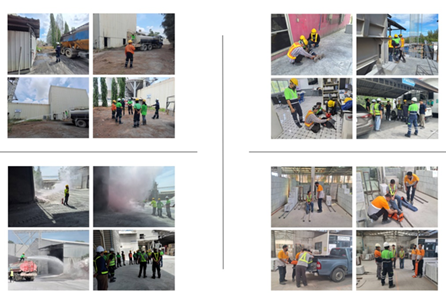
The analysis of Lost Time Injury Frequency Rate: LTIFR / Lost Time Incident Rate : LTIR , absentee rate (AR) ,the documentation of accident statistics to investigate the underlying causes of each incident.. (GRI :403-2)
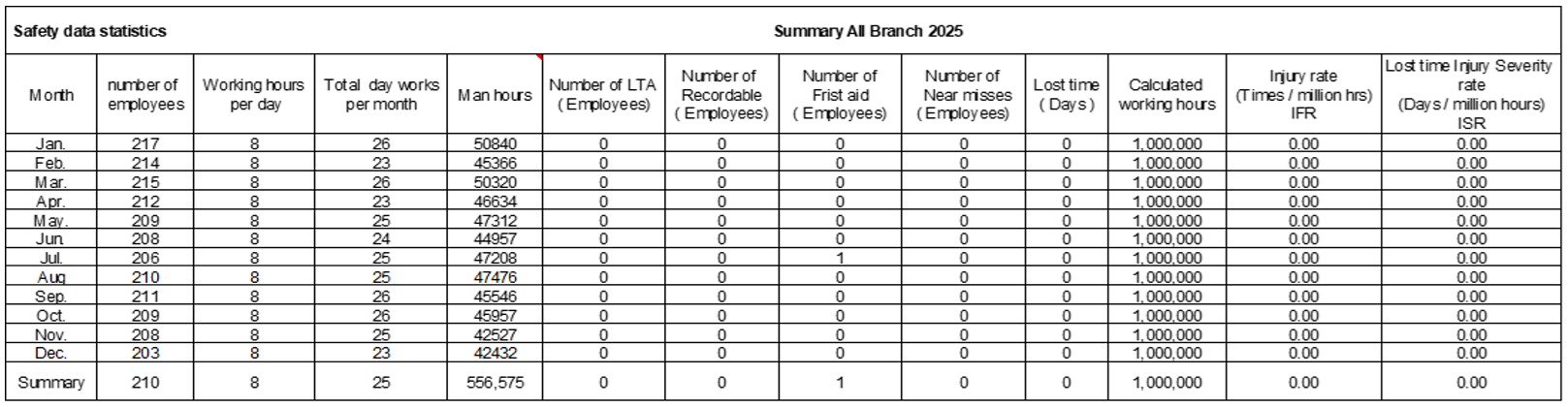
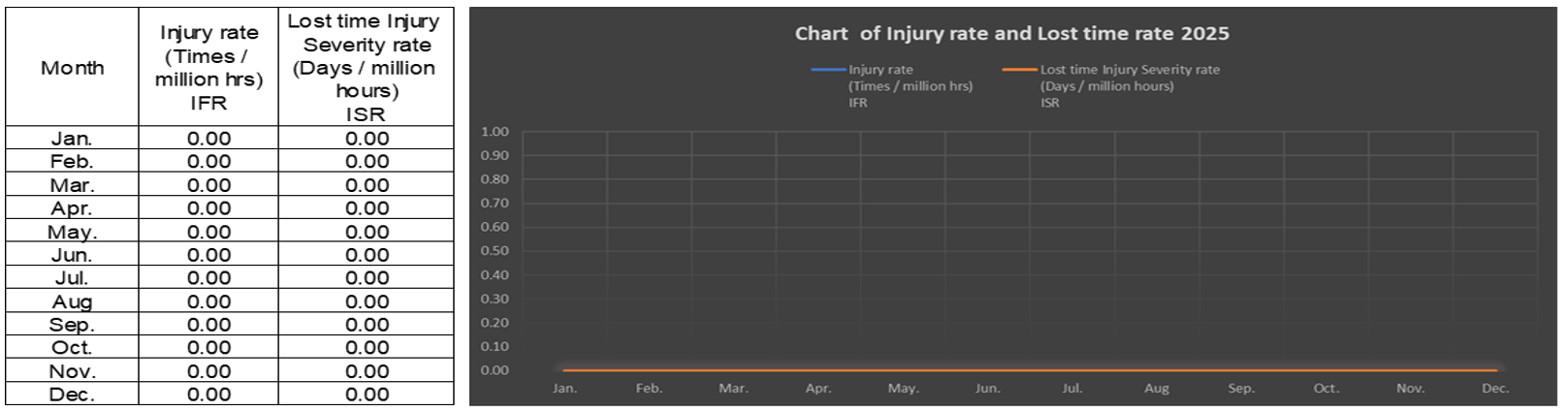
Safety Performance | |||
ISR | IFR | ||
Goal | Result | Goal | Result |
Less than 2 days / 1 million man-hours worked | Approx. 0 day / 1 million man-hours worked. (behind target) | Less than 3 times / 1 million man-hours worked | 0 times / 1 million man-hours worked (meet target) |
Safety training
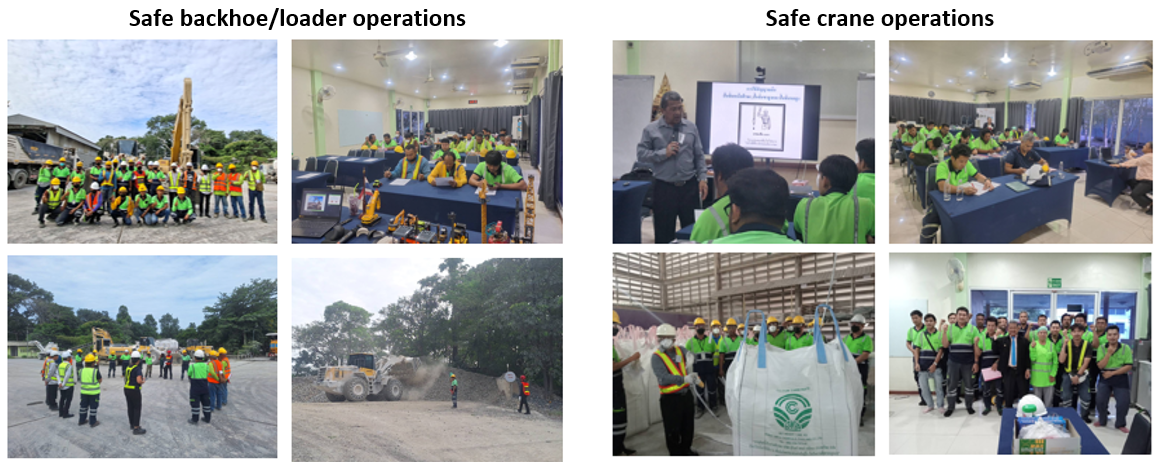
health, safety, and occupational health training
Occupational Safety and Health Courses | 2023 | 2024 | 2025 |
Employee and trainee count | 218 | 220 | 212 |
Short-term / Long term goals | |
2025 To achieve the Zero Accident by Lost-Time Injury Severity Rate: ISR to be less than 2 days/1,000,000 total hours worked and Injury Frequency Rate: IFR to be less than 3 times/1,000,000 Total hours worked | 2026-2028 To achieve the Zero Accident by Lost-Time Injury Severity Rate: ISR to be less than 2 days/1,000,000 total hours worked and Injury Frequency Rate: IFR to be less than 3 times/1,000,000 Total hours worked |
Plans of Y2025 - 2028 | |
| |
Occupational safety and health management certification.
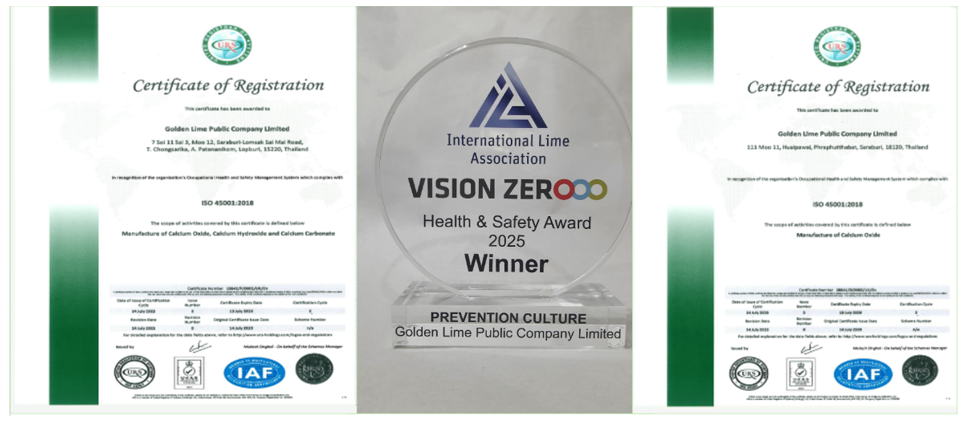
Occupational Health & Safety Data
| Metric | Current Year | Previous Year | Two Years Ago |
|---|---|---|---|
| Total number of lost time injury incidents by employees (Cases) | 0 | 0 | 1 |
Employees — Labour Relations
Labour Relations Data
| Metric | Current Year | Previous Year | Two Years Ago |
|---|---|---|---|
| Total voluntary resignations (Persons) | 57 | 86 | 87 |
| Male employees who voluntary resigned (Persons) | 51 | 64 | 65 |
| Female employees who voluntary resigned (Persons) | 6 | 22 | 22 |
| Percentage of employee turnover leaving the Company voluntarily (%) | 13 | 19 | 18 |
| Evaluation result of employee engagement | 1 | 1 | 1 |
Employees — Employee Representation
Employees Are Represented Collectively
Yes
Forms of Representation
| Form |
|---|
| Welfare committee |
Employees — Targets
Has Set Employee Targets
Yes
Targets
| Indicator | Target Areas | Base Year | Base Year — Description | Target Year | Target Year — Description |
|---|---|---|---|---|---|
| Labor disputes and complaints | 2983 · Description: Fair employee compensation · 2989 · Description: Non-discrimination · 2990 · Other name: Compliance with laws and fair treatment of labor · Description: Others | 2,025 | - Zero- of Labor disputes and complaints | 2,025 | -No Labor disputes and complaints
-No violations of the Code of Conduct were reported.
-One employee committed a serious breach of company regulations resulting in termination.
(Achieved)
|
| No use of illegal migrant/foreign/Child labor | 2986 · Description: Migrant/foreign labor · 2987 · Description: Child labor | 2,025 | No use of illegal Migrant
/foreign/child labor
| 2,025 | No use of illegal migrant/foreign/child labor
(Achieved)
|
| Average development and training hours provided to employees: 9 hours per person per year. | 2984 · Description: Employee training and development | 2,025 | average of training hours 9 hours / employees / year | 2,025 | Actual: average of training hours 17 hours /employees / year
(Achieved)
|
| Employment of 1 disabled employee per 100 employees | 2990 · Other name: Promoting employment of the disabled in a number as required by law · Description: Others | 2,025 | a total of six persons with disabilities were employed. | 2,025 | a total of six persons with disabilities were employed.
|
| Zero of Lost time Accident (Zero of LTA) | 2988 · Description: Safety and occupational health at work | 2,025 | Zero of Lost time Accident (Zero of LTA) | 2,025 | Actual times LTA
-Employees -0-time
(meet target)
-Subcontractors -0- time
(meet target)
|
| Survey results show an increase in engagement and satisfaction compared to the previous year | 2985 · Description: Promoting employee relations and participation | 2,025 | Engagement Survey participation rate is 90% | 2,025 | Engagement Survey participation rate is 97%
(Achieved)
|
Employees — Performance & Outcomes
Introduction
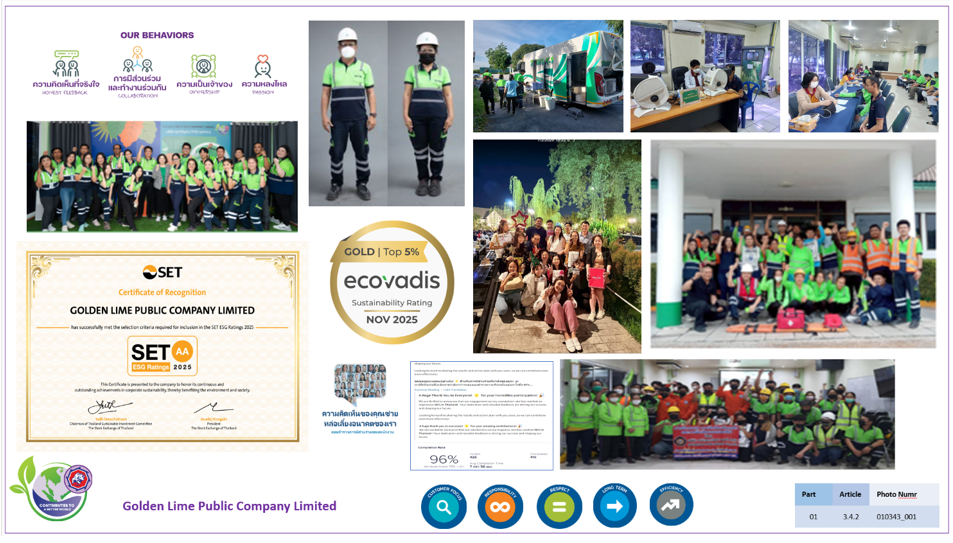
Has Performance Results
Yes
Performance Description
The Company places importance of values in Human Resources as fundamentally a factor that leads the organization to success.
The Company commits to developing the competency and capabilities of employees along with promoting employees' social and environmental responsibility including creating workplace happiness with fair treatment towards employees/laborer.
The company received a certificate of honor from the Department of Labor Protection and Welfare, recognizing our implementation of Good Labour Practices (GLP) in business management, meeting the standards since August 17, 2021.
Customers — Plan & Guidelines
Has a Customer Management Plan
Yes
Plan Description
Development plan | Plans for the year 2026-2028 |
|
|
Plan Areas
| Plan Area |
|---|
| Development of customer satisfaction and customer relationship |
Customers — Satisfaction Results
Customer Satisfaction Results
| Metric | Current Year | Previous Year | Two Years Ago |
|---|---|---|---|
| Evaluation results of customer satisfaction | 1 | 1 | 1 |
Customers — Targets
Has Set Customer Targets
Yes
Targets
| Indicator | Target Areas | Base Year | Base Year — Description | Target Year | Target Year — Description |
|---|---|---|---|---|---|
| Customer satisfaction | 3009 · Description: Development of customer satisfaction and customer relationship | 2,025 | To achieve the SD target of 100% performance and more than 3 Level | 2,025 | The customer satisfaction survey result is 88%, with a satisfaction level of 3.54. |
| Pending product noncompliance | 3007 · Description: Responsible production and services for customers | 2,025 | -Zero- | 2,025 | -Zero- |
| Operational Downtime | 3008 · Description: Communication of product and service impacts to customers/consumers | 2,025 | less than/or equal 4% | 2,025 | Operational Downtime 0.58 |
| Product quality compliance | 3011 · Other name: Product quality compliance · Description: Other | 2,025 | More than 95% | 2,025 | Product quality compliance 98.90 |
| Customer PDPA and confidentiality breach | 3010 · Description: Consumer data privacy and protection | 2,025 | -Zero- | 2,025 | -Zero- |
Customers — Performance & Outcomes
Has Performance Results
Yes
Performance Description
Customer management, Responsible product communication and Business Conduct to competitors
The Company manufactures and distributes professionally to build trust and strong customer relationships with best-clarifying product characteristics, guiding the best application, continuing product development, and creating value for all stakeholders for business sustainability.
Customer support and product management
SUTHA focuses on enhancing customer satisfaction and experiences to build customer loyalty, effective product management hence is also essential to expand our customer base for long term business growth. The Company controls product quality as per standard procedures to ensure safe products and services delivered. Such quality control ranges from material sourcing, inbound transport, production, quality analysis and control, storage and packing then delivery to customers in compliance with Quality Management System, ISO 9001, including the environment system management, ISO14001 and the occupational health and safety system management ISO 45001 (OHSAS 18000)
Responsible Consumer Communication and customers satisfaction Survey |
Note: 1) 2023 Lime and Calcium carbonate customer satisfaction survey result presented in percentage. 2) The objective is to ensure stability in production and distribution by creating a tailored distribution plan for various customer groups. Each group has specific product needs, prompting the company to implement strategies to minimize control impacts and ensure timely delivery. This includes developing standards aligned with quality management practices. Some customer needs remain unmet. In 2025, there were eight product complaints: six about unburned cement cores, one about moisture affecting cement properties, and one identified during a client visit. All issues were resolved and cases closed. 3) 2025, the percentage of returned products compared to the products sold within the period was 0.282% (Y2024 was 0.169% and Y2023 was 0.195%)(GRI 301-3) | ||
Target | Result | ||
100% | 88% | ||
Pending product noncompliance | |||
Target | Result | ||
0 | 0 ( note /2) | ||
Operational Downtime | |||
Target | Result | ||
< 4 % | 0.58 | ||
Product quality compliance | |||
Target | Result | ||
> 95 % | 98.9209 | ||
Customer PDPA and confidentiality breach | |||
Target Result | Result Result | ||
|
| ||
| |||
In 2025, customer satisfaction surveys for both lime and calcium carbonate products revealed that improvements and further development are necessary to better address the needs of each customer group. | |||
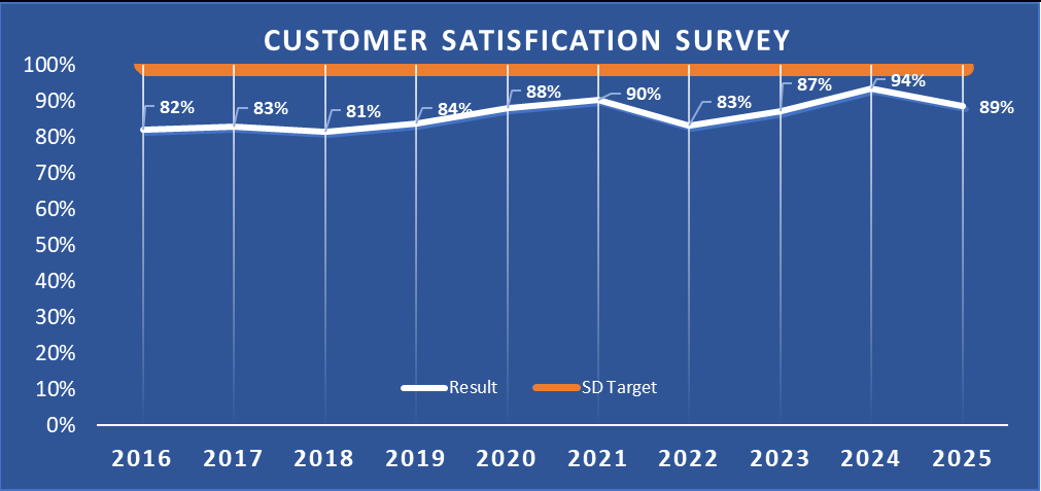
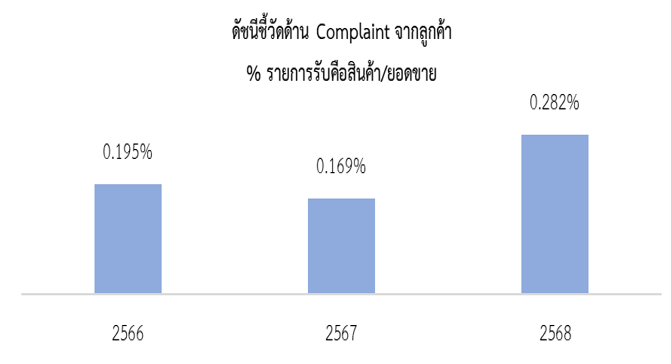
However, the Company still faces risks and challenges related to non-compliance with certain customer requirements, as well as issues stemming from the natural characteristics of the raw materials used in production. - Limestone and fuel are the main raw materials. Due to variations in limestone impurities and fuel properties, testing and controlling these inputs is essential to select the best materials for processing. High-calorific fuels are chosen in production to ensure consistent heating and reduce moisture issues, improving product or service quality. - The transformation process involving multiple products can lead to maintenance-related downtime, which may disrupt product continuity and present further risks. The Company remains committed to ongoing development and improvement. Satisfaction assessments are conducted using questionnaires that evaluate service and coordination systems, product quality, documentation services, and delivery and packaging. Key issues affecting customer satisfaction include inconsistent product properties in certain industry groups and occasional delivery delays. Furthermore, feedback from the survey indicated concerns regarding pricing adjustments due to increased fuel costs, which unexpectedly affected sales volume for some customer groups. In response, the Company is implementing improvements for the affected customers, including analyzing and developing measures to ensure consistent product quality that meets all customer needs. |
No. | Issue | measure | limitation |
1 | Product noncompliance identified with specific customers. | Create a customized production plan according to the needs of each customer group | vercapacity in some periods |
Diversify the fuel supply used in the kilns to enhance calcinations of limestone to meet the needs of each group of customers | Limited domestic fuel supply and higher cost of fuel import | ||
Maintain an adequate safety stock level against the purchase order | Silo storage limitations; Each kiln has a dedicated silo for its output, depending on products properties, specific characteristics for certain industries. | ||
Align delivery schedules with inventory levels and production schedules | |||
Arrange right condition in logistics to ensure right products delivered at the right time | |||
Apply right packaging | |||
Improve screening system to classify product characteristics | Operation shut down in high demand period, Restrictions on safe investment judging from the priorities and return | ||
Improve processing different lime particle sizes responding to customers’ requirements to be started once the capex plan is approved | |||
2 | Selling price adjustment | Balance the selling price with saving other costs | The selling price is determined by several factors, especially the production cost that must be covered by the selling price. |
New product development for more competitive advantages | |||
3 | Packaging | Stringent quality control in packaging ensures customer satisfaction and compliance with various regulatory standards and requirements | reusable packaging is not possible for certain types of lime packaging |
> Investment and development in essential lab equipment for quality control testing, highlighting tools necessary for accuracy and reliability.
> In 2023, the focus will be on enhancing the limestone raw material selection from the quarry and refining the quality inspection process during milling, grinding, and crushing.
> In 2024, efforts will shift to advancing the production process for hydrated products to align with customer requirements. The Replace Hydrated Lime Classifier project, including expansion work finished in 2025, represents a 6.6-million-baht investment focused on achieving the ideal size and fineness of hydrated lime products.
> Additionally, there will be a development of the lime production process tailored for the lightweight brick industry, supported by a 5.5-million-baht investment in machinery and equipment to ensure the lime produced meets the specific needs of lightweight brick manufacturers.
> Between 2024 and 2025, over 50 million baht will be invested to expand GCC product capacity at Marble Co., Ltd. (a subsidiary) to meet rising demand from construction, chemical, paint, rubber, and animal feed industries.
> developing an international-standard quality management system of Thai Marble Corp. Ltd., which produces marble slabs, handicrafts, and GCC products, is ISO 9001:2015 certified.
The Company is also advancing a Cost Saving initiative aimed at reducing production expenses and identifying alternative customer segments to offset potential losses in demand.
SUTHA’s success in managing the business chain collaboratively has been recognized through delivering value to key stakeholders, reinforcing the company's commitment to sustainability development. This achievement was acknowledged with the "Sustainability Award" for our efforts in fostering cooperation and advancing the business chain toward long-term sustainability. This recognition underscores the company’s dedication to aligning business practices with sustainable growth objectives, while building trust and confidence among our stakeholders.
> Training activities focus on selecting courses to enhance efficiency management and equip personnel with essential skills. Trainees will practice through workshops and on-site demonstrations to improve personal and process development, maximizing customer satisfaction. The program incorporates the Kaizen concept to help staff adapt and improve work processes provided from 2023 to 2024, inviting more attendees from operations unit to obtain key ideas as per below ;
|
|
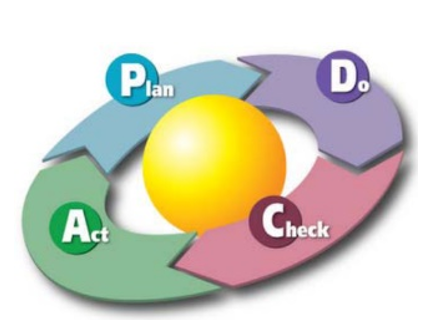
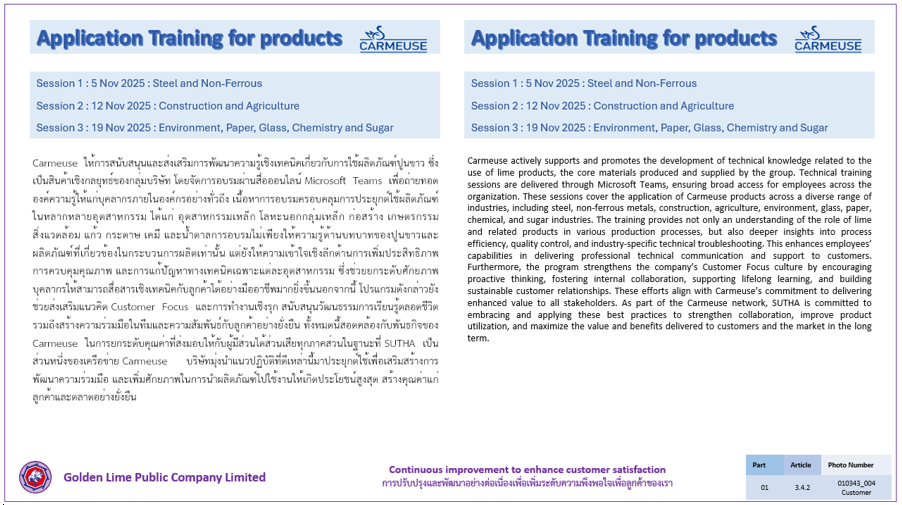
Responsible Product Communications and law compliance
The Company implements the Personal Data Protection Policy to proceed the collection, the usage and disclosure of personal data of the Company in order for compliance with the Personal Data Protection Act B.E. 2562 (2019) and Customer Service Code of Conduct has been revised to allow the right to access products information and labels and in line with sustainability development as follows;
Disclose products and services information accurately and completely
Employees must understand, analyze and know key issues related to customer needs and get ready to provide product and service information, terms and conditions including notifying such agreed conditions and terms agreements to customers in writing as follows;
2.1 Price of goods, services or related expenses excluded from product or service price detail and conditions
2.2 Detailed specifications of products, service, packaging and transportation information, terms and conditions
2.3 Other information regarding a mutual agreement of the Company and a customer that agreement, terms, policy or credit term shall be notified to customer
nce the Company changes the terms or condition related to customers, the notification shall be sent to customers in advance.
4. Employees must be ready to respond customer requirements in aspect of products, services, complaints, advice and follow up on the progress on various issues notified by customers on the basis of friendliness and goodwill and ready to work together to find solutions for customers who encounter problems from using the company's products. In addition, satisfaction surveys should be conducted to develop and retain good relationships with customers aiming to determine quantity-based goal to archive higher customers satisfaction and customer satisfaction evaluation for further use in product and service quality development.
5. Sales, marketing and services related departments should prepare communication equipment to be ready for customers to contact easily and quickly.
6. Keep customers’ secrecy information and trade information confidential including the designation of data controllers and data processor to be responsible for databases storage and protection according to the criteria the Personal Data Protection Act including notifying its rights and protection policy as per published through the Company's website.
7. Sustainability and Value Chain development implementation covering product development process raw material procurement, transportation and service providing to create value and benefits to both customers and the Company including taking human rights principles, legal labor practices and anti- corruption policy into implementation.
8. Developing safe products and services and communicate impact of products or services to customers with concern on the product safety for customers usages and communicating guidelines for customers on how to safely use the Company's products.
9. Sales promotion especially for eco-friendly products as a part of promoting the use of products to help reduce environmental impact.
Providing information, clarifications of requirements, terms and conditions of products and services
The Company always presents via its website the updated and complete set of products information; product specifications, qualifications, product life cycle, and material safety data sheet (MSDS) which is also delivered to customers to acknowledge safety related information such as chemical substance, hazard characteristics, toxicity, method of use, storage, transport, disposal, safe handling and control. This includes arranging a technical expert on the use of the product who can advise and guide customers to improve the efficiency of products, clarifying and solving various problems from the use of the product so that customers can obtain full efficiency and safety of products.
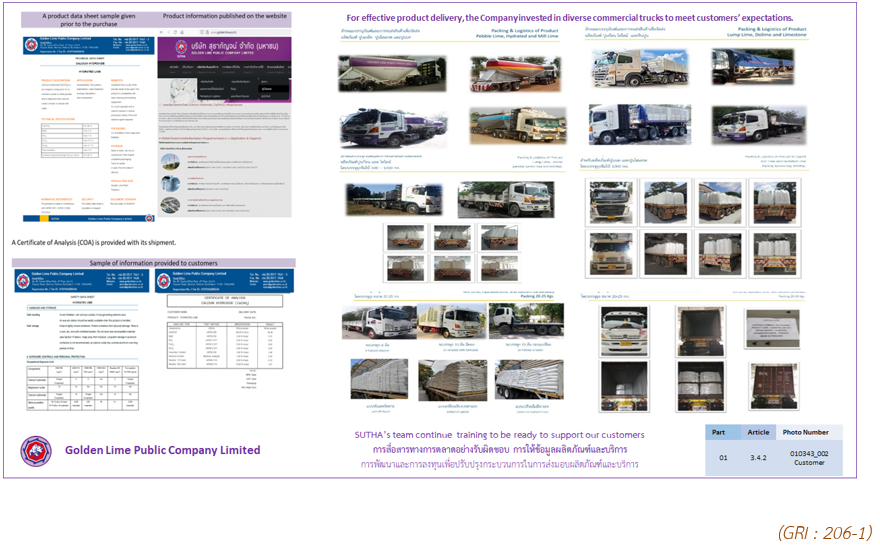
Treatment toward competitors and Anti-unfair competitiveness
1. Business Competitors
From 2023 to 2025, the Company experienced no conflicts or disputes with other players in the industry. In the primary product sector, there are approximately 7-8 key manufacturers or distributors. The Company holds the second position among these manufacturers and distributors, the number one sales share in the domestic market. The Company adheres to ethical standards when engaging with competitors.
Commitment to Fair Competition
The Company does not pursue confidential information from competitors through dishonest or illegal means.
The Company refrains from damaging competitors' reputations through false statements or unfair practices.
The Company avoids making agreements with competitors or other businesses that would create monopolies or hinder market competition.
The Company sets objectives to prevent any actions that could lead to disputes with competitors.
The Company has established protocols to ensure compliance with the Trade Competition Act and promotes fair business practices.
The business operates under ethical standards, adhering strictly to rules and regulations regarding fair competition and compliance with the law.
Employees must refrain from any actions that could lead to unfair trade practices, disrupt market mechanisms, or hinder free competition, as well as avoid causing harm or restricting the business activities of others.
If the company holds a dominant market position as defined by law, both the company and its employees must avoid misusing their power in an unfair or unreasonable manner that could distort market dynamics.
The company will not engage in any actions that would eliminate competition with rivals, whether directly or indirectly, and must not exchange business information or make agreements with competitors, partners, or customers to reduce or limit competition.
Agencies engaged in domestic and international business must comply with trade competition laws in their operating countries, including during mergers and acquisitions.
Employees should prioritize adherence to these laws to maintain ethical practices and educate partners on compliance.
rganizations involved in transactions and investments should establish control and monitoring systems to ensure full compliance with competition laws.
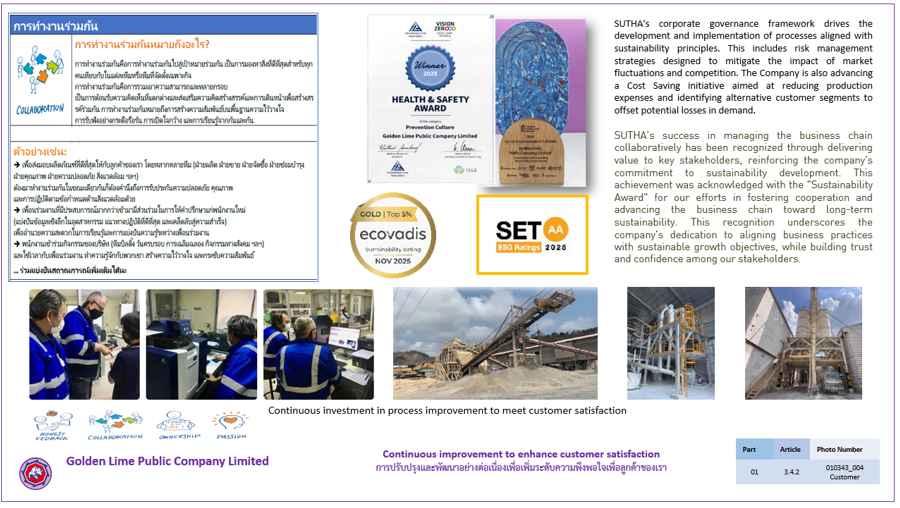
Community & Social — Plan & Guidelines
Has a Community & Social Plan
Yes
Plan Description
Community and society
Community and social management plan
Performance summary of Human Rights | 2025 Target and performance | |
Target | Performance | |
Community complaint The number of pending complaints The report identified 8 process-related complaints at specific times: 5 about dust at Phra Phutthabat, 2 at Huai Pa Wai, and 1 at Chong Sarika. All issues have been addressed and closed by responsible parties. | Zero | 8 complaints closed |
Zero pending complaint -Achieved- | ||
S5. Cmmunity and societyengagement
Golden Lime Public Company Limited, SUTHA, acknowledges its responsibility to engage and collaborate effectively with civil society, local communities, and governmental bodies. The company is committed to participating in and supporting various community, social, and local initiatives by deploying personnel to these activities. This involvement includes collecting feedback and addressing concerns to meet community expectations, enhancing public relations, mitigating potential conflicts or risks to its reputation, and securing community support for seamless business operations.
Based on the expectations surveys and needs of local agencies, the public, and communities adjacent to its facilities, the company engages in annual initiatives that align with community aspirations. These initiatives are designed to support sustainability objectives and enhance stakeholder engagement. Key stakeholders encompass local communities, organizations, government entities, and individuals residing near the company's production sites. Their influence and potential benefits derived from the company's operations make their perspectives vital to the company's overall functioning.
Community and Social Engagement Goals
The Company has developed a structured approach to assist relevant organizational units in planning initiatives that effectively support and collaborate with civil society, communities, and local or governmental entities. By engaging in or partnering with community, social, and local initiatives, the company can collect feedback and address concerns, thereby meeting expectations, enhancing public relations, minimizing conflicts or risks that may jeopardize its reputation, and securing community backing for seamless business operations. The framework encompasses the following elements:
1. Community and Social Engagement: Implementing surveys to identify societal issues stemming from the company's activities and formulating ongoing strategies to alleviate impacts on communities and society.
2. Emphasis on Sustainable Projects: Prioritizing initiatives that foster community development or address social challenges in a sustainable manner through business practices.
Plan Areas
| Plan Area |
|---|
| Forests and natural resources |
Community & Social — Targets
Has Set Community & Social Targets
Yes
Targets
| Indicator | Target Areas | Base Year | Base Year — Description | Target Year | Target Year — Description |
|---|---|---|---|---|---|
| The number of pending complaints | 3045 · Other name: Community complaint · Description: Others | 2,025 | -Zero- | 2,025 | -Zero- |
Community & Social — Performance & Outcomes
Has Performance Results
Yes
Performance Description
The framework for community and social engagement activities is aligned with the following strategic guidelines:
1. Community Engagement Activities for Environmental Impact Reduction and Biodiversity Promotion
Objective:
Develop engagement between company personnel and community stakeholders.
Align activities with the company's sustainability goals, particularly UN Sustainable Development Goal 15.
These goals support protecting and restoring terrestrial ecosystems, sustainable tree planting, forest management, and halting biodiversity loss. Businesses rely on land for resources and have a duty to maintain and restore ecosystems. Emphasizing restoration and biodiversity throughout operations is vital. Managing water quality, planting trees, and collaborating with others help ensure business-related land and community ecosystems are effectively restored.
Goals:
Protect, restore, and promote sustainable use of terrestrial ecosystems.
Sustainably manage forests, combat desertification, halt and reverse land degradation, and halt biodiversity loss.
Recognize land as a vital resource for business, ensuring responsible use and maintenance.
Restore ecosystems and enhance biodiversity through water quality management, tree planting, and related projects.
Collaborate with various groups to ensure proper restoration of ecosystems related to the business.
Benefits and Promotion for Company Operations:
Activities that instill a sense of responsibility towards products, services, and business processes.
Activities that foster positive relationships and interactions with the community and local agencies, promote cooperation and networks that support social, community, and living conditions of nearby residents.
Benefits to Community, Society, and Environment:
Activities that create benefits and promote sustainability, conservation, and positive environmental impacts for a sustainable social and community environment.
Activities that promote and restore the environment, such as tree planting to absorb carbon and mitigate climate change and global warming.
Tree planting as a compensatory and restorative activity benefiting the community, supported by the business as part of its social responsibility.
Environmental conservation and green space expansion to promote sustainable terrestrial ecosystems, supporting plants and animals for a better environment and biodiversity.
KPI for Evaluating and Measuring Sustainability Progress:
1. Quantitative Indicators:
Number of trees planted to absorb and offset industrial greenhouse gas emissions, positively impacting the community's sustainable environment.
Budget or funding allocated for support.
2. Qualitative Indicators:
utcomes aligned with objectives, goals, and specified benefits.
In 2025, SUTHA held a tree-planting and waste collection event at Chongsarika factory with employees from all branches, supporting the objectives and goals outlined above.
CSR budget | ESG values | |
- Increased Green Space: 500 square meters - Number of Trees Planted: 27 in 2025 - Cleaning and landscape area around the factory Budget paid: 15,980.00 THB | Economic | Licensed business operations, developed in partnership with civil society, create non-monetary benefits that help build sustainable communities and reduce negative impacts. |
Society | Positive corporate image in enhancing community’s good relation, healthy ecosystem, and environment | |
Environment | - mitigating dust impact, environment awareness - promoting environmental conservation activities resonating the corporate goal of CO2 neutrality - 9-15 Hg. Per year of CO2absorption rate - provides oxygen to 2 people / year - capture dust and air pollution 1.4 Kg. / Year - Air purifier - A temperature goes down 2 – 4 Celsius - Activities to promote environmental conservation and balance the ecosystem and biodiversity. - Clean-up and waste collection activities near the factory help maintain a tidy environment and improve the locallandscape. | |
Activity: Reforestation Project “Save the World, Reduce Pollution,”
SUTHA launched a reforestation project at Chongsarika branch to support conservation, reduce dust, and limit local impact. The “Save the World, Reduce Pollution,” initiative involved planting 27 pine trees along a 500-meter boundary as a dust barrier, with 43 company staff participating. The project budget was 10,980 Baht.
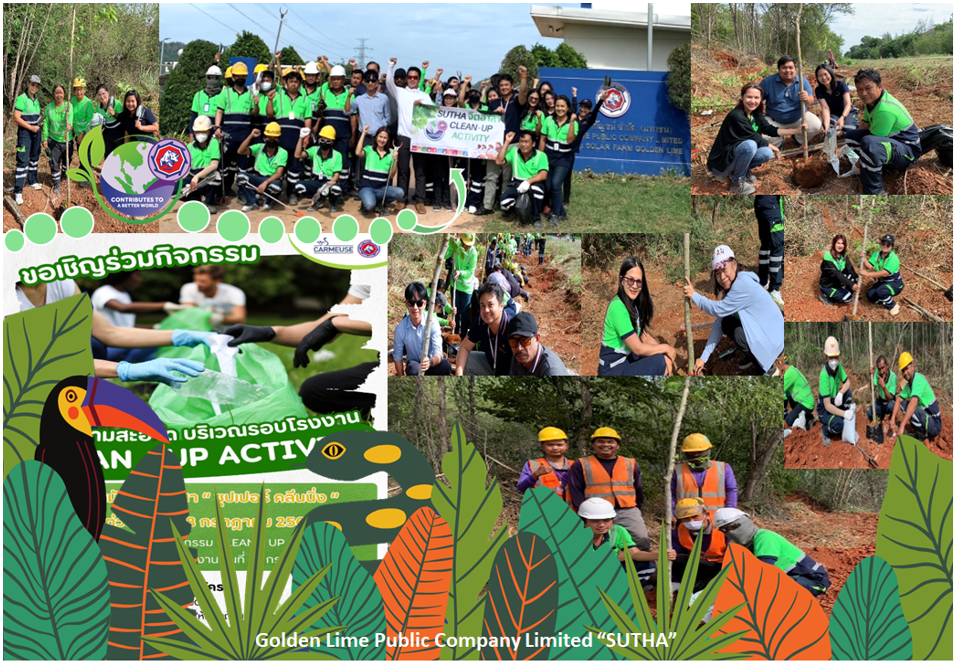
CLEAN – UP ACTIVITY
SUTHA aims to reduce operational impacts and strengthen community ties. The company held a ‘CLEAN-UP Activity’ to clean and collect waste around the factory, promoting sustainability. Within a 1- kilometer radius, 43 participants gathered 22.84 kg of waste—including 20.04 kg general and 2.80 kg metal—on a budget of 5,000 Baht.
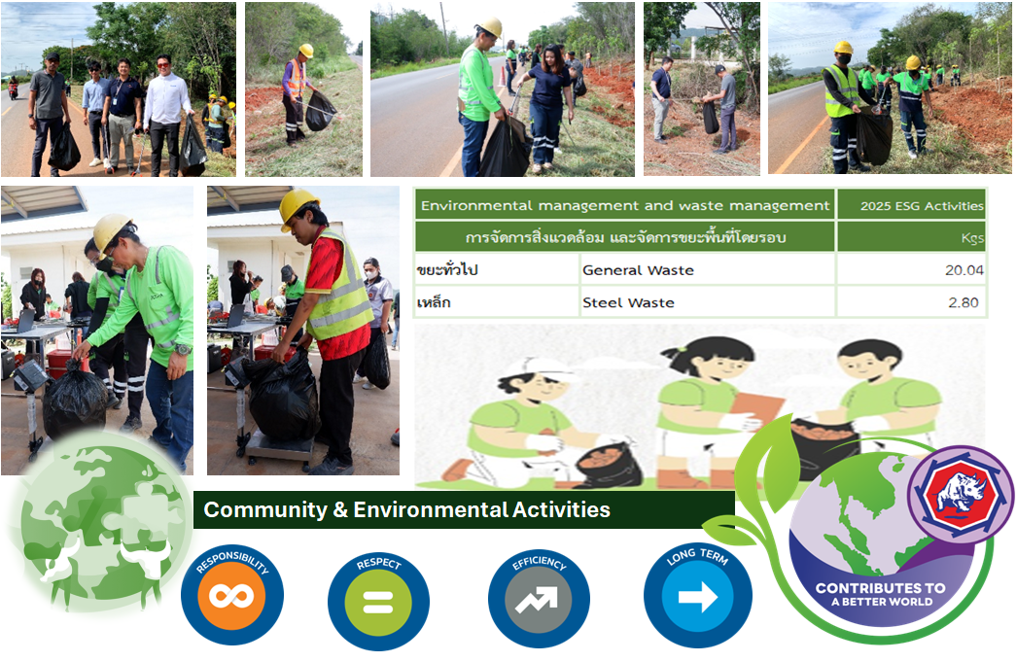
Community Volunteer Initiative: Aquatic Species Release in Commemoration of H.M. King Rama X, July 24, 2025
SUTHA joined a volunteer project for King Maha Vajiralongkorn’s birthday, releasing aquatic species and enhancing the local environment.
Partners & Location
Partners:Chongsarika Subdistrict Administrative Organization and private sector partners
Location:Around Nong Pho Weir, Moo 8, Chongsarika Subdistrict, Phatthana Nikhom District, Lopburi
Participants:12 employee representatives from Golden Lime Public Company Limited (SUTHA)
Activities Conducted
Aquatic species release
litter removal, and site cleanup
grass cutting, tree pruning, and brush clearing nearby
Environmental & Social Outcomes
Ecosystem benefits:Restored ecological balance, increased biodiversity, and boosted fish populations in local waters.
Community engagement:Enhanced cooperation between authorities, private partners, and SUTHA employees to protect water resources and improve environmental safety.
Alignment with SUTHA’s Sustainability Goals
This initiative furthers SUTHA’s social sustainability by engaging the community and supports its biodiversity commitment to reduce operational impact and benefit ecosystems over time.
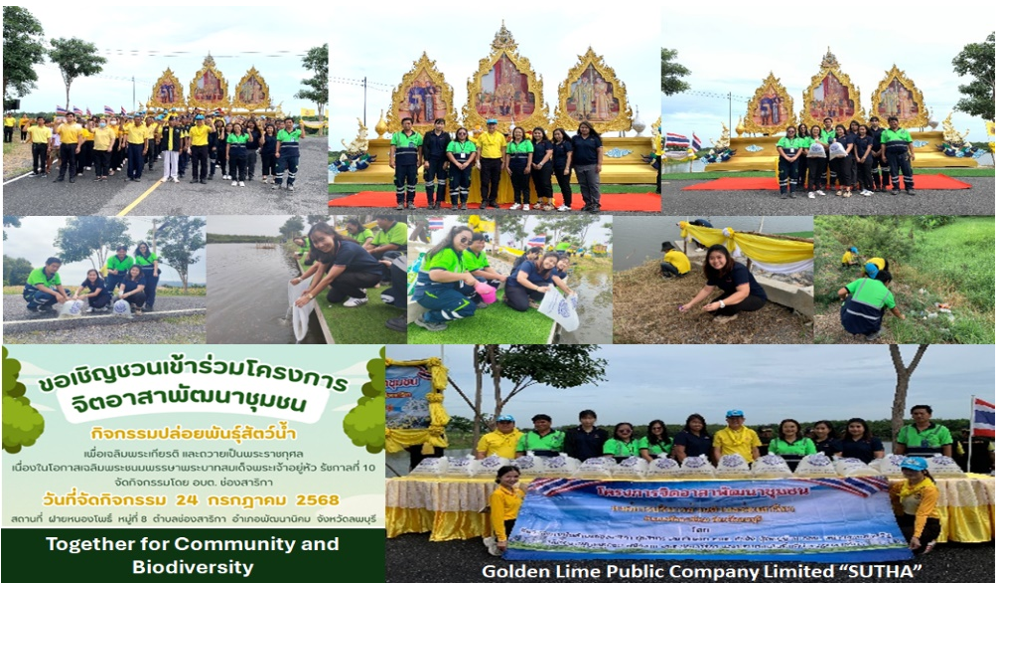
2. Collaboration with Local Organizations to Address Community Issues
SUTHA collaborates with local organizations to gather feedback and address community issues through activities that visit residents who may be affected by social, health, or living condition problems. This leads to the development of activities with local organization networks to create opportunities or promote community and social well-being in the following areas:
1) Addressing the hardships faced by disadvantaged individuals and vulnerable groups
2) ccupational health, safety, well-being, and quality of life
3) Managing sanitation
4) Reducing social disparities
5) Creating opportunities for future self-reliance
Benefits promoting the Company’s Operations:
Mitigating social and community issues, fostering relationships and cooperation with civil society organizations, which support continuous business operations.
Raising a sense of responsibility towards business processes and contributing to developing society and community well-being.
identifying social issues of residents around the company's facilities to develop initiatives that address these issues and improve community living conditions.
Benefits to Community, Society, and Environment:
Engaging local organizations to enable civil society or community members to gain from the established objectives.
Partnering with governmental bodies to enhance the welfare of the community and society at large.
Backed by the annual budget provisions, guaranteeing support for community and social initiatives.
Involving staff, management, and workforce, which includes offering financial assistance to benefit the community and society.
KPI for Evaluating and Measuring Sustainability Progress:
Quantitative Indicators:
Determine quantitative indicators, such as the project's contribution to the objectives or topics according to the target, or the percentage of satisfaction or success of the project as specified in the plan and budget or funding for support.
Qualitative Indicators:
Outcomes aligned with specified objectives, goals, and benefits.
SUTHA is collaborating with local organizations to enhance community development through the initiative "Clean Drinking Water from SUTHA for Everyone's Hygiene." This effort aligns with the objectives outlined in Section 2.2, which focuses on occupational health, safety, and the overall quality of life. The initiative aims to improve sanitation management by ensuring access to clean drinking water, thereby promoting the health of community members. For the year 2025, the objective is to foster a better quality of life for individuals within the community as follows:
Budget allocation | ESG values | |
61,553 THB | Economic | Value that can be subtracted prior to tax calculations |
Social |
| |
Focus group activity at public service points during the Songkran Festival, New Year's Festival, and community Kathin events in 2025
SUTHA provides Golden Lime branded drinking water at these service points to support road users during the festival, which is known for its significant traffic congestion. Furthermore, the company engages in a campaign aimed at promoting safe driving practices to reduce the incidence of accidents at five specific locations. These sites have been selected due to their closeness to the company's operational branches. The identified areas include:
1) Phatthananikhom District Office, Lopburi
2) Chong Sarika Subdistrict Administration, Lopburi, at Sai Si Intersection on the Saraburi-Lomsak New Road.
3) Phra Phutthabat District Office, Saraburi Province
4) Huai Pa Wai Municipality, Saraburi, and the communities surrounding the Huai Pa Wai branch.
5) Phukrang Municipality, Saraburi.
6) Phuk Rang Subdistrict Patrol Unit, Saraburi.
A total of 126 packs, containing 2,268 bottles of drinking water, were supplied. The combined value amounts to 8,820 baht.
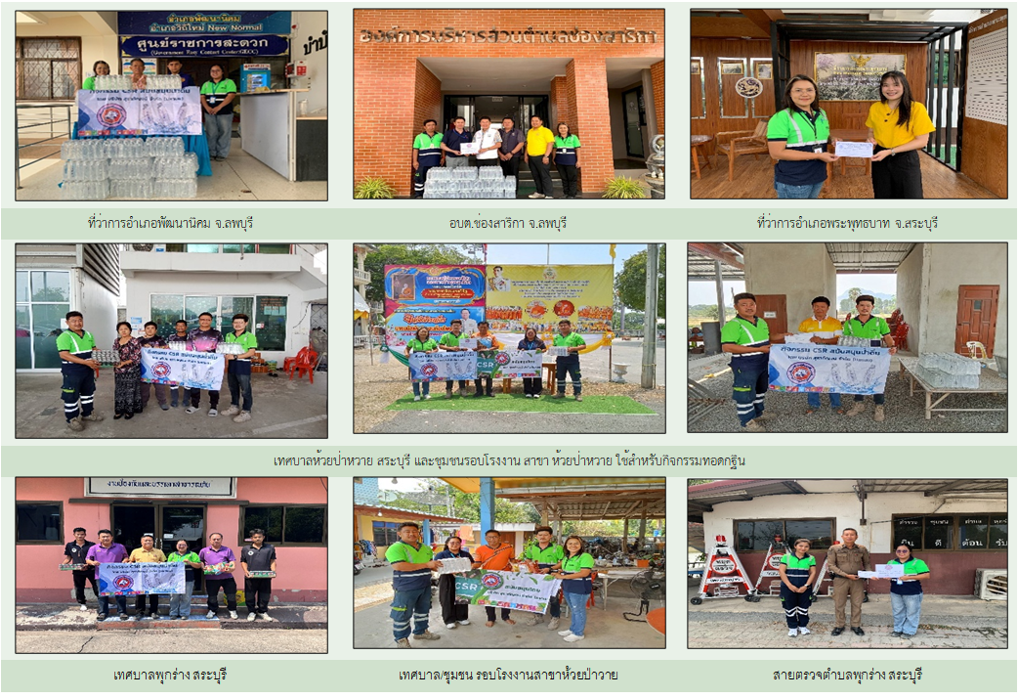
ESG Social Initiative: “Sharing Love, Spreading Happiness to the Community”
Date: 25 March 2025
Location: Chongsarika Subdistrict Administrative Organization, Lopburi Province
1. Objective
The “Sharing Love, Spreading Happiness to the Community” initiative is designed to improve the lives of vulnerable groups such as elderly people, individuals with disabilities, women, children, and low-income families by donating essential consumer goods. This effort supports SUTHA’s commitment to Social Sustainability through Community Engagement.
2. Partnership and Participation
This project was carried out in collaborating engagement with:
Chongsarika Subdistrict Administrative Organization
Private sector partners in the community
SUTHA donated 10 cartons of vegetable oil worth THB 17,790 to support better food security and living conditions. Five SUTHA representatives, including executives and staff, joined the event.
3. Key Activities
Donation of essential goods (vegetable oil) to vulnerable groups within the community
Support for improving household welfare and food availability
Strengthening cooperation between local authorities, private partners, and SUTHA employees
4. Social Impact
Reduced household expenses for vulnerable families through essential goods support
Enhanced community relations and trust between SUTHA and local stakeholders
Contributed to social welfare and well-being in Chongsarika Subdistrict
Encouraged employee engagement in community development activities
5. Alignment with SUTHA’s Sustainability Goals
This initiative supports SUTHA’s:
Social Sustainability (Community Engagement): Strengthening relationships and collaboration with the community
Social Well-being Goal: Enhancing quality of life for vulnerable groups
Stakeholder Partnership: Promoting cooperative development between employees, local authorities, and private partners
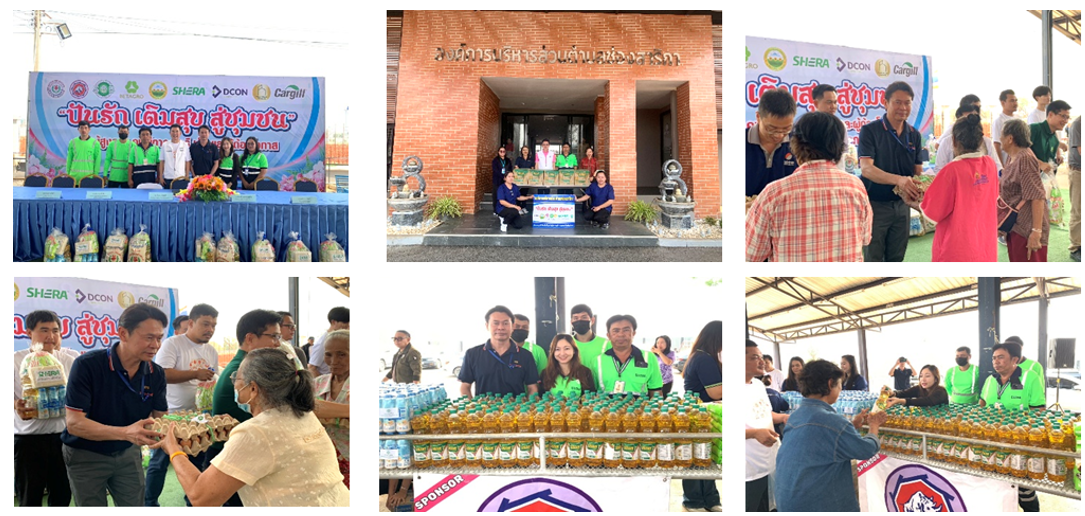
Community visits on Songkran Day 2025
SUTHA held a community outreach at its Chong Sarika branch for Songkran 2025, covering Chonphat Village and Village No. 12. The event aimed at fostering good relations and gathering feedback to address local issues. Cooking oil was distributed to residents as part of efforts to improve quality of life. The activity involved 20 participants from management and staff, with a total cost of 15,435 baht.
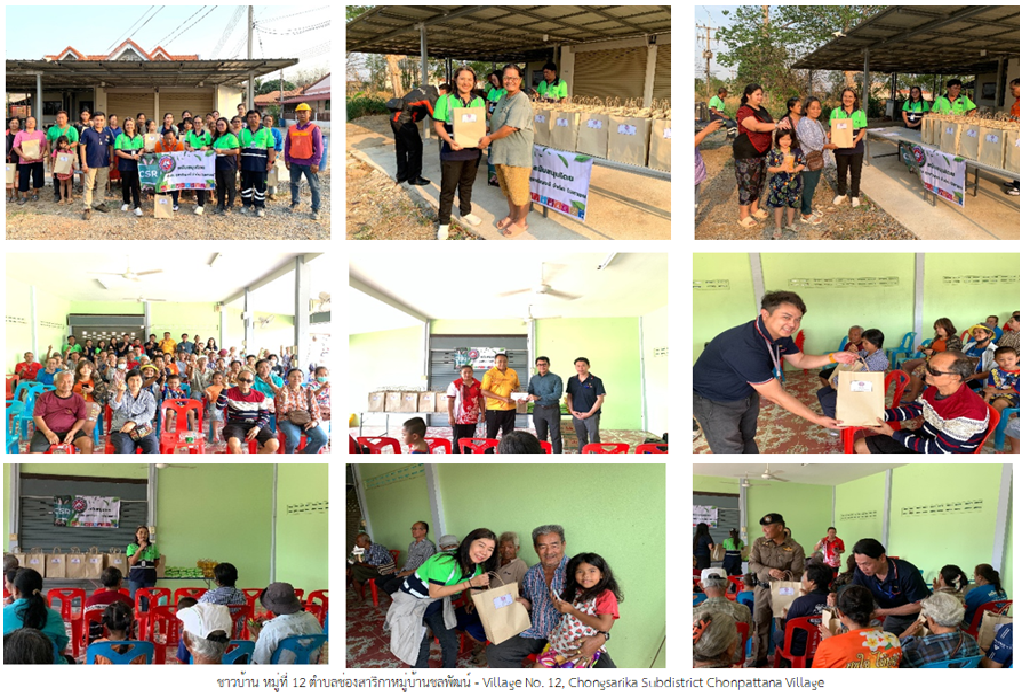
Evening home visit of Khao Khaw community, surrounding the Na Phra Lan factory branch.
SUTHA organized an evening home visit for Khao Khaw community residents near the Na Phra Lan factory, working with the village headman to foster relationships and address local concerns to distribute essential goods to 70 households (worth 21,700 baht) and donate 100 blankets to the Na Phra Lan Subdistrict Municipality.
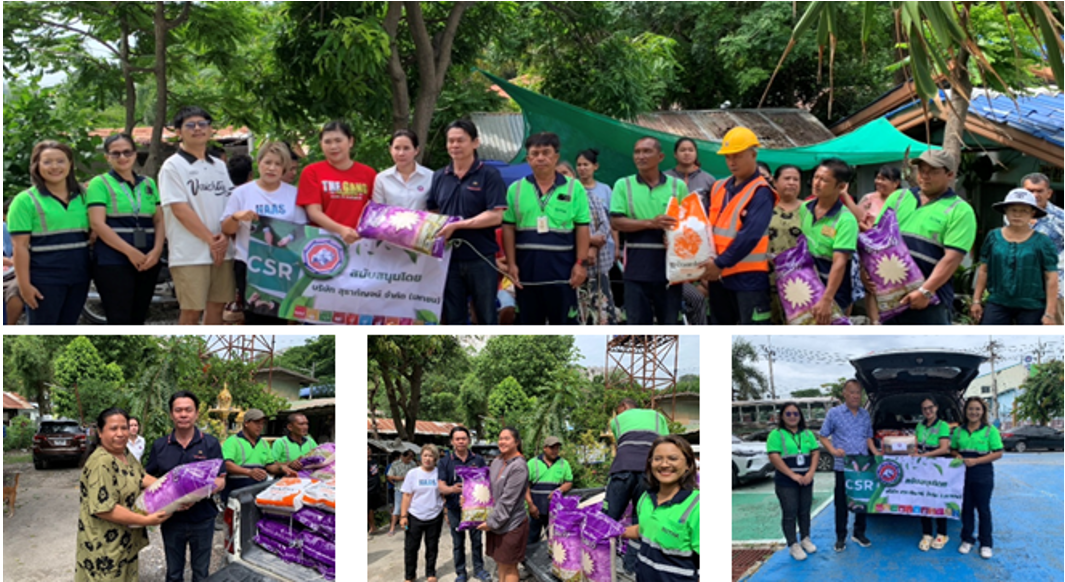
Blood Donation
Golden Lime Public Company Limited (SUTHA), in collaboration with the National Blood Service Center Region 2, Lopburi Province, organized a blood donation event to support the supply of quality blood for saving the lives of patients in hospitals within its service area. Seven SUTHA executives and employee representatives participated in the donation.
Objectives:
1. To increase the supply of quality blood reserves to meet medical needs.
2. To promote volunteerism and social responsibility among employees.
3. To foster collaboration between the business organization and local public health agencies.
Partnership Scope:
Main Agency: National Blood Service Center Region 2, Lopburi Province
SUTHA's Role: Coordinate and mobilize volunteers within the organization; provide communication resources within/around the event area (as appropriate).
Value & Impact Analysis:
Health Support:
Increased blood reserve security for emergency/surgical/chronic disease treatment.
Enhanced readiness of the healthcare system. Within the hospital network in the responsible area:
Social and Human Capital:
Create a volunteer culture within the organization, encouraging employees to continuously see the value of helping society.
Enhance employee engagement through purpose-driven activities.
Stakeholder Collaboration:
Strengthen relationships with local health agencies and civil society networks.
Increase the credibility and trust of the community towards the organization.
Alignment with the Sustainability Framework:
ESG – Social: Community Engagement / Employee Volunteering
Relevant SDGs: SDG 3 (Good Health and Well-being), SDG 17 (Partnerships for the Goals)
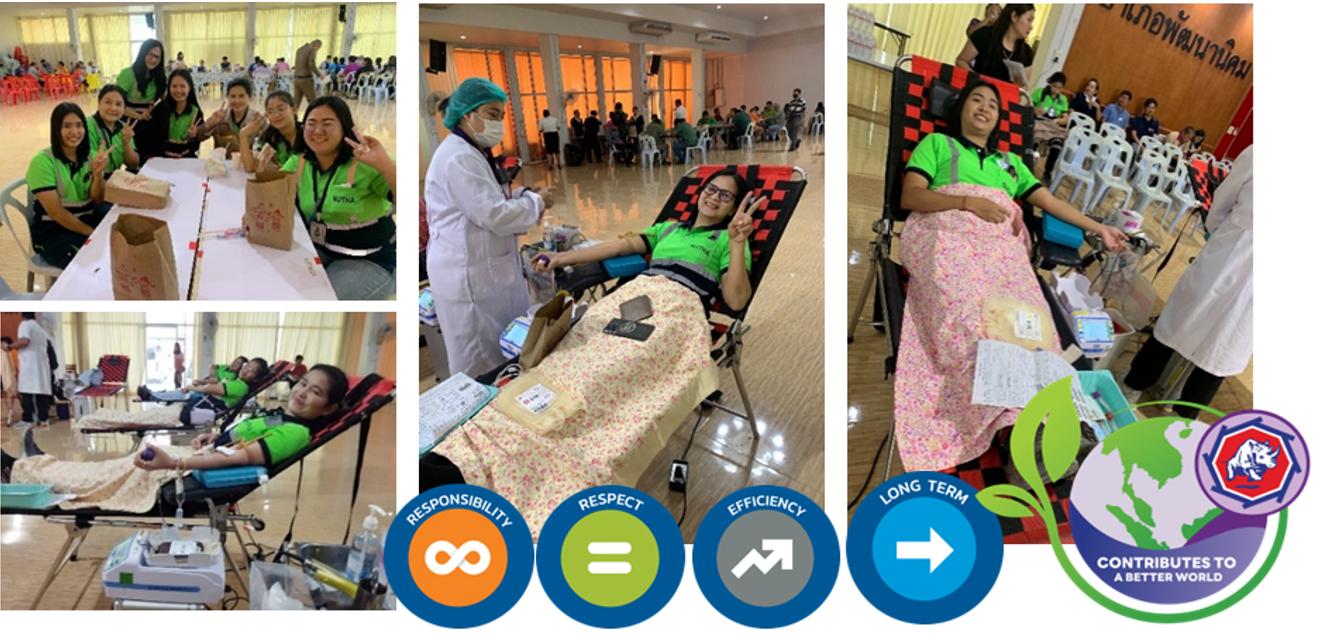
3. Youth development promotion
Recognizing youth as essential for the community's economic future, these initiatives aim to foster positive relationships and develop a skilled labor force. Collaborating with local organizations, the focus areas include:
3.1. Promotion of Education
3.2 Promotion of Sports and Recreation
3.3. Development of Vocational Skills
3.4. Mitigating Inequality through Educational Opportunities for Underprivileged Youth
Objectives:
Funded by the Carmeuse Foundation as a shareholder.
rganized by the company in collaboration with government bodies.
Supported by the annual budget allocation.
Involves participation from company personnel and executives and financial contributions
Goals:
Enhancement and promotion of the company's operations
by aligning with strategic plans based on community feedback, focusing on societal support and youth education. This initiative fosters collaboration with local organizations through an annual plan that targets Sustainable Development Goal 4, ensuring inclusive and equitable quality education.
Community, Society, and Environmental Benefits
- Engages local civil society organizations, benefiting community members.
- rganized by the company or in partnership with government agencies, prioritizing community benefits.
- Allocates annual budgets to support initiatives, aiding the social sector.
- Involves company personnel and executives, potentially contributing additional financial resources to support the community.
Youth Knowledge Development Project
Activity 1: The “English Camp” course aims to improve students’ English skills and confidence through engaging activities outside regular classrooms. Held on December 19, 2025, at Chong Sarika School and opened by Mr. Panya Srisapha from Golden Lime Public Company Limited, the camp was organized in partnership with the JA Thailand Foundation. Teachers received training to better support students’ English learning for everyday use. Three local schools - Chong Sarika School, Wat Manee Srisophon School, and Ban Pho School - took part, with a total of 100 student participants.
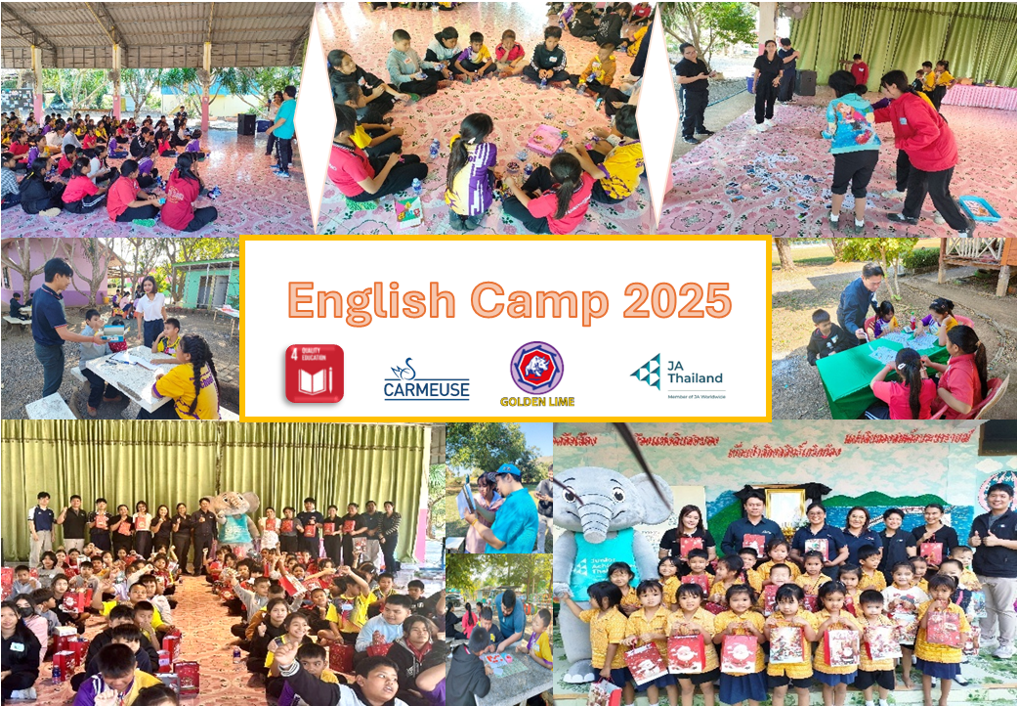
This community service not only strengthens civil society but also encourages collaboration with local groups to support social initiatives that build positive relationships and improve Golden Lime Public Co., Ltd’s reputation among regional educational institutions and young people. It also aims to increase trust within the community and may reduce labor migration, potentially leading to more local employment opportunities in the future.
Budget Allocation | ESG values | |
The Carmeuse Group has provided support through JA Worldwide and its branch in Thailand. | Economic | Strengthening the organization's reputation by prioritising local employment initiatives and proactively addressing potential labor shortages. |
Social | Building a positive image and strong connections with local community organizations. | |
4.A community survey designed to collaboratively foster a range of activities and engage residents through participatory initiatives focused on improving social relationships. The subjects of development and promotion encompass:
4.1 Religion and culture
4.2 Employment and vocational skills development
4.3 Sports and recreation
4.4 Programs supporting Sustainable Development Goal 11, which focuses on inclusive, safe, resilient, and sustainable urban development.
4.5 Programs supporting Goal 16: fostering peaceful, inclusive societies, ensuring justice for all, and building effective, accountable institutions at every level.
Benefits for the company's operations include:
- to meet the expectations of stakeholders within the community, society, government agencies, and local organizations
- to cultivate relationships and garner cooperation and support, facilitating the ongoing success of the business
- to receive timely information, mitigate impacts, and reduce the likelihood of negative relationships that could adversely affect the company's operations
- These activities offer more than financial benefits through tax deductions; they help build relationships, enhance communication, and support the License to Operate goal. Strong community ties also ensure resident concerns reach the company quickly for prompt action.
Benefits to the community, society, and the environment include:
- Meeting the expectations of the community sector, which seeks support and involvement from the company, such as:
- Engaging in community activities and helping for religious sites and ceremonies held by local temples.
- Taking part in annual merit-making events and gatherings, allowing employees and community members to connect, share insights, and gather feedback from the community.
- ffering support to non-commercial religious institutions, as donations and assistance play a crucial role in easing the financial burden on monks for maintaining religious sites and covering utility costs for ceremonies.
- Participating in activities organized by local religious sites or community representatives, which fosters engagement in local customs and practices.
- Supporting government bodies or community representatives, ensuring that organized activities benefit the community.
- Allocating annual budgets for specific activities arranged by the social and community sectors.
- Sending personnel, executives, and employees to participate in community events, along with budget contributions, tothe social and community sectors.
Budget Allocation | ESG Values | |
93,300 THB | Economy |
|
Social |
| |
Community service at Wat Chong Sarika in Lopburi
SUTHA sent volunteer staff to help clean Wat Chong Sarika in Lopburi Province before the Kathina Samakkhi collective merit-making ceremony alongside residents of Village 12 in Chong Sarika Subdistrict. The team also joined the 2025 annual Kathina Samakkhi event with local temples and participated in the Royal Kathina ceremony, where they contributed donations, served food to the attendees, and provided clean drinking water.
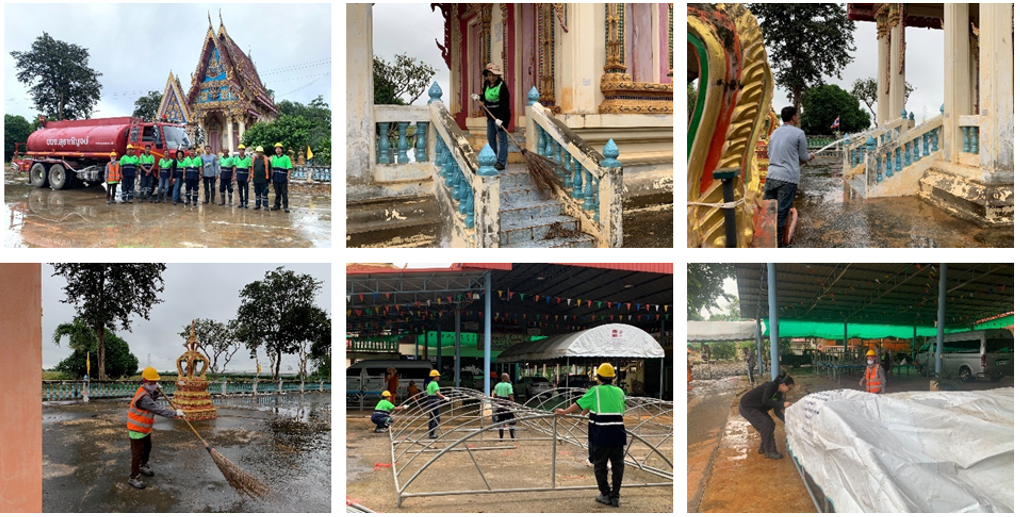
Support cultural activities and important religious sites in the community and improve the cleanliness and orderliness of public spaces.
Strengthen unity, camaraderie, and trust between the company, the community, and local authorities.
Promote volunteerism and pride in employee participation.
| 4. Wat Kanyanabanphot
5. Royal Kathina Ceremony (with the Lopburi Provincial Industry Office)
Total Kathina donation: 86,300 baht Additional supports: Clean drinking water, 90 packs (total value 6,300 baht) + food for the temple's alms giving (value/quantity as per activity receipt) Total staff and team members participating in the activity: 13 people |
Activities Undertaken:
Cleaning the temple grounds and common areas.
Providing clean drinking water and food for the Kathina ceremony.
Participating in the Kathina ceremony with local temples in the vicinity of the company, continuing the tradition of religion and local culture.
Social Outcomes:
Clean and usable public spaces for community religious events.
Strengthening unity and trust between SUTHA and the local community, continuing local cultural traditions in promoting religion.
Increased employee participation in community activities (volunteer work/food donation).
Alignment with SUTHA's Sustainability Goals:
Community Engagement: Community involvement and development.
Social Well-being: Supporting basic welfare and community culture.
Stakeholder Partnership: Collaborating with religious institutions and government/local agencies.
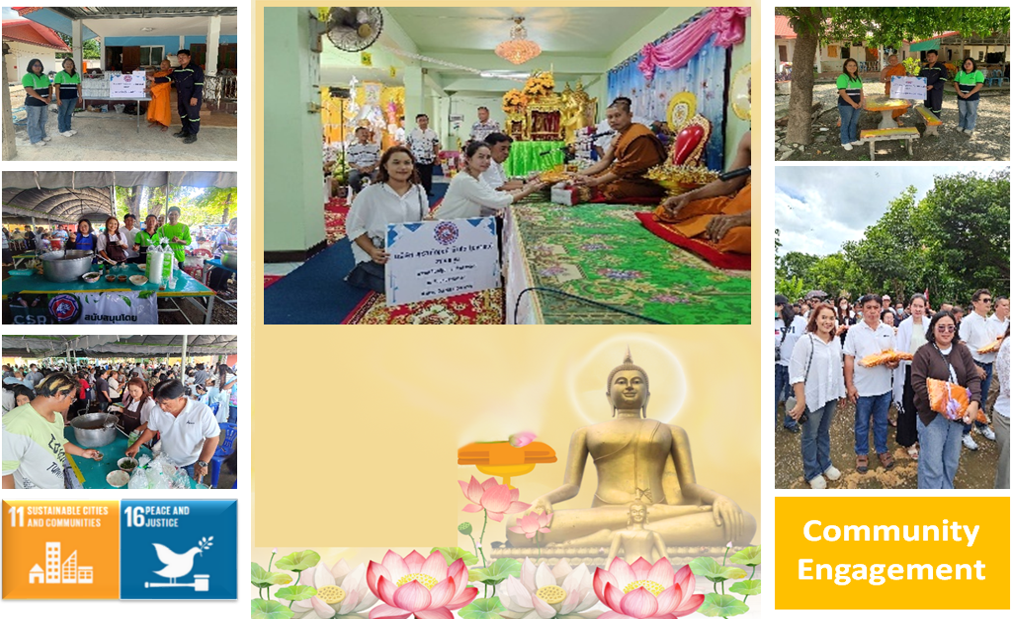
SUTHA focuses on preserving local traditions and building strong community relationships by supporting cultural activities.This year, SUTHA contributed 7,000 baht to Phukrang Municipality’s Loy Krathong festival, helping maintain tradition, foster unity, and celebrate Thai culture.This support reflects the company’s commitment to community engagement and sustainable quality of life improvements. |
|
5. Engage with local organizations and government agencies, and provide funding for community development when appropriate. | |
SUTHA prioritizes youth development in the communities surrounding its operational areas and participated in "National Children's Day" activities with various local organizations. The company supported these events with prizes and scholarships to inspire, promote learning opportunities, and sustainably develop the potential of children and youth in the community.
Total value: 44,000 baht 2. Scholarships - Scholarships for Chong Sarika School: 10,000 baht Total support value: 54,000 baht Social Outcomes
Alignment with SUTHA's Sustainability Goals:
|
|
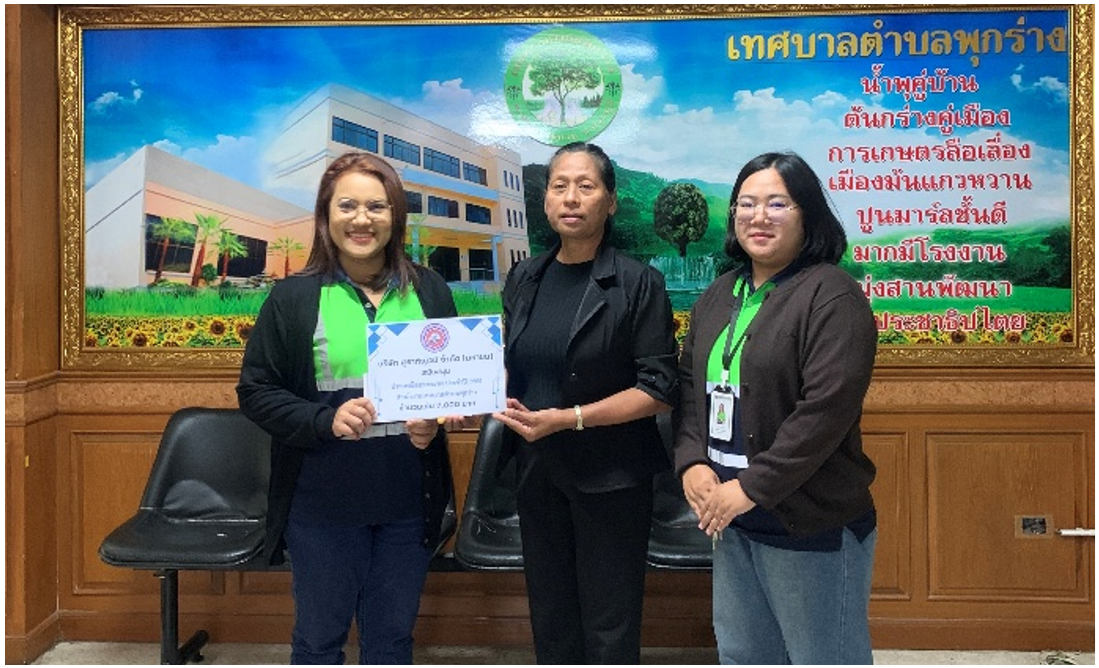
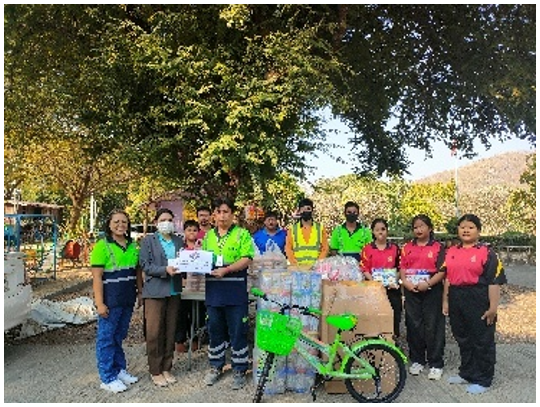
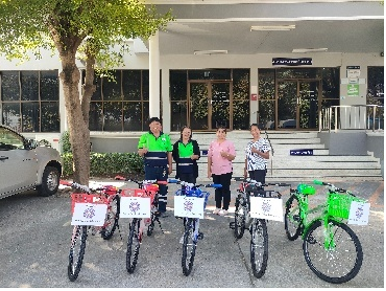
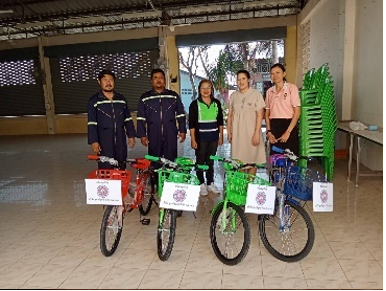
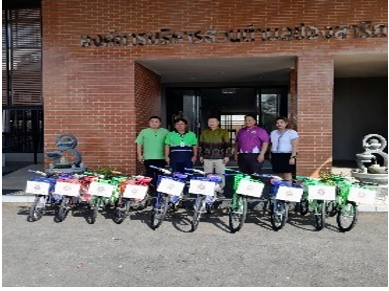
To Be Number One: Pracha Bamrung Community, Saraburi Province. Golden Lime Public Company Limited (SUTHA) provided a budget of 10,000 baht to District Chief Manasphan Donkonphai for the “To Be Number One – Street Art: Who’s Addicted to Drugs, Raise Your Hand” art competition in Pracha Bamrung Community, Phra Phutthabat District, Saraburi Province. This project promotes youth and community participation.
Description:
The community and youth collaboratively created artwork, including:
Painting street art around the community.
Creating an Art Toy: “Giant Kumbhakarna Doll.”
All activities provided a creative space for youth to use their free time constructively, develop their artistic skills, and reduce the risk of drug involvement.
Social Outcomes:
Promotes youth potential and creates a creative space for beneficial activities.
Generates income for the community through the production of artwork and Art Toys.
Fosters local pride and community unity.
Serves as an example of an activity that reduces social risk factors and supports drug prevention.
Promotes “Self-reliance for Sustainable Communities” by helping people develop skills and additional jobs in the arts.
Alignment with SUTHA's Sustainability Goals:
Social – Community Engagement: Promoting community involvement.
Youth Development: Supporting youth development and reducing drug abuse.
Local Economic Empowerment: Enhancing community potential for income generation and job creation.
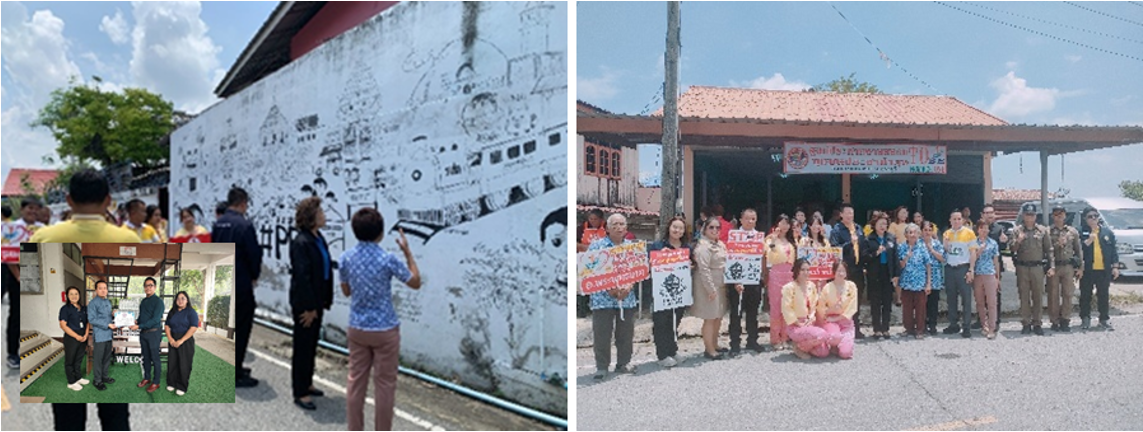
Human Rights and Equality for People with Disabilities | |
SUTHA has supported and empowered people with disabilities through a donation of 10,000 baht to support their participation in the Miss & Mister Deaf Thailand 2025 and Rare Fashion Designer , an ASEAN-level competition for the deaf, held in Da Nang, Vietnam. This year, Mr. Aniruth Wongnim, a hearing-impaired individual from Chong Sarika Subdistrict, was selected as Thailand's representative to participate in the competition. The company recognizes the importance of promoting the abilities and potential of people with disabilities and therefore provides support to open opportunities for them to participate in international activities, bringing pride to the community and concretely promoting the inclusion of people with disabilities in society. This support reflects the company's commitment to operating according to its Social (S) sustainability principles and promoting human rights, aiming to create an inclusive society, reduce barriers, and increase opportunities for people with disabilities to develop their potential and access international stages equally. Volunteer activities to honor and commemorate the benevolent reign of the Thai monarch and the birthday of Her Royal Highness Princess Maha Chakri Sirindhorn: SUTHA supported Phra Phutthabat District, Saraburi Province with 30 packs of drinking water, costing 2,100 baht. Charity run event “Phraphutthabath HERO RUN” SUTHA supported Phra Phutthabat Hospital, Saraburi Province with 30 packs of drinking water, costing 2,100 baht, for use in the charity run event. Sports day, Phukrang Subdistrict Municipality, Saraburi Province: SUTHA provided 6,000 baht to Phukrang Subdistrict Municipality, Saraburi Province, for the organization of the event. |
|
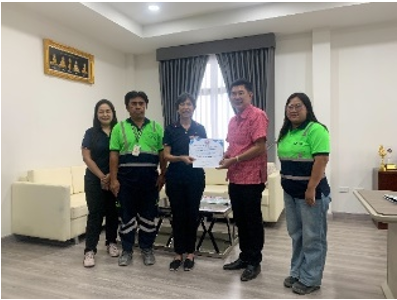
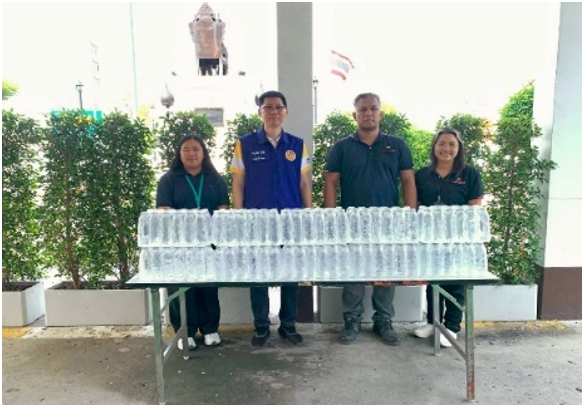
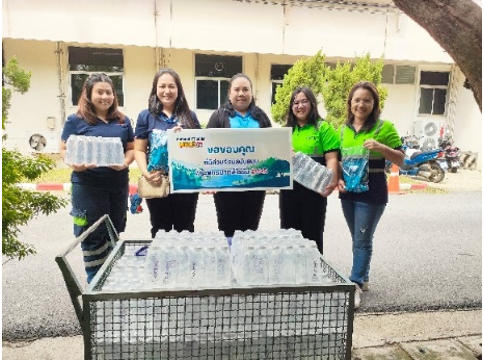
Other Social Management
Plan & Outcomes — Description
Stakeholder engagement
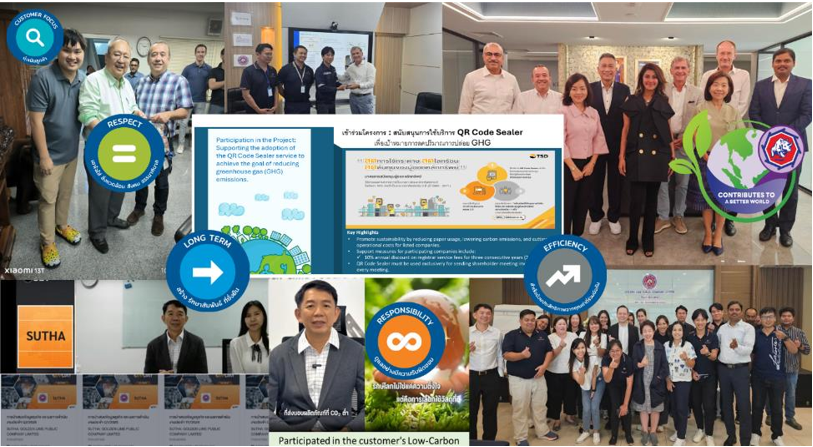
Principles
Stakeholder engagement provides opportunities to further align practices with societal needs and expectations, helping to drive long-term sustainability. Engaging stakeholders in the dialogue to find out what social and environmental issues matter most to them will improve decision-making and accountability.
Guidelines
The process includes:
1.1) Establish a policy to include and categorize all stakeholders
1.2) Prioritize and specify activities for each group of stakeholders including reporting to the board
2. The management adopts the framework from the Board, follows up performance and involves employees to participate in proposing ideas for activities or projects.
Stakeholders’ identification
A method for systematically identifying stakeholder groups should consider the scope of the engagement and
may be guided by attributes of stakeholders such as the following:
Attribute | Description |
Dependency | groups or individuals who are directly or indirectly dependent on the organization’s activities, products or services and associated performance, or on whom the organization is dependent to operate |
Responsibility | groups or individuals to whom the organisation has, or in the future may have, legal, commercial, operational or ethical/moral responsibilities |
Tension | groups or individuals who need immediate attention from the organisation with regard to financial, wider economic, social or environmental issues |
Influence | groups or individuals who can have an impact on the organisation’s or a stakeholder’s strategic or operational decision-making |
Diverse perspectives | groups or individuals whose different views can lead to a new understanding of the situation and the identification of opportunities for action that may not otherwise occur |
Source: AA1000 (2015), Stakeholder Engagement Standard (SES)
For mutual cooperation to drive SUTHA’s business value chain, SUTHA includes and categorises all supporting stakeholders into groups as follows ;

1. Customers who use products
2. Shareholders, either direct or indirect ones
3. Directors, executives, and employees, and employees: A company's employees, managers and board of directors make up a business's internal stakeholders.
4. Business partners, contractors, service providers, creditors, and loan providers make up a business's external stakeholders.
5. Community around the business
6. Organizations regulating listed companies or supervise, asses the operations of listed companies under the capital market or the Stock Exchange of Thailand.
7. Government agencies and local authorities.
8. Other businesses offer the same or similar goods and services to customers.
Stakeholder Prioritization
Prioritizing stakeholders involves assessing their level of interest and influence. Stakeholders with a high level of interest and influence should receive more attention and resources than those with low levels of interest and influence.
1) Influence refers to the degree of power each individual stakeholder has in setting and modifying the operations of the companymeasuredby a stakeholder’s level of power, authority, expertise, or resources to change or prompt decisions in any area of the company.
2) Interest refers to how the stakeholders are impacted by the operation outcomes without having any power over influencing it.Interest is the degree to which a stakeholder is affected by or interested which is measured by a stakeholder’s level of involvement, their level of concern or commitment, and their perceived benefit or harm.
Score | Y-axis (Influence) | X-axis (Interest) | ||
1 | Low | Low power or influence in determining company outcomes. | Low | Low interest or place little importance on determining company outcomes |
2 | Moderate | Moderate power or influence in determining company outcomes. | Moderate | Moderate interest or placing of importance on determining company outcomes. |
3 | High | High power or influence in determining company outcomes. | High | High interest or placing of importance on determining company outcomes. |
4 | Very high | Great power or influence in determining company outcomes and can halt company operations. | Very high | Very high interest and placing of importance on determining company outcomes and are able to halt company operations. |
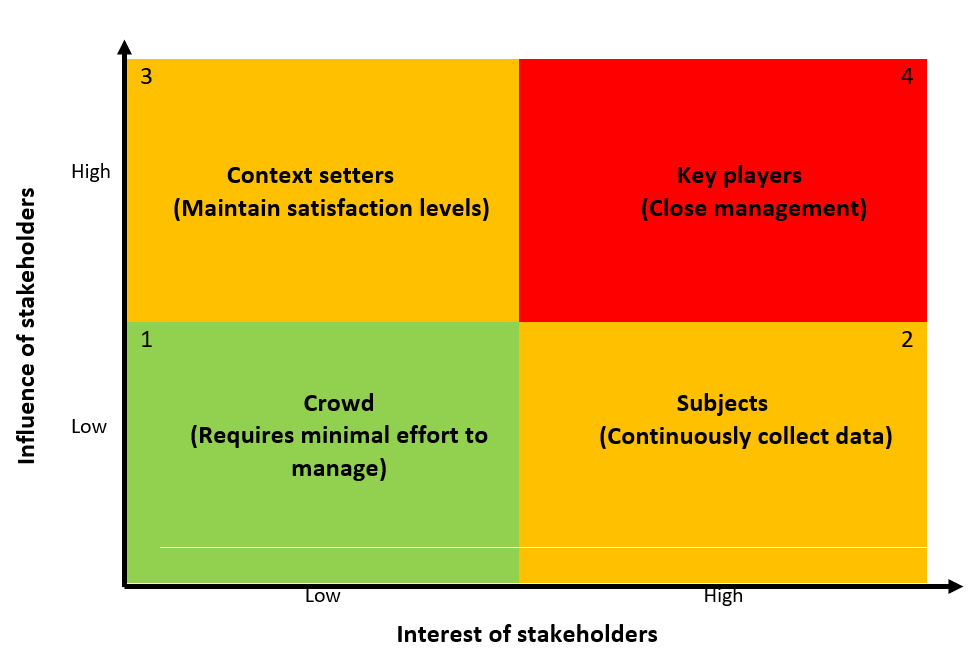
Players are the high-power, high-interest individuals with whom the Company considerscollaborating and keep fully engaged.
Subjects are the low-power, high-interest stakeholders who can offer great insights and ideas for the Company and its business operations, but the Company can selectively agree or admit.
Context-setters are high-power, low-interest stakeholders (heads of departments, for example) can have a lot of influence over the operations but don’t want to be involved in the details. Keep them up to date and upgrade them to players.
Crowd: These individuals will require some ongoing communication about the project’s progress but probably the least of all stakeholders.
The company has evaluated and prioritized key stakeholder groups using influence and interest assessment principles in preparing engagement activities to create stakeholder participation. |
|
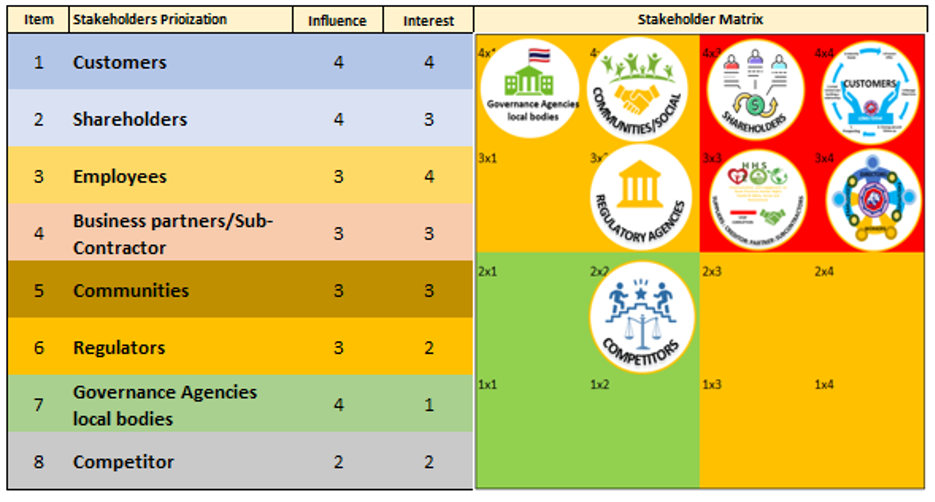
To establish the stakeholder engagement
1. Assess stakeholder needs and expectations through a survey.
2. Evaluate the significance, strategy, and planning for stakeholder engagement.
3. Execute stakeholder engagement activities that align with appropriateness, opportunities, and budget, ensuring they contribute to impact and value creation for the business or organization while adhering to the company's sustainability strategy or plan as outlined.
Minimize environmental impact and advocate for environmental development.
Create innovative initiatives that provide value to society and the environment in line with sustainability development goals.
Implement programs aimed at reducing environmental harm, addressing dust issues, and mitigating production-related impacts.
Initiate efforts focused on climate change management and decreasing greenhouse gas emissions.
Promote environmental policies, including circular economy practices, waste separation, and effective waste management.
Encourage product responsibility.
Mitigate adverse impact for safety, enhance collaboration, relationships, well-being, potential, society, community, and human rights.
Foster labour relations initiatives that enhance safety, hygiene, and employee engagement.
Create programs that align performance with the expectations of key stakeholders influenced by business operations.
Encourage activities that foster a safe work environment, promote hygiene, enhance happiness in workplace and engagement, reduce inequality, and support human rights initiatives.
Develop programs that enhance skills, responsibilities, and oversight by capable internal staff, fostering creativity and business growth to enhance competitiveness.
Support educational initiatives and youth development in accordance with sustainability goals.
Engage in community, social, and public relations activities aligned with sustainability objectives.
Advance business growth and governance.
Engaging involvement that generate business opportunities, improve product or service quality, and enhance overall business performance to meet established objectives.
Implementing risk management strategies and fostering business management skills to minimize issues, overcome challenges, and mitigate risks associated with operations.
Establishing processes for effective control and monitoring to ensure ongoing operational improvements.
Encouraging various advancements to ensure businesses comply with regulations and standards while developing measures to prevent potential impacts and disputes.
Initiating activities aimed at reducing resource consumption, managing costs, and enhancing business capabilities.
Promoting initiatives that support the development of a circular economy and optimize resource management.
Framework for stakeholder engagement
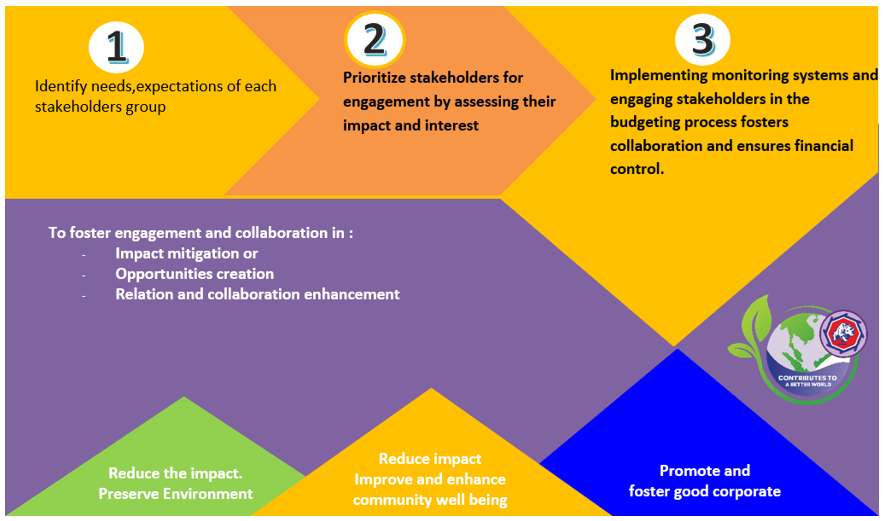
Roles and Responsibilities
Departmental and unit chiefs whose operations are relevant to each stakeholder group can coordinate with relevant parties such as investor relations, sustainability development work panel and relevant sub-committees such as the Welfare Committee, Environmental Committee, Environmental Governance Team to jointly determine strategies and activities to create engagement with each stakeholder group to
1) Set objectives for determining engagement outcomes such as building co creation, providing information, providing information to shareholders and investors, developing relationships, and guidingpersonnel to reduce operational costs, to reduce greenhouse gases emissions, etc.
2) Carry out identifying, prioritizing ,analyzing and mapping engagement activities in accordance with the engagement framework.
SUTHA conducts essentially five levels of engagement with stakeholders: informing, consulting, involving, collaborating, and empowering.
Inform:Provide stakeholders with balanced and objective information to assist them in
understanding the ongoing operations, problem, alternatives, threats,opportunities and/or solutions informed in a transparent, correct, reliable manner (There is no opportunity for stakeholder input or decision-making.) via accessible channel.
Consult: Gather feedback on the information given.Consultation involves information exchanges among the stakeholders ; government, the implementing authorities,project executing suppliers, in which level of input can range from minimal interaction (online surveys, etc) to extensive either formal or informal to provide opportunities to give feedback to be considered in the decision-making process
Involve: Work directly with stakeholders during the process to ensure that their concerns and desired outcomes are fully understood and taken into account at each stage. Final decisions are still made by the company, but with well-considered input from stakeholderssuch as environmental management initiatives taken in the operational establishment areas.
Collaborate: Partner with stakeholders at each stage of the decision-making, including developing alternative solution ideas and choosing the preferred solution together. Goal is to achieve consensus regarding decisions.For examples, to partner with customers in each aspect of the
decision including the development of alternatives and the identification of the preferred solution.
Empower: Place final decision-making power in the hands of stakeholders. Voting ballots and referenda are common examples conducted via a general meeting of shareholders and agenda meeting with major shareholders.
Engagement tools applied.
Inform | Consult | Involve / Collaborate / Empower |
|
|
|
The Company identifies, prioritizes, and does a mapping of engagement to implement effectively and monitor its outcomes against its goal to report in the annual report and to the board to evaluate the efficiency and allocate budget appropriately.
Stakeholder Engagement: Customers | ||
The customer satisfaction survey is effectively and thoroughly applied in measuring and benchmarking customer satisfaction for comprehending customer satisfaction, requirements, and areas for improvement toward product qualifications, packaging, transportation services, the sales document management to meet the expectations of customers in each industry. |
Customer Survey Results |
|
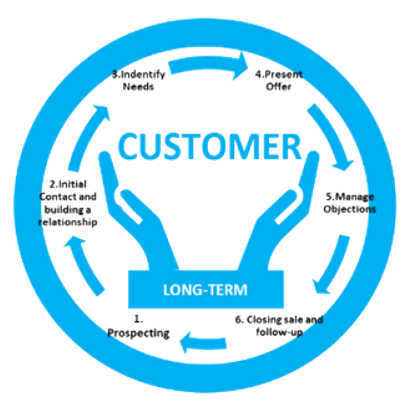
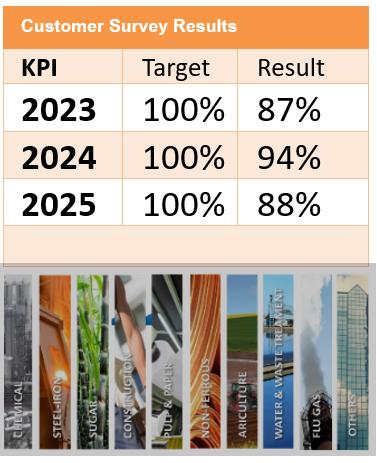
Open Space Meeting: Customer Visit rganized either by the customer orthe company , during which the customer engages with the company's processes, or the company meets with the customer to explore potential collaboration opportunities. | ||
Aligning with the agenda set by the customer either onsite at the Company or on customers’ sites, our Sales and Marketing representatives are to coordinate with other departments to achieve meeting objectives. |
| Objective: to exchange knowledge and insights related to the development of products and services, as well as to articulate needs, expectations, and collaborative efforts. Corporate Benefit: - Gain valuable insights into customer needs and expectations. Stakeholders benefit: - btain information guidance on how to meet those expectations. |
Action research: In collaboration with the Carmeuse ,the key shareholder including clients, government bodies, and educational institutions, an assessment will evaluate the viability of using lime products for new sustainable applications. This initiative will leverage the Carmeuse's expertise and innovations alongside educational specialists to explore the potential of lime and calcium carbonate in enhancing the competitiveness of national infrastructure projects. | ||
The sales and business development seek ways to improve the development of lime and calcium carbonate products for field projects, thereby supporting inclusive and sustainable industries and encouraging innovation, in alignment with SDG Goal 9.
|
| Objective: To improve the competitiveness of the national industry in lime products by leveraging insights from Carmeuse to collaborate with Thailand's education sector for research and development. This initiative aims to generate business opportunities while benefiting civil society and establishing a robust infrastructure system for the nation. Corporate Benefit: To assess the viability of business growth that encourages the development of new products, potentially leading to sustainable commercial opportunities in the future. Stakeholders benefit: To access knowledge from world-class research and development organizations, fostering a knowledge network that can be expanded to enhance expertise. This can lead to societal and national benefits, creating value and promoting overall development. |
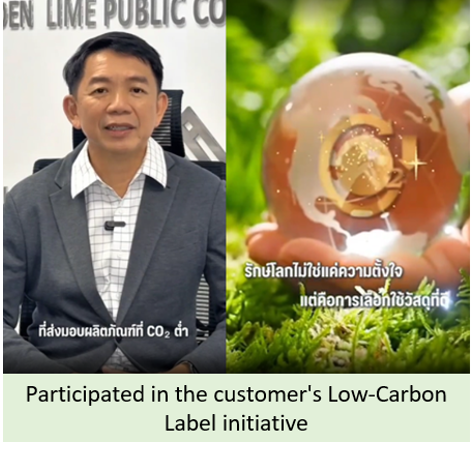
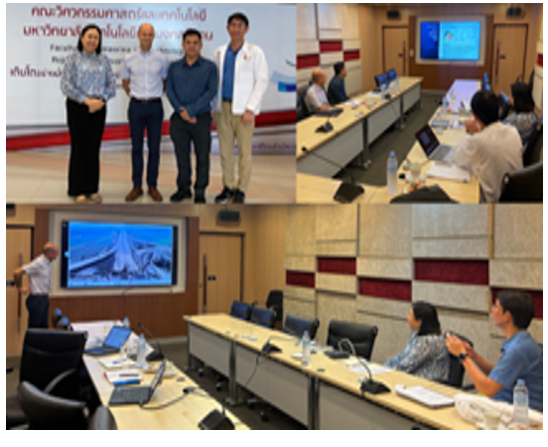
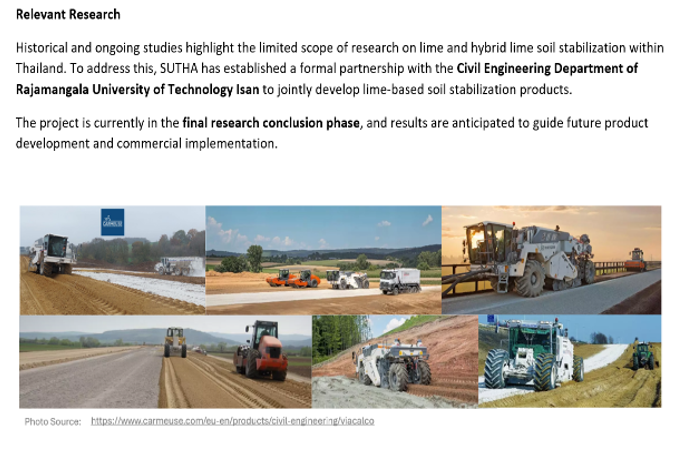
Shareholders Engagement: Meetings of shareholders, SET Opportunity Day, other engaging activities via concepts and frameworks associated with policy implementation | ||
Annual general meeting of shareholders IR and management team participate Opportunities Day arranged by SET | The shareholders' meeting, which minority shareholders attend annually, is expected to be an open meeting at the designated venue. The Company has arranged the meeting to meet these expectations.
SET Opportunity Day The Company presents its annual and quarterly operating results at least twice a year, depending on available opportunities and scheduling procedures. These events can be scheduled through the Stock Exchange of Thailand system for 2024. The following three sessions are planned to report operating results:
"SILVER Y2022 , GOLD Y2023, SILVER Y2024, GOLD Y2025."
| Objectives: - Adhering to legal requirements in disclosing performance and key information for minority shareholders. - Working together to enhance business operations and generate new opportunities Corporate benefit - Report operating performance and obtain expectations/ opinions Stakeholders benefit - To acknowledge operating results and practices to respond expectations Objectives: - Ensure compliance to verify that the Company's internal control system is sufficient and suitable. - Foster collaboration among shareholders, the Board of Directors, the Audit Committee, and management to collectively oversee and follow up on the effectiveness of the internal control process, making necessary improvements and corrections annually to maintain an adequate and appropriate internal control system. Corporate benefit - btain recommendations and strategies for enhancing the internal control process, ensuring it operates effectively and efficiently to safeguard and manage assets comprehensively while improving overall efficiency and effectiveness. Stakeholders benefit: - confidence regarding the adequate and proper internal control system, assured by regularly monitoring and reporting to the Audit Committee each year, along with transparent disclosure and complete report for stakeholders. |
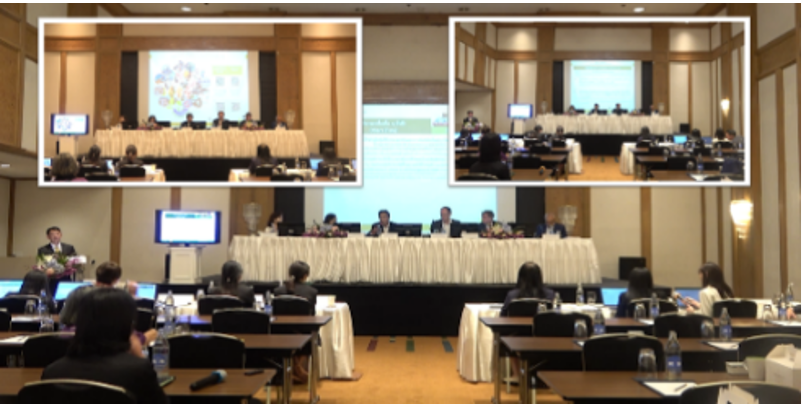
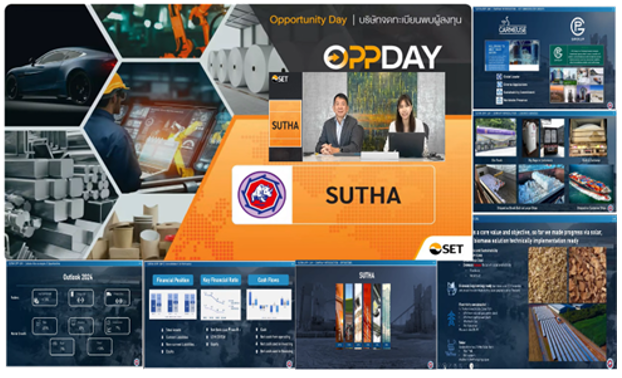
Personnel, directors, and executives’ engagement | |||||
Customer Visit : The Carmeuse group’s Directors and Executives In October 2025, Sales and Marketing Executives, under the leadership of Executive Director Mr. Ben Harrath Faouzi and Mr. Timothe Van den Bossche, visited key customers to obtain valuable insights into their needs. The collected information will be evaluated to improve product integration in customer processes and maximise benefits.
| Objective : The newly appointed directors visited the customer's operations to familiarize themselves with how the company's products are utilized. Their goal was to collaboratively identify the best solutions for maximizing the benefits of these products. Corporate benefit To foster trust and demonstrates the commitment of the Company's directors and executives. It highlights the significance of engaging with customers regularly to support product development strategies and to find tailored solutions that enable customers to fully leverage the products for optimal results. Stakeholders benefit The directors gain valuable insights from customer feedback, allowing them to offer recommendations or assemble a team of experts from both the Company and Carmeuse. This collaboration aims to enhance product development and ensure effective integration of the products into the customer's operations. | ||||
Employee engagement and employee satisfaction surveys conducted by the Human resources department to assess and analyze for better responding to the needs of personnel. |
|
| |||
The Employee Satisfaction and Engagement Survey conducted by SUTHA, as a subsidiary of the Carmeuse Group, utilizes the Oracle HCM system and applications provided by the Carmeuse Group to enhance its human resource management. SUTHA has utilized a tailor-made survey to assess employee satisfaction. The findings from the survey are utilized to identify potential improvements in human resource management, employee engagement, meeting expectations, work development, and overall efficiency in advancing the organization. To establish the format, ideology, process, and methods have been established, and a schedule has been set to gather employee feedback from the management group every 18 months. In the most recent round (Y2024-Y2025), the survey was conducted and monitored online by an external operator, Perceptyx, between October 28 and November 15, 2024. This survey covered 11 key categories; Engagement, Communication, Honest Feedback, Development (individual), Manager Relationship, Ownership, Positive Environment, Purpose, Recognition, Support & Collaboration, Work-life Balance and included a total of 34 questions; Employees take pride in their organization and are motivated to stay, feeling a sense of personal achievement and often recommending it as a great workplace. Internal communication is open and honest, fostering personal growth through training and support from supervisors. The well-organized work environment promotes efficiency, safety, and health, contributing to a sense of security. Senior management provides a clear vision and goals, helping employees understand expectations and recognize their skills. Contributions are valued, workloads are manageable, and compensation is fair. Employees have the necessary tools and work collaboratively, benefiting from effective cooperation that helps balance work and personal life while managing stress.
In 2024-2025, the survey conducted for SUTHA employees, including those in subsidiaries, revealed that 97% of the total workforce participated. Among these respondents, 84% expressed a strong commitment to the organization. The survey gathered employee opinions across various aspects such as Engagement, Communication, Honest Feedback, Development (individual), Manager Relationship, Ownership, Positive Environment, Purpose, Recognition, Support & Collaboration, Work-life Balance. The top three survey findings, each averaging over 90%, indicated that employees felt their skills and abilities were being utilized effectively, they experienced a sense of belonging to the organization's success, and they valued being part of a team that contributes to achieving organizational goals. Additionally, the three areas identified for development, with response rates between 68% and 71%, included enhancing employee health and well-being, fostering an efficient work environment, and improving comprehensive and beneficial communication. The next survey will be in 2027. Executive engagement with a major shareholder
| |||||
Suppliers’ engagement | |||||
Suppliers’ engagement : Supplier Site Visit : Monitoring the fuel import process for products purchased from suppliers during the year 2025 | |||||
| Objective: Analyze the value chain and origins of key raw materials. Corporate Benefits: Stakeholders gain insights into processes and resource origins, boosting confidence for significant investment loans. Stakeholders Benefit : versee operations and retrieve information on essential asset sources, which helps in assessing the business's stability. | ||||
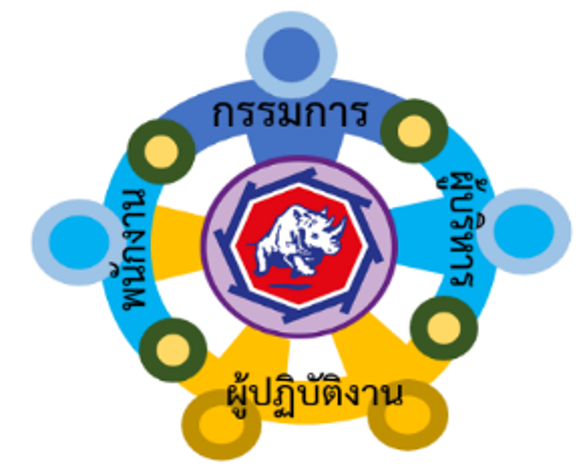

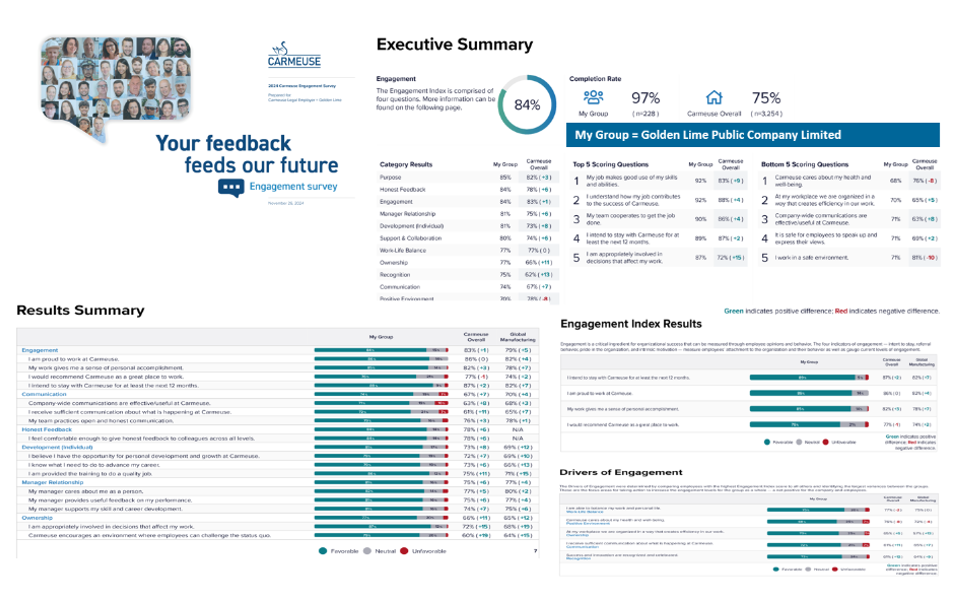
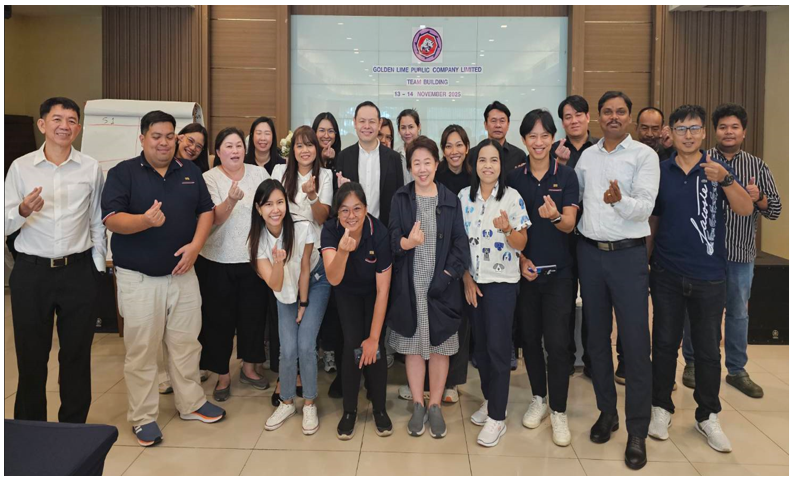
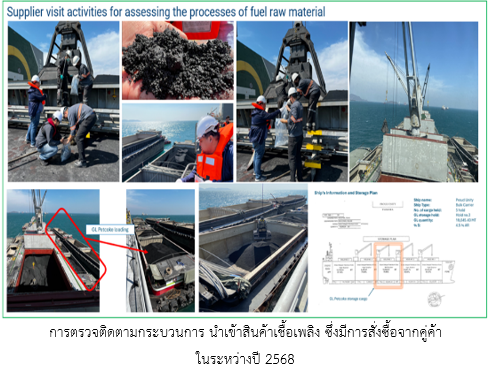
Participation with TSD, in the Project: Supporting the adoption of QR Code Sealer service
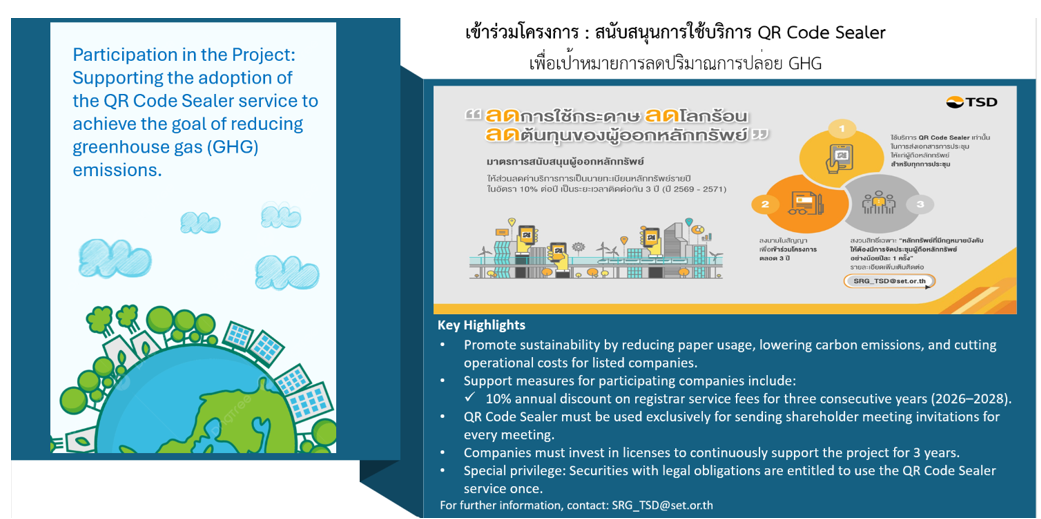
Project Background:
The Thailand Securities Depository Co., Ltd. (TSD) launched the TSD e-Services for Net Zero project to promote sustainability and reduce environmental impact by inviting listed companies to use the QR Code Sealer service for sending electronic shareholder meeting invitations.
Project Objectives:
Reduce paper usage
Reduce greenhouse gas emissions
Reduce operating costs for listed companies
Increase work efficiency
Benefits for Participating Companies:
Receive a 10%discount on annual securities registrar fees for 3consecutive years (2026–2028)
Expected Positive Impacts:
Reduce paper usage by over 3,817million sheets per year
Reduce carbon emissions by 53tons per year
Equivalent to the CO2absorption of over 5.6million trees
Reduce average annual costs by over 25%
What is QR Code Sealer:
It is a service developed by TSD that allows listed companies to send shareholder meeting invitations and supporting documents in QR code format instead of printing documents. This allows shareholders to access information conveniently, quickly, and in an environmentally friendly manner.
Environmental
Reduce the use of natural resources such as paper and energy.
Reduce greenhouse gas emissions, which helps mitigate global warming.
Support the organization's and country's Net Zero goals.
Social
Promote ethical and honest cooperation with local partners.
Create equality within the organization and foster a fair work culture.
Support paperless work both inside and outside the office.
Governance
Strive to create a transparent and highly accountable organizational culture.
Adhere to quality standards in all areas to enhance data management capabilities.
Reduce the cost of shareholder meetings, such as printing, transportation, and other expenses.
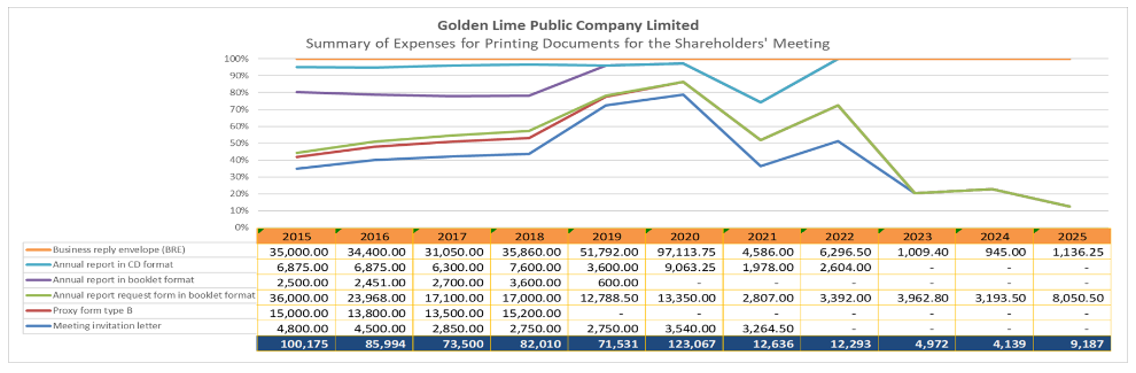
Law Violation Incidents
Introduction
Information on Legal or social and human rights violations.
A Summary regarding cases that represent serious breaches of laws or social regulations, or those alleged to have adverse effects on social issues, particularly those highlighted in public news that could influence the company's business, image, reputation, and assets. Outline the facts, developments, causes, consequences, and preventive actions taken including any major labor disputes the company has experienced in the last three years.
Number of Incidents — Introduction
Note: Environmental Complaints
Complaint: an allegation or narrative expression of dissatisfaction that highlights problems or areas for improvement, resolution to alleviate suffering or request for action.
The Company has received complaints from the community regarding the dust issue, which align with previously reported environmental concerns.
2023 | 2024 | 2025 | |
Number of cases or incidents that violated the law or created a significant negative impact on the environment (cases) | 4 Rectified and closed | 4 Rectified and closed | 8 Rectified and closed |
Law Violation Incidents
| Metric | Current Year | Previous Year | Two Years Ago |
|---|---|---|---|
| The total number of cases or incidents of significant violations of laws or regulations regarding social and human rights (Cases) | 0 | 0 | 0 |
| The total number of cases or incidents that cause significant labor disputes (Cases) | 0 | 0 | 0 |
| The total number of cases or complaints related to consumer rights violations (Cases) | 0 | 0 | 0 |
| The total number of cases or complaints related to partner rights violations (Cases) | 0 | 0 | 0 |
| The total number of cases or incidents that cause disputes with the community/society (Cases) | 0 | 0 | 0 |
| The total number of cases or incidents related to cyber security or customer data breaches (Cases) | 0 | 0 | 0 |
| The total number of cases or incidents related to safety and occupational health at work (Cases) | 0 | 0 | 0 |